Ingredients
Scale
- 500 g (about 4 cups) bread flour or all-purpose flour, plus a little extra for dusting
- 325 g (about 1⅓ cups) lukewarm water, around 95°F
- 7 g (2¼ teaspoons, or one packet) instant yeast or active dry yeast
- 10 g (about 1¾ teaspoons) fine salt
- 1 tablespoon sugar or honey (optional, for a softer crumb and better browning)
- 2 tablespoons olive oil or softened butter (optional, for a softer loaf that stays fresh longer)
- A little oil for greasing the bowl and loaf pan
Instructions
- Whisk the flour, salt, and yeast together in a large bowl. Add the water (plus sugar and oil, if using) and stir until no dry flour remains.
- Cover and let the dough rest for 20 minutes.
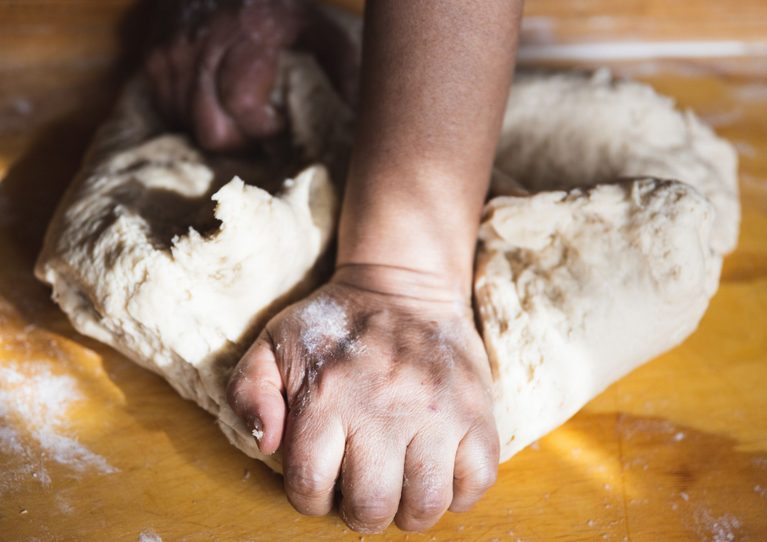
- Knead on a lightly floured surface for 10 to 15 minutes, until smooth and elastic.
- Place the dough in an oiled bowl, cover, and let it rise in a warm spot for 1 to 2 hours, until puffy.
- Gently degas the dough and shape it into a loaf or boule.
- Cover and proof for 30 to 60 minutes. Meanwhile, preheat the oven to 375°F for a loaf pan or 450°F for a Dutch oven.
- Bake for 30 to 45 minutes, until golden brown and 200 to 210°F inside.
- Cool for at least 1 hour before slicing.
Notes
Use an oven thermometer, since many ovens run 25°F hot or cold.
Bake lean loaves a shade darker than you think. Pale bread is often gummy inside.
- Category: bread
- Method: Baking