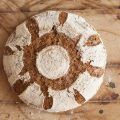
One jar of sourdough starter can keep you in fresh bread all week. Feed it a little each night, scoop out 100 grams the next morning, and that same culture turns into five very different loaves: a crackly country boule, a dimpled rosemary focaccia, a soft sandwich loaf, a hearty seeded whole wheat, and a cinnamon raisin swirl for Saturday breakfast.
This plan fits around a normal work week. Most days need about 20 minutes of hands-on time, and your fridge does the slow work overnight. Every recipe uses the same amount of starter and the same feeding routine, so once you learn the rhythm on Sunday, the rest of the week runs on autopilot.
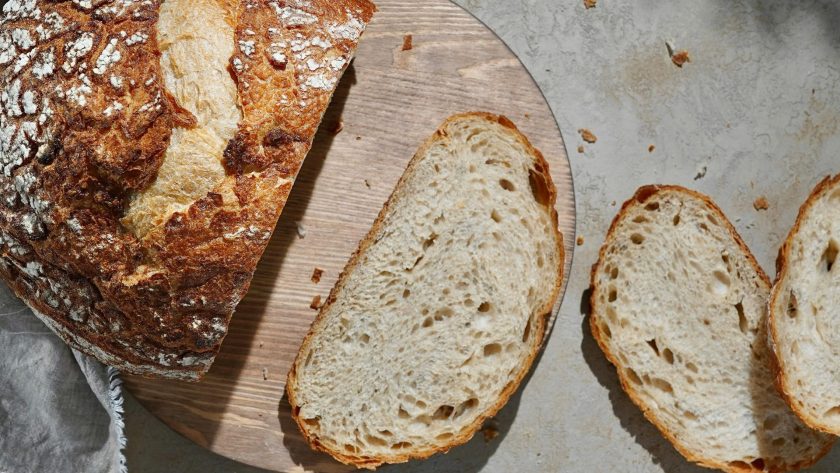
Your Sourdough Week at a Glance
You mix one dough a day and bake it the next day (or that evening). Here’s the full lineup:
| Loaf | Mix | Bake | Hands-on time | Best for |
|---|---|---|---|---|
| 1. Classic country boule | Sunday morning | Monday morning | 25 min | Toast, soup, cheese boards |
| 2. Rosemary focaccia | Monday morning | Tuesday afternoon | 20 min | Dinner sides, panini |
| 3. Soft sandwich loaf | Wednesday morning | Wednesday evening | 30 min | School lunches, grilled cheese |
| 4. Seeded whole wheat | Thursday morning | Friday morning | 25 min | Avocado toast, hearty sandwiches |
| 5. Cinnamon raisin swirl | Friday morning | Saturday morning | 30 min | French toast, weekend breakfast |
The loaves also get a little more adventurous as the week goes on:
| Loaf | Hydration | Flour mix | Difficulty |
|---|---|---|---|
| Country boule | 73% | 90% bread, 10% whole wheat | Medium |
| Rosemary focaccia | 80% | 100% bread | Easy |
| Sandwich loaf | about 64% (milk) | 100% bread | Easy |
| Seeded whole wheat | 76% plus seed soaker | 60% bread, 40% whole wheat | Medium |
| Cinnamon raisin swirl | 66% | 90% bread, 10% whole wheat | Medium |
Tuesday is your breather. No dough gets mixed that day, so you just bake the focaccia and give the starter its nightly feed.
Short on time? Drop any loaf you like. The starter routine stays the same, and you can freeze extra bread for up to 3 months.
How to Set Up Your Sourdough Starter for a Week of Baking
Start Saturday night with a lively starter, one that doubles within 4 to 8 hours of a feeding. If yours lives in the fridge, pull it out Friday and give it two room-temperature feedings so it wakes up in time.
The nightly feeding routine
Every recipe in this plan uses 100 g of ripe starter. To get exactly that, feed at a 1:4:4 ratio around 9 or 10 pm:
- Keep 15 g of starter in a clean jar. Discard the rest or save it for pancakes and crackers.
- Add 60 g flour and 60 g lukewarm water, about 27°C / 80°F. Stir until no dry bits remain.
- Cover loosely and leave it on the counter overnight.
- By 8 or 9 am you’ll have about 135 g of bubbly starter. Use 100 g in the dough and keep 15 g for tonight’s feed.
Ready check: the starter has at least doubled, the top is domed or just starting to flatten, it smells pleasantly tangy, and a spoonful floats in water.
| Night | Feed | That starter goes into |
|---|---|---|
| Saturday | 15 g + 60 g + 60 g | Country boule (Sunday) |
| Sunday | 15 g + 60 g + 60 g | Focaccia (Monday) |
| Monday | 15 g + 60 g + 60 g | Upkeep only, Tuesday is a rest day |
| Tuesday | 15 g + 60 g + 60 g | Sandwich loaf (Wednesday) |
| Wednesday | 15 g + 60 g + 60 g | Seeded whole wheat (Thursday) |
| Thursday | 15 g + 60 g + 60 g | Cinnamon raisin swirl (Friday) |
| Friday | One feed, then into the fridge | Next week’s bread |
Kitchen running hot, above 26°C / 79°F? Switch to 12 g starter with the same 60 g flour and 60 g water so it doesn’t peak at 4 am. Kitchen chilly, below 20°C / 68°F? Use 20 g starter instead.
Plan around your kitchen temperature
[embed: node/8ddb1203-8ea8]
Use the clock as a rough guide and the dough as the final word. Bulk fermentation is done when the dough has grown 50 to 75%, has a domed, jiggly top, and shows bubbles along the sides of the container. A clear, straight-sided tub with a rubber band marking the starting level makes this easy to read.
Gear checklist
- Digital kitchen scale (grams keep every recipe consistent)
- 5 to 6 qt Dutch oven
- 9 x 5 in (23 x 13 cm) loaf pan
- 9 x 13 in (23 x 33 cm) baking pan
- Banneton, or a medium bowl lined with a well-floured towel
- Bench scraper, parchment paper, and a razor blade or lame
Shopping list for the week
- Bread flour: 3 kg (about 7 lb), which covers all five doughs plus nightly feeds
- Whole wheat flour: 1 kg (about 2 lb)
- Fine sea salt: about 50 g across the week
- Extra-virgin olive oil: about 120 ml (1/2 cup)
- Whole milk: 270 g (about 1 cup plus 2 tbsp)
- Unsalted butter: 30 g, plus a little extra for brushing
- Honey: 30 g
- Fresh rosemary and flaky salt for the focaccia
- Mixed seeds: 120 g (sunflower, pumpkin, flax, sesame)
- Raisins: 100 g, plus 50 g brown sugar and 2 tsp ground cinnamon
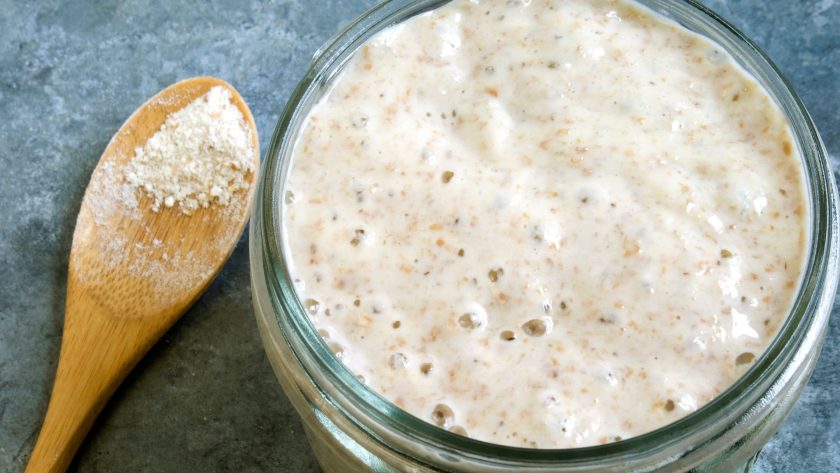
Loaf 1: Classic Country Sourdough Boule (Sunday to Monday)
This is your anchor loaf: blistered crust, open but sliceable crumb, and a mild tang. A splash of whole wheat adds flavor without making the dough harder to handle. Nail this one and every other loaf this week feels easier.
| Ingredient | Amount |
|---|---|
| Bread flour | 450 g |
| Whole wheat flour | 50 g |
| Water, warm (about 30°C / 86°F) | 330 g, plus 20 g later |
| Ripe starter | 100 g |
| Fine sea salt | 10 g |
Sunday: mix, fold, and shape
- 8:30 am, mix. Stir both flours with 330 g water until no dry flour remains. Cover and rest 45 minutes.
- 9:15 am, add starter. Dimple 100 g starter into the dough, then pinch and fold until it’s fully mixed in, about 2 minutes. Rest 30 minutes.
- 9:45 am, add salt. Sprinkle on the salt and the last 20 g water. Squeeze and fold until the water disappears and the dough feels smooth again.
- 10:15 to 11:45 am, stretch and fold. Every 30 minutes, do one set: with wet hands, lift one side of the dough, stretch it up, and fold it over. Turn the bowl and repeat 4 times. Four sets total.
- Noon to about 2 pm, let it rise. Leave the dough alone until it has grown 50 to 75% with a domed, bubbly top.
- Pre-shape. Tip it onto an unfloured counter, use a bench scraper to tuck it into a loose round, and rest 20 to 30 minutes.
- Shape and chill. Lightly flour the top, flip it, and fold it into a tight ball. Place it seam-side up in a banneton dusted with rice flour. Cover and refrigerate 12 to 18 hours.
Monday: bake
- Put the Dutch oven with its lid in the oven and preheat to 250°C / 480°F for 45 minutes.
- Turn the cold dough onto parchment and score one confident slash about 1 cm (1/2 in) deep.
- Lower it into the pot using the parchment. Bake covered for 20 minutes.
- Remove the lid, drop the heat to 230°C / 450°F, and bake 20 to 25 minutes more, until deep brown. The center should read 96°C / 205°F.
- Cool on a rack for at least 1 hour before slicing. The crumb is still setting inside.
Pro tip: Bake straight from the fridge. Cold dough holds its shape better and scores cleanly.
Loaf 2: Rosemary Sourdough Focaccia (Monday to Tuesday)
Focaccia is the most forgiving bread in the lineup. There’s no shaping and no scoring, and a long nap in the fridge builds big, glossy bubbles with almost zero effort. Expect a crisp, olive-oil-fried bottom and a soft, airy middle.
| Ingredient | Amount |
|---|---|
| Bread flour | 500 g |
| Water, warm | 370 g, plus 20 g later |
| Ripe starter | 100 g |
| Fine sea salt | 10 g |
| Olive oil (dough) | 15 g (1 tbsp) |
| Olive oil (pan and topping) | 75 g (about 5 tbsp) |
| Fresh rosemary | Leaves from 2 to 3 sprigs |
| Flaky salt | 1 tsp |
Monday: mix and chill
- 9 am, mix. Stir flour, 370 g water, and starter into a sticky, shaggy dough. Rest 30 minutes.
- 9:30 am, add salt and oil. Add the salt, the remaining 20 g water, and 1 tbsp olive oil. Squeeze it through until absorbed.
- 10 to 11 am, fold. Do 3 sets of coil folds, 30 minutes apart: lift the middle of the dough with wet hands and let the ends tuck under.
- 11 am to about 1 pm, rise. Let it sit until it’s about 50% bigger and bubbly at the edges.
- Pan it. Pour 3 tbsp olive oil into a 9 x 13 in pan. Tip the dough in and flip it once to coat. Cover and refrigerate 18 to 24 hours.
Tuesday: dimple and bake
- About 4 hours before dinner, take the pan out. After 1 to 2 hours, once the dough relaxes, gently nudge it into the corners.
- It’s ready when it’s puffy, jiggles when you shake the pan, and has bubbles on top.
- Preheat the oven to 230°C / 450°F with a rack in the lower third.
- Drizzle 2 tbsp olive oil on top. Oil your fingers and press straight down to the bottom of the pan all over. Scatter rosemary and flaky salt.
- Bake 25 to 30 minutes until golden on top and crisp underneath.
- Slide it onto a rack within 5 minutes so the bottom stays crunchy.
Easy topping swaps:
- Halved cherry tomatoes and sliced olives
- Thin red onion rings and grated parmesan
- Sliced garlic and chili flakes
- Halved grapes and a sprinkle of fennel seed
Loaf 3: Soft Sourdough Sandwich Bread (Wednesday)
Milk, honey, and butter turn the same starter into a tender, squishy loaf with a thin crust. It slices neatly, toasts evenly, and holds up to a stacked lunch. This one mixes and bakes on the same day, so start early.
| Ingredient | Amount |
|---|---|
| Bread flour | 450 g |
| Whole milk, warmed to about 32°C / 90°F | 270 g |
| Ripe starter | 100 g |
| Honey | 30 g |
| Unsalted butter, very soft | 30 g |
| Fine sea salt | 9 g |
Wednesday: mix, rise, bake
- 8 am, mix and knead. Combine flour, milk, starter, honey, and salt. Knead 5 minutes, rest 10 minutes, then add the butter in small pieces. Knead 8 to 10 minutes more, until the dough is smooth, stretchy, and barely tacky. (A stand mixer on medium-low does this in about 8 minutes.)
- 8:30 am to about 1:30 pm, rise. Cover and leave it somewhere warm, around 26°C / 79°F, until it has grown about 75%. An oven with only the light on works well. Butter and sugar slow sourdough down, so give it the full time.
- Shape. Pat the dough into a rectangle about 23 x 30 cm (9 x 12 in). Roll it up tightly from the short side, pinch the seam closed, and set it seam-down in a buttered 9 x 5 in loaf pan.
- Proof, 3 to 4 hours. It’s ready when the dough domes about 2 cm (3/4 in) above the rim and springs back slowly when poked.
- Bake. Bake at 190°C / 375°F for 40 to 45 minutes, until golden and 90°C / 195°F in the center. Tent loosely with foil after 25 minutes if the top browns fast (the honey loves to color).
- Cool. Brush the top with melted butter for a soft crust. Cool 10 minutes in the pan, then at least 2 hours on a rack.
Workday version: Shape it Wednesday afternoon, cover the pan, and refrigerate overnight. Thursday morning, let it warm up for 1 to 2 hours until it crowns above the rim, then bake as above.
Loaf 4: Seeded Whole Wheat Sourdough (Thursday to Friday)
By Thursday your starter is in top form, so it’s time to bring in more whole wheat. This loaf is nutty, a little sweet, and packed with crunch. A seed soaker keeps the seeds from stealing moisture, so the crumb stays soft for days.
| Ingredient | Amount |
|---|---|
| Bread flour | 300 g |
| Whole wheat flour | 200 g |
| Water, warm | 350 g, plus 20 g later |
| Ripe starter | 100 g |
| Fine sea salt | 11 g |
| Seed soaker: 40 g sunflower, 30 g pumpkin, 30 g flax, 20 g sesame | 120 g seeds + 120 g boiling water |
| Rolled oats or extra seeds for coating | About 3 tbsp |
Wednesday night: make the soaker
When you feed your starter, toast the seeds in a dry pan for 3 to 4 minutes until fragrant. Pour 120 g boiling water over them, cover, and leave on the counter overnight. By morning, the flax will have turned the mix pleasantly gooey.
Thursday: mix, fold, and shape
- 8:30 am, mix. Stir both flours with 350 g water. Rest 45 minutes. Whole wheat loves this extra soak time.
- 9:15 am, add starter. Pinch and fold it in until even.
- 9:45 am, add salt. Add salt and the last 20 g water, and squeeze until absorbed.
- 10:15 am, first fold. Do one set of stretch and folds.
- 10:45 am, add the soaker. Spread it over the dough and fold it in. It will feel slippery for a minute. Keep folding and it comes together.
- 11:15 and 11:45 am, two more folds. Then let the dough rest.
- Until about 1:30 pm, rise. Whole wheat ferments faster, so stop at about 50% growth.
- Shape and chill. Pre-shape, rest 20 minutes, then shape into a tight oval. Roll the top on a damp towel, then press it into the oats or seeds. Place it seam-side up in a floured banneton and refrigerate 12 to 16 hours.
Friday: bake
- Preheat the Dutch oven at 250°C / 480°F for 45 minutes.
- Score and bake covered for 20 minutes.
- Uncover, reduce to 230°C / 450°F, and bake 25 to 30 minutes, until it reaches 98°C / 208°F inside.
- Cool at least 2 hours. Whole grain and seeds need extra time to set, or the slices turn gummy.
No Dutch oven? Shape it into a log and bake it in a greased 9 x 5 in loaf pan at 220°C / 425°F for 45 to 50 minutes.
Loaf 5: Cinnamon Raisin Swirl Sourdough (Friday to Saturday)
You’ve earned a treat. This lightly sweet loaf hides a cinnamon spiral inside and bakes in a loaf pan, so it slices cleanly for toast and makes outstanding French toast. The dough is a bit stiffer than the others, which keeps the swirl tight.
| Ingredient | Amount |
|---|---|
| Bread flour | 400 g |
| Whole wheat flour | 50 g |
| Water, warm | 260 g, plus 20 g later |
| Ripe starter | 100 g |
| Granulated sugar | 15 g |
| Fine sea salt | 9 g |
| Raisins | 100 g |
| Filling: brown sugar + ground cinnamon | 50 g + 2 tsp |
Friday: mix, fold, shape, chill
- 8:30 am, mix. Stir flours, sugar, and 260 g water together. Rest 45 minutes. Meanwhile, cover the raisins with hot water for 15 minutes, then drain and pat them dry.
- 9:15 am, add starter. Pinch and fold until even.
- 9:45 am, add salt. Add salt and the last 20 g water, and squeeze until absorbed.
- 10:15 am to 11:45 am, fold. Do 4 sets of stretch and folds, 30 minutes apart. Scatter the raisins over the dough before the second set and fold them in.
- Until about 2 pm, rise. Wait for 50 to 75% growth and a bubbly, domed top.
- Roll it out. On a lightly floured counter, gently press and roll the dough into a rectangle about 23 x 35 cm (9 x 14 in).
- Fill it. Mist or brush the surface lightly with water. Mix the brown sugar and cinnamon and sprinkle it evenly, leaving a 2 cm (3/4 in) bare strip along the far short edge.
- Roll and pan. Roll it up tightly from the near short edge and pinch the seam shut. Tuck any raisins poking out on top back inside, since exposed ones burn. Set it seam-down in a greased 9 x 5 in loaf pan.
- Chill. Cover and refrigerate 10 to 14 hours.
Saturday: bake
- Leave the pan on the counter 1 to 3 hours, until the dough domes 1 to 2 cm (1/2 to 3/4 in) above the rim.
- Bake at 200°C / 400°F for 45 to 50 minutes, tenting with foil after 25 minutes. It’s done at 93°C / 200°F inside.
- Cool in the pan for 10 minutes, then at least 2 hours on a rack.
Why water and not butter in the swirl? Butter creates a slick layer that separates as the loaf bakes, leaving a gap under the crust. A light mist of water glues the spiral together.
Quick Fixes for Common Sourdough Problems You Might Encounter
Most sourdough hiccups come down to timing and temperature. Find your symptom, then adjust the next loaf.
| What you see | Likely cause | Fix for next time |
|---|---|---|
| Starter isn’t doubling by morning | Kitchen too cool or starter still sluggish | Use 20 g starter per feed, warmer water, or a warm spot like the oven with the light on |
| Starter peaked and collapsed overnight | Kitchen too warm | Drop to 12 g starter per feed or feed later in the evening |
| Dense, tight crumb with a few big holes | Under-fermented in bulk | Let the dough rise longer, until it’s 50 to 75% bigger and jiggly |
| Flat loaf that spreads out | Over-fermented or loosely shaped | Shorten bulk by 30 to 60 minutes and shape with more tension |
| Gummy slices | Cut too early or underbaked | Bake to the target temperature and cool for the full time |
| Very sour flavor | Long, warm fermentation | Shorten the fridge time or use a younger starter (just peaked) |
| Pale crust | Oven or pot not hot enough | Preheat the Dutch oven a full 45 minutes and bake a few minutes longer uncovered |
| Loaf sticks in the banneton | Not enough flour in the basket | Dust with rice flour, which doesn’t absorb moisture like wheat flour |
| Gap under the cinnamon swirl | Filling too wet or rolled loosely | Use only a light mist of water and roll tighter |
| Focaccia bottom is soft | Left sitting in the pan | Move it to a rack within 5 minutes of baking |
More Sourdough Recipes to Try
Frequently Asked Questions
Can one sourdough starter make different types of bread?
Yes. The starter is just the leavening. Flour choice, hydration, and add-ins like milk, butter, seeds, or raisins are what make each loaf different. The same 100 g of starter works for lean crusty loaves, soft sandwich bread, and sweet breads.
How much starter do I need to bake every day?
For this plan, 100 g a day. Feeding 15 g starter with 60 g flour and 60 g water each night gives you about 135 g by morning, which covers the dough plus 15 g to keep going.
Do I need to feed my starter every day if I bake all week?
Yes, if it stays on the counter. A daily feed keeps it active and predictable. If you skip baking for a few days, feed it and move it to the fridge, then give it one or two room-temperature feeds before you bake again.
Can I use all-purpose flour instead of bread flour?
You can. All-purpose flour has less protein, so cut the water in each recipe by about 15 to 20 g and expect a slightly softer, less open crumb. It works especially well in the focaccia and sandwich loaf.
What if my kitchen is cold?
Everything slows down. Use warmer water (about 30°C / 86°F), proof in the oven with only the light on, and add 1 to 3 hours to bulk fermentation. Use the temperature chart above as your guide.
How do I store a week’s worth of sourdough?
Keep the current loaf cut-side down on a board or in a bread box for 2 to 3 days. Slice and freeze anything you won’t finish, then toast slices straight from frozen. Skip the fridge, since it makes bread go stale faster.
Can I bake two loaves on the same day instead?
Absolutely. Double the nightly feed (30 g starter, 120 g flour, 120 g water) and you’ll have enough for two doughs. Pair loaves with matching schedules, like the country boule and seeded whole wheat, which both rest overnight in the fridge.
What can I do with the leftover starter discard?
Stir it into pancake or waffle batter, crackers, flatbreads, or banana bread. You can collect discard in a jar in the fridge for up to a week.