
Last updated on February 19th, 2026
Cold proofing is one of the most powerful techniques in sourdough baking, but the timing can feel confusing. Let’s break down together exactly how long to cold proof based on your specific dough, fridge, and schedule, plus how to read your dough’s cues so you never have to guess again.
The Answer
Cold proof sourdough for 8 to 48 hours, with 12 to 24 hours being the sweet spot for most bakers.
What Is Cold Proofing?
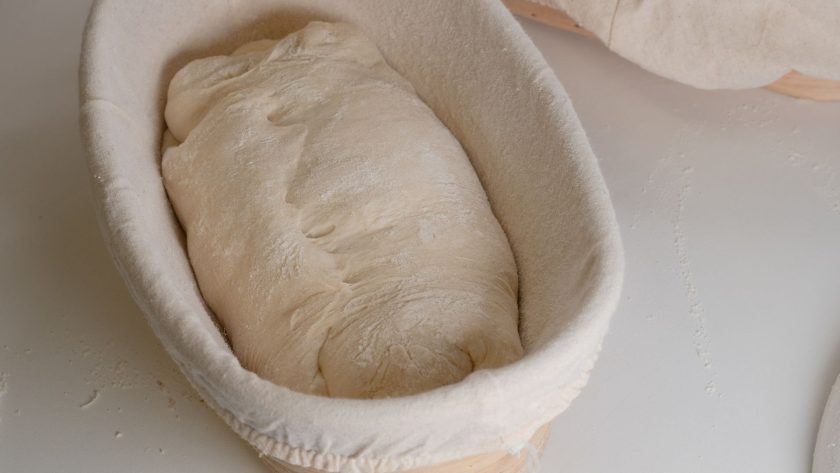
Cold proofing means placing your shaped sourdough dough in the refrigerator for its final rise, rather than proofing at room temperature. The cold slows yeast activity dramatically while allowing bacteria to keep working, which builds flavor over time.
| Environment | Temperature | Proofing Time |
|---|---|---|
| Room temperature | 75 to 82°F | 1.5 to 3 hours |
| Refrigerator (cold proof) | 38 to 40°F | 8 to 48 hours |
Note that your dough does not simply pause in the fridge. It takes roughly 8 hours just to cool down from room temperature, and fermentation continues actively throughout that cooling window.
Related: Rescue Overproofed Sourdough
Why Cold Proof Sourdough?
Cold proofing is not just a scheduling convenience. It produces a noticeably better loaf in several ways.
During a long cold proof, lactobacilli bacteria break down starches and produce two key acids:
- Lactic acid creates a smooth, creamy, yogurt-like flavor
- Acetic acid creates sharper, more pronounced tang
Cold temperatures and lower hydration favor acetic acid production. Warmer temperatures and higher hydration favor lactic acid.
Benefits of cold proofing at a glance:
| Benefit | Why It Happens |
|---|---|
| Deeper, more complex flavor | Extended bacterial fermentation produces more acid |
| Better crust and crumb | Gluten has more time to develop and strengthen |
| Blistered crust texture | Slower fermentation improves surface structure |
| Easier scoring | Surface dries out slightly, creating a thin skin |
| Longer shelf life | Higher acidity slows staling |
| Lower risk of overproofing | Cold slows fermentation significantly |
| Schedule flexibility | Dough holds in the fridge for up to 48 hours |
How Long to Cold Proof Sourdough
Most doughs fall somewhere in this range:
| Cold Proof Duration | What to Expect |
|---|---|
| 6 to 8 hours | Mild flavor improvement over room temperature proofing |
| 8 to 16 hours | Standard overnight proof, great balance of flavor and rise |
| 24 hours | More developed tang, still good structure |
| 36 to 48 hours | Stronger sour flavor, slightly less rise |
| 48+ hours | Risk of overproofing increases significantly |
The 12 to 24 hour range is the most reliable starting point for most.
What Can Affect Cold Proof Timing
Your ideal cold proof time is not one-size-fits-all. These four variables have the biggest impact:
1. Dough Hydration
Higher hydration doughs (75 to 80%) tolerate longer cold proofs well because the extra water gives bacteria more to work with and the looser structure handles extended fermentation. Lower hydration doughs (65 to 70%) tend to max out around 24 hours.
2. Starter Strength
A very active starter at peak activity will push fermentation faster, even in the cold. Recipes using a smaller amount of starter with a shorter bulk ferment can generally handle a longer cold proof without issue.
3. Fridge Temperature
The colder your fridge, the slower the fermentation. Aim for 34 to 40°F. A fridge running closer to 34 to 36°F gives you more flexibility with timing. Avoid placing dough near the back where it can get too cold, or near the door where temperatures fluctuate.
4. Flour Type
Whole grain flours ferment faster than white flours because they contain more enzymes, nutrients, and bran that feed wild yeast and bacteria. High-protein bread flour builds a stronger gluten network that can better withstand longer fermentation without collapsing.
Related: Underproofed Sourdough
How to Tell When Cold Proofing Is Done
How to Tell When Cold Proofing Is Done
Rather than relying strictly on time, use these practical cues to judge readiness:
The Poke Test
Press one finger gently into the dough. Here is how to interpret what you feel:
| Reaction | What It Means |
|---|---|
| Springs back quickly and fully | Needs more time (underproofed) |
| Springs back slowly, leaves a slight indent | Ready to bake |
| Leaves a permanent crater, no spring | Overproofed |
Visual Cues
- The dough should look gently puffed, with roughly 50 to 75% volume increase from when it was shaped
- A slight skin on the surface is a good sign and makes scoring easier
- You should not see it doubled in size, as that signals overproofing
Smell
A ready dough smells tangy and slightly sweet. If it smells strongly alcoholic or overly sharp, fermentation has gone too far.
What Happens If You Overproof or Underproof? (If Timing Is Off)
Overproofed Dough
Overproofing can happen in the fridge, especially when bulk fermentation was already too far along.
Look for:
- Dough deflates or collapses when touched
- Loaf spreads sideways rather than rising up in the oven
- Gummy, dense crumb in the finished bread
- Aggressively sour flavor
Underproofed Dough
Underproofed dough has not had enough time to develop flavor or structure.
Signs include:
- Explosive, uneven oven spring that blows out the scoring
- Tight, dense crumb with very small uniform holes
- Gummy interior texture
- Bland, underdeveloped flavor
How to Adjust Cold Proofing for Your Schedule
One of the biggest advantages of cold proofing is flexibility. Here are practical approaches based on your timeline:
| Schedule | How to Make It Work |
|---|---|
| Overnight (10 to 16 hours) | Shape in the evening, bake the next morning. The most reliable schedule for home bakers. |
| 24 hours | Slightly shorter bulk ferment to avoid over-fermentation before the fridge. |
| 48 hours | Keep bulk fermentation on the shorter side. Many bakers prefer the results of this longer cold proof. |
| 6 to 8 hours (minimum) | Set your fridge to its coldest safe setting (34 to 36°F) to slow fermentation as much as possible. |
For the most consistent results, place your dough covered on a stable middle shelf away from the fridge door.
Cold Proofing Cheat Sheet
| Variable | Recommendation |
|---|---|
| Ideal cold proof duration | 12 to 24 hours |
| Acceptable range | 8 to 48 hours |
| Ideal fridge temperature | 34 to 40°F |
| Volume increase to look for | 50 to 75% |
| Poke test result when ready | Slow spring back, slight indent remains |
| Warning sign of overproofing | Strong alcohol smell, no spring back |
| Warning sign of underproofing | Immediate full spring back, no indent |
Your Path to Perfect Sourdough Starts Tonight
Cold proofing isn’t rocket science, really. The sweet spot is 12-24 hours in a fridge running 34-40°F, but you’ve got flexibility from 8 to 48 hours depending on hydration, starter strength, and desired flavor.
Trust the poke test, visual cues, and aroma over any timer.
Cold temps slow yeast while bacteria build that complex tang and open crumb you’re after. Start with an overnight proof, watch how your dough responds, and adjust from there.
FAQs – How Long to Cold Proof Sourdough
How long does sourdough cold proofing take?
Most sourdough cold proofs for 8 to 48 hours. The sweet spot for most home bakers is 12 to 24 hours.
How do you know when cold proofing is done?
Use the poke test and look for a 50 to 75% volume increase, a slightly dried surface, and a tangy aroma. These cues are more reliable than any specific time.
Can you cold proof sourdough too long?
Yes. Beyond 48 hours the dough risks exhausting its gluten structure, producing an overly sour loaf that does not rise well. The bulk fermentation stage has a big influence here as well.
Is cold proofing better than room temperature proofing?
For flavor, texture, and scheduling flexibility, yes. Cold proofing allows more complex acid development and gives you much more control over when you bake.




![[video] from the seed to the peasant bakery with nicolas supiot](https://www.mydailysourdoughbread.com/wp-content/uploads/2022/11/image-16-120x120.jpeg "[Video – Part 2] Entering Into Peasant Bakery 6")
