
Last updated on March 11th, 2026
When you need a little break from baking sourdough, you’ll need to remember that you’re in possession of an active starter. In order to temporarily place these live bacteria on snooze, your sourdough starter will have to be stored well to remain alive. Storage in a plastic container at room temperature is completely possible if you intend to bake bread every day. However, for those who wish to store their sourdough starter long-term, then here are some tips to guide you.
The Basics of Storing Your Starter
Sourdough starters can be stored three ways:
- refrigerated (up to 6 months)
- frozen (up to 3 months)
- dried (indefinitely)
Mature starters (8+ weeks old) handle storage best.
Feed your starter using a 1:2:2 ratio before storage, and always check for mold before reviving.
Short-term storage in the fridge requires minimal feeding, while long-term storage benefits from dehydration.
- ✓ Room temperature: 3-7 days max, feed every 12-24 hours
- ✓ Fridge storage: Up to 6 months, feed every 2 weeks
- ✓ Freezer storage: Up to 3 months, thaw slowly in fridge first
- ✓ Dried storage: Indefinitely when stored properly in airtight container
Notes to remember:
- ✓ Mature starter needed: At least 8 weeks old, doubles in 2-4 hours
- ✓ Revival time: 1-3 feedings depending on storage duration
- ✓ Hooch is normal: Alcoholic smell means hungry starter, not spoiled
Storage Guides
Ways to Store
| Method | Duration | Maintenance | Best For |
|---|---|---|---|
| Room Temperature | 3-7 days max | Feed every 12-24 hours | Daily bakers, active use |
| Refrigerator | Up to 6 months | Feed every 2 weeks | Regular bakers taking short breaks |
| Freezer | Up to 3 months | None during storage | Medium-term breaks |
| Dehydrated | Indefinite | None during storage | Long-term storage, sharing, backup |
Storage Container Options
| Container Type | Pros | Cons |
|---|---|---|
| Glass jar | Easy to see contents, non-reactive | Can break, heavier |
| Plastic container | Lightweight, won’t break | Can stain, may absorb odors |
| Stoneware crock | Traditional, stable temperature | Can’t see contents, expensive |
💡 Tip: Use loose lids or cover with cloth and rubber band. Starters need airflow but protection from contamination. Tight sealing can cause pressure buildup.
Guide to Reviving Your Starter
| Time in Fridge | Revival Method | Expected Timeline |
|---|---|---|
| Few days | Bring to room temperature | 2-4 hours to activate |
| Up to 2 weeks | Room temp + 1 feeding if needed | 4-8 hours total |
| 2+ weeks | Discard half + 1-2 feedings | 1-2 days |
| 6+ months | Mix hooch + multiple feedings | 3-5 days |
Signs Your Starter Is Ready Again
Active Starter Checklist
✓ Consistent bubbling throughout
✓ Doubles in size within 2-4 hours after feeding
✓ Passes the float test (spoonful floats in water)
✓ Has a domed top when at peak
✓ Pleasant, yeasty aroma (not overly sour or alcoholic)
Refrigerator Storage
How It Works
Cold temperatures (around 37°F/3°C) slow fermentation dramatically. The bacteria stay somewhat active while the yeast goes dormant, creating a slow-motion version of normal starter activity. You’ll still see some bubbling and rise, plus the formation of “hooch” – a liquid layer that smells alcoholic.
Benefits of Fridge Storage
- No daily feeding required
- Reduces waste from frequent discarding
- Develops tangier flavor over time
- Easy to maintain with minimal effort
- Allows stress-free vacations
Before You Refrigerate
Feed your starter using a 1:2:2 ratio: 25g starter + 50g flour + 50g water. This extra food helps sustain the culture during cold storage. Mix well, cover loosely, and refrigerate immediately – no need to wait for doubling.
⚠️ Important: Only refrigerate mature starters (8+ weeks old) that double consistently within 2-4 hours when fed at room temperature.
Maintenance Schedule
- Every 2 weeks: Remove from fridge, discard half, feed with fresh flour and water, return to fridge
- For extended storage: Repeat this process to keep your starter healthy
Freezer Storage
Two Freezing Methods
Whole Starter Method
- Feed your starter and wait for initial bubbling
- Transfer to freezer-safe container or double-bagged freezer bags
- Seal tightly to prevent freezer burn
- Freeze up to 3 months
Portion Method
- Make a large batch by feeding generously
- Divide into baking-sized portions using silicone molds
- Freeze portions in molds for several hours
- Pop out and store in freezer bags
Thawing Process
- Move from freezer to refrigerator for 24 hours
- Bring to room temperature
- Feed 2-3 times over 1-2 days until active
Dehydration Storage
Why Choose Dehydration?
- Indefinite storage when done properly
- No equipment needed beyond parchment paper
- Easy to share with friends
- Great backup method
- Both starter and discard can be dried
Step-by-Step Dehydration
- Line baking sheet with parchment paper
- Spread starter in thin, even layer (thinner = faster drying)
- Let air dry 2-3 days until completely brittle
- If top layer hardens first, peel and flip to dry other side
- Break into pieces and blend to powder (optional but recommended)
- Store in airtight container in pantry
Rehydration Process
- Mix 50g dried starter + 50g warm water
- Let rehydrate 24 hours
- Begin regular feeding schedule (50g flour + 50g water daily)
- Continue until bubbling and doubling consistently
- Usually takes 3-5 days for full revival
Room Temperature Storage
When to Keep Starter at Room Temperature
Room temperature storage works best for active bakers who use their starter at least once or twice per week. At 68-75°F, your starter stays fully active and ready to bake with minimal preparation time.
Feeding Schedule
- Daily baking: Feed once daily with 1:1:1 ratio (equal parts starter, flour, water)
- Regular baking: Feed every 12-24 hours to maintain peak activity
- Warm weather: May need feeding every 8-12 hours in temperatures above 80°F
Signs Your Room Temperature Starter Needs Attention
- Strong alcoholic smell (hooch formation)
- Liquid separation on top
- Deflated appearance after previously rising
- Takes longer than usual to double after feeding
Maximum Room Temperature Storage
Without regular feeding, room temperature starters typically survive 3-7 days before becoming overly acidic and sluggish. The exact timeframe depends on temperature, humidity, and your starter’s maturity level.
⚠️ Important: Room temperature storage beyond one week without feeding risks overwhelming the beneficial cultures with harmful bacteria, especially in warm conditions.
Benefits of Room Temperature Storage
- Starter stays at peak activity
- No warm-up time needed before baking
- Faster fermentation for bread dough
- Easy to monitor starter health
- Develops mild, balanced flavor
Drawbacks of Room Temperature Storage
- Requires daily attention
- Creates more discard waste
- Uses more flour over time
- Not suitable for vacations or breaks
- Risk of spoilage if forgotten
What is a Sourdough Starter?
Essentially, a sourdough starter is a cultivated community of lactic acid bacteria and wild yeast. Both yeast and bacteria feed on the carbohydrates in the flour once hydrated with water and allowed to ferment. You can make sourdough starter using any type of flour you like, whether it is rye flour, whole wheat flour, or all purpose flour.
As long as your starter is fed fresh flour regularly, there should be no problems at all!
Can You Use Refrigerated Starter Immediately?
Logically it is not advised to use your starter straight from the fridge, because you’ll be working with an inactive starter. This can cause many bread baking problems, which is why it’ll be more favorable to wake your starter before a bake. The way you do this will depend on how long your starter had been in the fridge, and how it responds when awoken.
- Less than 2 weeks
- More than 2 weeks
- 6 months+
Less than 2 weeks
If you fed your starter in the ration 1:2:2 before placing it into the fridge, remaining in the fridge for less than 2 weeks, then you won’t require much effort in awakening your starter.
If it’s only been a few days since your starter has been refrigerated, then place the jar on your kitchen counter, allowing it to warm up. This method works because the yeast and bacteria will not have consumed all the food in your starter yet.
Bring your starter to room temperature, and check your starter for a rise. A rise is a starter ready for baking with. A starter that was refrigerated for 2 weeks would mean that you should discard half and feed it once more before baking.
More than 2 weeks
A starter that has been refrigerated for more than 2 weeks, will be sleepy, but shouldn’t require much effort in awakening.
Take it out of the fridge and remove 25g of he cold starter, placing it into a clean jar. Feed this with 50g of flour and 50g of water, watch it double, then repeat.
If you notice that it doesn’t double, then keep feeding your starter with fresh flour and water until it does.
Your starter is ready to bake with when it has doubled, bubbled, and has a slightly domed top.
6 months+
A starter that has been kept in the fridge for more than 6 months, will most likely be in bad shape.
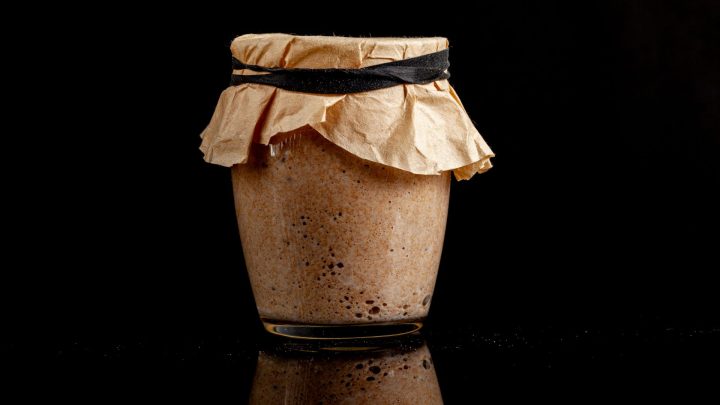
It may have developed a hooch which is a layer of liquid that forms on top of your starter, as an indication that an excess of alcohol has been produced, as a by-product of yeast fermentation. This usually happens when your sourdough starter hasn’t been fed for long periods.
As long as there’s no mold on your starter, then it can be revived simply by mixing it back into the starter, before discarding a small amount of starter, in time to feed it as you would normally.
What Happens if I Leave My Sourdough Starter in the Fridge for a Long Time?
Fortunately, your starter will survive for quite a while in the fridge, even if you take a vacation for a few months and forget about it!
It may develop hooch, and release a sour – almost alcoholic smell, which is just an indication of the sourdough starter being very hungry. You can revive it by discarding some and feeding it again.
Some people have even managed to revive a starter from the fridge after 2 years! As long as there’s no mould, there’s always a possibility that your starter is good to bake with!
In Summary: When to Use Each Method
- Daily baking: Room temperature storage with daily feeding
- Weekly baking: Refrigerator storage
- Monthly baking: Refrigerator storage with biweekly feeding
- Seasonal baking: Freezer or dehydration
- Long-term backup: Dehydration
- Sharing starter: Dehydration (easiest to mail)
What Can Go Wrong?
Hooch Formation
This gray or brown liquid layer is normal – it’s alcohol from fermentation. You can either stir it back in for extra tang or pour it off. Feed your starter more frequently to reduce hooch formation.
Mold vs. Normal Growth
- Normal: Hooch, slight color changes, alcohol smell
- Concerning: Fuzzy growths, green/black spots, putrid odors
If you see actual mold (fuzzy, colored growths), discard the entire starter and begin fresh.
Slow Revival
Some starters take longer to wake up. Keep feeding daily with consistent ratios. Temperature affects speed – warmer environments (75-80°F) encourage faster activity.
So, How to Store Starter?
Whether you choose to dehydrate, refrigerate, or freeze your sourdough starter, it all boils down to when you intend to bake again.
For longer vacation time, dehydrate your starter, as this will remain good indefinitely.
For weeks to months refrigerate or freeze your starter, then revive with fresh flour and water till its active and ready to bake with!
FAQs
How long can you keep sourdough starter in the fridge?
You can keep a refrigerated sourdough starter for 3 to 4 days at a time between feedings. You should aim to feed your sourdough starter at least twice a week for best results.
How to store sourdough starter if you aren’t using it?
You can store sourdough starter three ways depending on how long you’ll be away from baking. For short breaks (up to 6 months), feed it with a 1:2:2 ratio (starter:flour:water) and refrigerate – you’ll only need to feed it every 2 weeks. For longer storage, either freeze it for up to 3 months or dehydrate it by spreading it thin on parchment paper until completely dry, then store the pieces in an airtight container indefinitely. Just make sure your starter is mature (at least 8 weeks old and doubles within 2-4 hours when fed) before storing it any way other than at room temperature.
Does sourdough starter go bad if not refrigerated?
Sourdough starter won’t necessarily go “bad” at room temperature, but it will become very hungry and produce a lot of “hooch” (alcoholic-smelling liquid) if not fed regularly. At room temperature, active starters need feeding every 12-24 hours to stay healthy – without this, they’ll develop a strong sour smell and may separate, but they’re usually still revivable as long as there’s no mold growth. The main risks of leaving starter unfed at room temperature are that it will exhaust its food supply, become overly acidic, and potentially allow harmful bacteria to outcompete the beneficial cultures, though the acidic environment does provide some natural protection against spoilage.
How do you store sourdough starter long term?
If you wish to store your sourdough long term, then dry it. Spread your sourdough starter to dry until its completely brittle. Then break it into pieces, and store it in an airtight container.
Should I keep my sourdough starter in an airtight container?
While the surrounding temperature plays an important role to your sourdough starter, it does not need to be sealed in an airtight container. Though you should cover the starter with a lid, to prevent any mess from entering.
What should I store my sourdough starter in?
You can store your sourdough starter in a glass jar, plastic container, pint jar, or stoneware crock.
Related Articles:
 50+ Creative Sourdough Starter Name Ideas
![Easy recipes using sourdough starter [with step by step guide]](https://www.mydailysourdoughbread.com/wp-content/uploads/2025/05/10-Recipes-Using-Sourdough-Starter-Beyond-Basic-Bread-120x120.jpg "10 Recipes Using Sourdough Starter (Beyond Basic Bread!) 6") 10 Recipes Using Sourdough Starter (Beyond Basic Bread!)
10 Recipes Using Sourdough Starter (Beyond Basic Bread!)
 Sourdough Cinnamon Coffee Cake Recipe: 9 Steps to Irresistible Bakery-Style Results
 Strawberry Cinnamon Rolls Recipe: A Sweet Twist on a Classic Favorite
 Sourdough Cinnamon Banana Bread: Easy, Moist & Delicious Recipe
