Last updated on November 10th, 2026
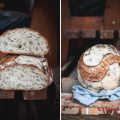
Prosciutto bread is the loaf you spot in the case at an old Italian bakery and wonder if you could pull off at home. You can. This prosciutto bread recipe makes a crusty ring loaf with prosciutto, Gruyere and fresh basil rolled through the middle, and you don’t need a stand mixer or any special gear.
Recipe at a Glance
| Yield | 1 large ring loaf, about 12 slices |
| Hands-on time | 35 minutes |
| Rising time | 1 hour 45 minutes to 2 hours 30 minutes |
| Bake time | 30 to 35 minutes at 400°F (205°C) |
| Total time | About 3½ hours, including cooling |
| Skill level | Beginner |
| Equipment | Large bowl, rolling pin, rimmed baking sheet, parchment |
What Is Prosciutto Bread?
a savory yeast bread filled with cured pork, cheese and a good amount of black pepper. Italian-American bakeries, especially in New York, have sold it for generations. Its roots go back to filled breads from southern Italy, like casatiello and tortano from Naples.
A lot of bakeries call it lard bread, and the two get mixed up all the time. They aren’t quite the same loaf.
Related: Sourdough Pizza Crust Recipe
Prosciutto Bread Ingredients
I’ve included grams for anyone with a kitchen scale. Measuring flour by weight is the easiest way to avoid a dry, dense loaf, since a scooped cup can hold 20 percent more than a spooned one.
For the dough
| Ingredient | US measure | Metric | Notes |
|---|---|---|---|
| Bread flour | 4 cups, spooned and leveled | 480 g | All-purpose works; the crumb will be a bit softer |
| Lukewarm water (100 to 110°F) | 1¼ cups, plus 1 to 2 tbsp if needed | 300 g | Warm to the touch, never hot |
| Active dry yeast | 2¼ tsp (1 packet) | 7 g | Instant yeast works too (see FAQs) |
| Sugar | 1 tsp | 4 g | Gets the yeast going; you won’t taste it |
| Fine sea salt or table salt | 1½ tsp | 9 g | Use 2¼ tsp if using Diamond Crystal kosher salt |
| Olive oil | 2 tbsp | 27 g | Plus a little for the bowl |
For the filling
| Ingredient | US measure | Metric | Notes |
|---|---|---|---|
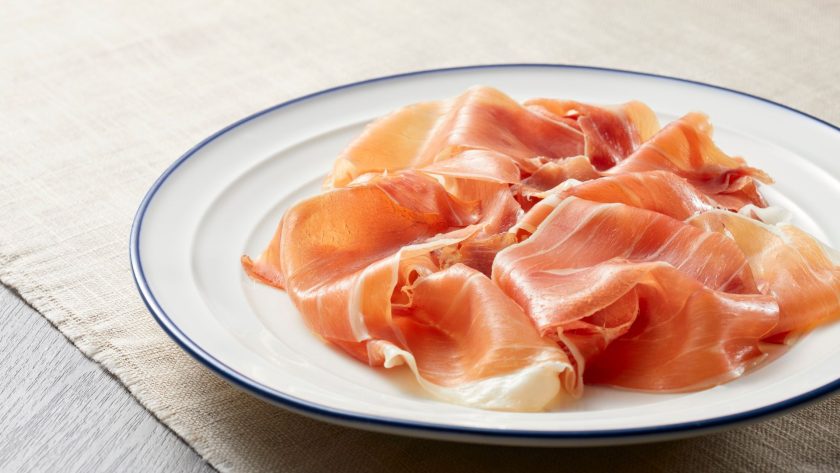
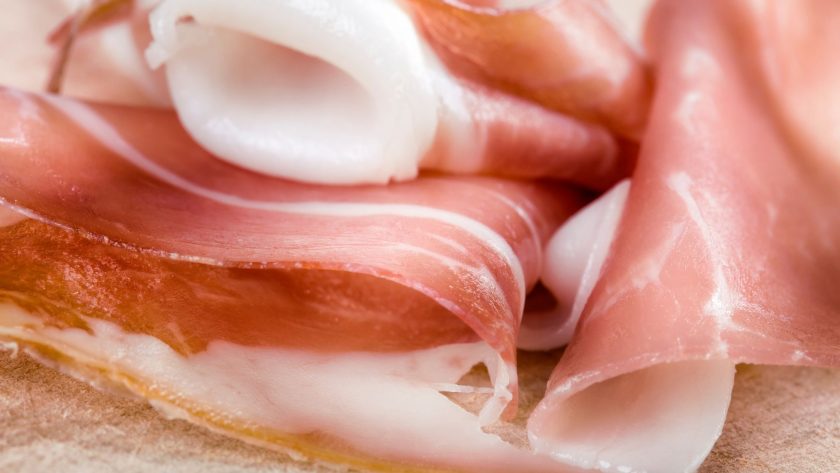
| Thinly sliced prosciutto | 6 oz | 170 g | Domestic or Prosciutto di Parma |
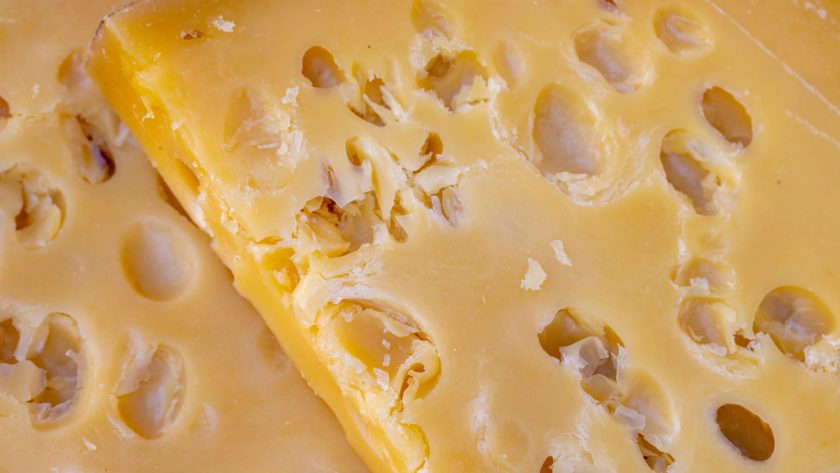
| Gruyere or aged provolone, shredded | 1 cup (4 oz) | 113 g | Shred it yourself so it melts smoothly |
| Fresh basil leaves | About 12 large leaves | 10 g | Tear any big ones |
| Coarse black pepper | 1 tsp | 2 g | Traditional in Italian-American meat breads |
For the topping (optional)
- 1 tbsp extra virgin olive oil for brushing
- 1 tbsp finely chopped fresh rosemary
- 2 tbsp finely grated Parmesan
- A few grinds of black pepper
You can also spread 1 tablespoon of whole-grain mustard over the dough before adding the filling. It adds a mild tang that balances the salty prosciutto.
Equipment
- Large mixing bowl
- Rolling pin
- Rimmed baking sheet lined with parchment
- Sharp knife or bread lame
- Small metal pan for steam (a cake pan or cast iron skillet)
- Instant-read thermometer, if you have one
How to Make Prosciutto Bread
Most of the time is spent waiting on the dough, so you can get on with your day in between.
| Stage | Time |
|---|---|
| Bloom yeast and mix | 15 min |
| Knead | 8 to 10 min |
| First rise | 1 to 1½ hours |
| Rest, roll and fill | 20 min |
| Second rise | 40 to 60 min |
| Bake | 30 to 35 min |
| Cool | At least 20 min |
1. Bloom the yeast
- Stir the sugar into the lukewarm water (100 to 110°F), then sprinkle the yeast over the top.
- Leave it for 5 to 10 minutes. It should look foamy. If nothing happens, the yeast is old or the water was too hot, so start again with a fresh packet.
2. Mix and knead the dough
- Whisk the flour and salt together in a large bowl.
- Pour in the yeast mixture and the olive oil. Stir with a wooden spoon until you have a rough, shaggy dough with no dry flour left. If it won’t come together, add water 1 tablespoon at a time.
- Tip the dough onto a lightly floured counter and knead for 8 to 10 minutes. It’s ready when it feels smooth, springs back when you poke it, and is only a little tacky.
- If it’s sticking to your hands badly, add flour 1 tablespoon at a time. Add as little as you can get away with, because extra flour is what makes the loaf heavy.
3. Let it rise
- Shape the dough into a ball, put it in a lightly oiled bowl and turn it once to coat.
- Cover and leave it somewhere warm (75 to 80°F) until doubled, 1 to 1½ hours.
- While it rises, take the cheese out of the fridge so it can warm up. Leave the prosciutto in the fridge. Cold slices peel apart without tearing.
4. Roll out and fill
- Press the air out of the dough gently. Cover it and let it sit on the counter for 10 minutes so the gluten relaxes and the dough stops shrinking back.
- Roll it into an 18 x 12-inch rectangle with a long side facing you. If it keeps pulling back, rest it 5 more minutes and try again.
- Spread the mustard over the dough now, if you’re using it.
- Lay the prosciutto over the dough in a single layer, overlapping the slices a little, and leave a 1-inch border bare on all sides. Tear up any thick clumps.
- Scatter the cheese, basil and black pepper evenly over the top.
5. Roll up and shape
- Starting with the long edge closest to you, roll the dough up firmly like a jelly roll. Keep it snug without stretching the dough, or it may split in the oven.
- Pinch the seam closed.
- Set the log seam-side down on the lined baking sheet. Bend it into a ring, tuck one end into the other and pinch them together. A ring fits on a standard half-sheet pan and bakes more evenly than a long log.
6. Second rise
- Cover loosely with a kitchen towel and let it rise for 40 to 60 minutes, until it looks puffy and about 1½ times bigger.
- To check, press a floured finger about ½ inch into the side. If the dent fills back in slowly, it’s ready. If it pops right back, give it another 10 minutes.
7. Heat the oven
- About 30 minutes before baking, put one rack in the middle of the oven and an empty metal pan on the bottom rack. Heat the oven to 400°F (205°C).
- Boil a kettle of water just before the bread goes in.
8. Top, score and bake
- Brush the loaf with olive oil.
- Use a sharp knife to cut 5 or 6 shallow diagonal slashes across the top, about ¼ inch deep. Deeper cuts expose the filling and it can burn.
- Sprinkle on the rosemary, Parmesan and pepper, if using.
- Put the bread on the middle rack. Carefully pour about 1 cup of boiling water into the hot pan underneath and close the door quickly. The steam keeps the crust soft for the first few minutes so the loaf can rise, then lets it bake up crisp.
- Bake for 30 to 35 minutes, until deep golden brown. The bottom should sound hollow when tapped, or the center should read 195 to 200°F. If the top is getting too dark, lay a piece of foil over it for the last 10 minutes.
9. Let it cool
Move the bread to a wire rack and wait at least 20 minutes before cutting. The inside is still finishing from the leftover heat, and slicing too soon gives you squashed, gummy slices.
Related: Pizza Rustica Recipe
Tips for a Crisp Crust and a Soft Center
- Put an oven thermometer inside your oven. A lot of home ovens run 25°F or more off, and a cool oven gives you a pale, soft crust.
- Don’t skip the steam. If you don’t have a spare pan, toss a handful of ice cubes into a preheated cast iron skillet instead.
- For a crunchier bottom, heat a pizza stone or an upside-down baking sheet on the middle rack and slide the parchment and loaf straight onto it.
- Watch the dough instead of the clock. Rising takes longer in a cold winter kitchen and goes faster in summer.
- Keep the oven door closed until the 25-minute mark. Opening it lets the heat and steam out.
- Spread the filling in a thin, even layer. Thick clumps leave gaps and raw-looking spots around them.
Related: How to Make Coppia Ferrarese
Prosciutto Bread Troubleshooting
| Problem | Likely cause | What to do next time |
|---|---|---|
| Dense, heavy loaf | Too much flour, or not enough rising | Weigh the flour and let the dough fully double |
| Flat loaf that spreads | Second rise went too long | Start checking with the finger test at 35 minutes |
| Gummy center | Underbaked, or sliced while hot | Bake to 195°F inside and cool 20 minutes or more |
| Gap between dough and filling | Rolled too loosely, or clumpy filling | Roll firmly and lay the prosciutto in an even layer |
| Split along the side | Dough stretched while rolling, or slashes too shallow | Roll snug without pulling; cut slashes ¼ inch deep |
| Pale, soft crust | Oven too cool, or no steam | Check the temperature and use the steam pan |
| Burnt bits of prosciutto on top | Slashes cut too deep | Keep cuts shallow and cover with foil if needed |
| Yeast didn’t foam | Water too hot, or old yeast | Keep water at 100 to 110°F and check the date on the packet |
| Dough shrinks back when rolling | Gluten hasn’t relaxed yet | Let it rest 5 to 10 more minutes |
Swaps and Flavor Variations
Once you’ve made the basic loaf, it’s easy to play with. Keep the total filling at roughly the same weight (about 10 ounces of meat and cheese combined) and the dough will roll up fine.
| Swap | Use instead | How it changes the loaf |
|---|---|---|
| Meat | Speck | Smokier, a little firmer |
| Meat | Diced pancetta, about ½-inch pieces | Little pockets of rendered fat; cut the pieces bigger than you think, they shrink |
| Meat | Thin-sliced deli ham | Milder and cheaper |
| Cheese | Aged white cheddar | Sharper, tangier |
| Cheese | Smoked provolone | Smoky, stretchy, good with ham |
| Cheese | ½-inch cubes of Fontina or Asiago | Melty pockets instead of an even layer |
| Herbs | Fresh thyme or sage, or 1 tsp dried oregano | Earthier; rub dried herbs between your palms first |
| Extra | Whole-grain mustard spread on the dough | Mild tang that cuts the saltiness |
If you’re cubing cheese, press the cubes lightly into the dough so they don’t roll around as you shape it.
How to Serve Prosciutto Bread
It tastes best slightly warm. If it’s been sitting out, give the whole loaf 10 minutes in a 300°F oven before you slice.
- As part of an antipasto board with marinated artichokes, olives and a drizzle of aged balsamic
- Toasted for breakfast with a poached egg and a handful of arugula
- Split and made into a sandwich with fresh mozzarella and sliced tomato
- Cut into bite-size pieces for a party, next to a bowl of olives and something bubbly
- With soup, especially minestrone or a simple tomato soup
For wine, a crisp white like Verdicchio or a medium red like Sangiovese both go well with the salty prosciutto and nutty cheese. Prosecco works for brunch.
How to Store, Freeze and Reheat Prosciutto Bread
Because the filling is meat and cheese, treat leftovers like you would a sandwich. Leave it out on the counter the day you bake it, then move it to the fridge.
| Where | How to store it | How long it keeps | How to reheat |
|---|---|---|---|
| Counter | Cut side down on a board, loosely covered with a towel | Same day | Not needed, or 5 min at 350°F |
| Fridge | Wrapped in foil or in a zip-top bag | Up to 4 days | Wrap in foil, 10 to 15 min at 350°F; unwrap for the last 3 min to crisp |
| Freezer | Sliced, in a freezer bag with the air pressed out | Up to 3 months | Straight from frozen, 8 to 10 min at 350°F on a sheet pan |
Skip the microwave. It turns the crust chewy and the prosciutto leathery. A toaster oven does a good job with single slices.
Related: Easy Sourdough Ciabatta Bread Recipe
Perfect Prosciutto Bread: Your New Favorite Recipe
This versatile Italian bread combines salty prosciutto, nutty cheese, and fresh herbs in a golden crust, delivering exceptional flavor in every slice. Serve it for antipasti, sandwiches, or straight from the oven. Store at room temperature in an airtight container for 2-3 days. While similar to traditional lard bread, this central Italian recipe specifically showcases prosciutto, unlike Rome’s pancetta-based ciccola bread. Ready to create your perfect loaf? Let’s get baking!
FAQs – Prosciutto Bread Recipe
Is prosciutto bread the same as lard bread?
They’re close relatives, and some bakeries use the names for the same loaf. Traditional lard bread is made with lard in the dough and has diced cured meat mixed through it. This version uses olive oil and rolls whole slices of prosciutto and cheese into a swirl.
Do you have to refrigerate prosciutto bread?
It’s fine on the counter the day you bake it. After that, wrap it and keep it in the fridge for up to 4 days, since it has meat and cheese inside. Warm it in the oven before serving and the crust will crisp back up.
Where does prosciutto bread come from?
It grew up in Italian-American bakeries, especially in New York, where bakers used cured meat scraps and cheese to make a loaf hearty enough to be a meal. Its ancestors are southern Italian Easter breads like casatiello from Naples, which is packed with salami, cheese and black pepper.
Can I use instant yeast instead of active dry?
Yes. Use the same amount (2¼ teaspoons) and mix it straight into the flour. Skip the blooming step and add the water, sugar and oil together. The first rise may go 10 to 15 minutes faster.
Can I freeze prosciutto bread?
Yes. Slice it first, then freeze the slices in a bag with the air pressed out for up to 3 months. Reheat them straight from the freezer at 350°F for 8 to 10 minutes.
Why is my prosciutto bread dense?
Usually it’s too much flour or not enough rising time. Weigh your flour if you can, and let the dough fully double on the first rise. A cold kitchen can easily add 30 minutes or more.
Can I make the dough ahead of time?
Yes. After kneading, put the dough in an oiled, covered bowl and refrigerate it for up to 24 hours. Let it sit at room temperature for about an hour before you roll it out, then carry on with step 4.
Can I use all-purpose flour?
You can. The loaf will be a little softer and less chewy. You may need 1 to 2 tablespoons less water, so add the last bit slowly.