Last updated on October 22nd, 2025
Watching a loaf of Japanese milk bread emerge from the oven is pure magic. That golden-brown top, the way it springs back when you press it gently, and most importantly, that impossibly soft, pillowy interior that seems to defy the laws of bread physics. Now imagine taking that beloved texture and adding the complex, tangy flavor of sourdough. Yes, we’re doing this.
Japanese milk bread, or shokupan, has won hearts worldwide with its cloud-like texture and slight sweetness. It’s the bread that makes you question everything you thought you knew about sandwich bread. Meanwhile, sourdough brings depth, character, and that signature tang that makes toast infinitely more interesting. Combining them might seem ambitious, but the results are absolutely worth the effort.

What We’re Learning
Sourdough Japanese milk bread combines the soft, pillowy texture of shokupan with the complex flavor of natural fermentation.
Using tangzhong (a cooked flour paste) and active sourdough starter, this recipe creates an incredibly tender loaf with a subtle tang that stays fresh for days.
The process takes 8-12 hours total (mostly hands-off fermentation time) and requires an active sourdough starter, bread flour, milk, butter, egg, and sugar.
The result is a fine-crumbed, feathery bread ideal for toast and sandwiches.
Why Make This Bread
Traditional Japanese milk bread gets its distinctive texture from a technique called tangzhong, which is essentially a cooked flour paste that helps the bread retain moisture.
This same technique works beautifully with sourdough, creating a loaf that stays soft for days while still offering that subtle sour note we love. The natural fermentation from your sourdough starter adds layers of flavor that complement, rather than overpower, the mild sweetness of milk bread.
The process does take longer than conventional milk bread, but not in a hands-on way.
Most of the time is just letting the starter do its thing, which means you can go about your day while the dough develops. If you’re already maintaining a sourdough starter, you’re halfway there.
Your Starter’s Role
Not all sourdough starters are created equal, and this matters more for enriched doughs like milk bread.
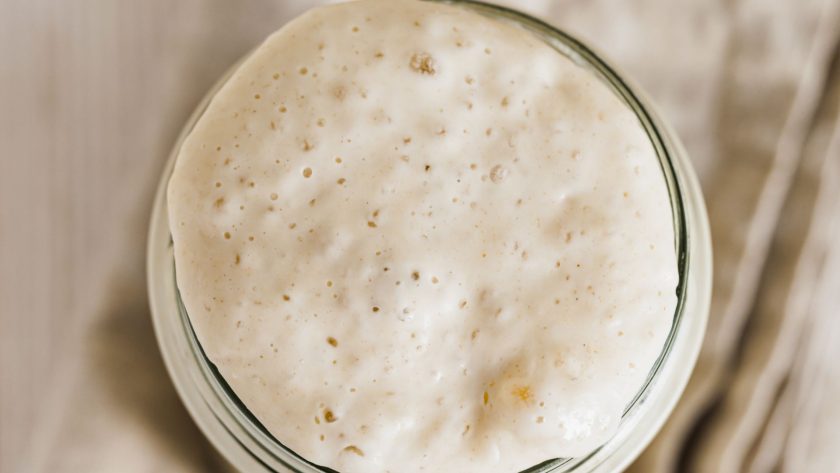
You want your starter active and bubbly, ideally at its peak when you mix your dough.
An underfed or sluggish starter will struggle with the weight of all that butter, milk, and eggs.
Feed your starter 4-6 hours before you plan to mix your dough, and make sure it’s doubled in size and showing plenty of activity.
The Recipe
Tangzhong
- 25g bread flour
- 125ml whole milk
Dough
- 150g active sourdough starter (100% hydration)
- 360g bread flour
- 50g sugar
- 6g salt
- 1 large egg (about 50g)
- 120ml whole milk (room temperature)
- 45g unsalted butter (softened)
- Tangzhong (all of it, cooled)
For the Pan
- Butter for greasing
This makes one 9×5 inch loaf
Let’s Make Sourdough Milk Bread
Make the Tangzhong
Start by whisking together the flour and milk in a small saucepan.
Cook over medium-low heat, stirring constantly, until the mixture thickens into a paste. You’ll know it’s ready when your whisk leaves visible trails in the mixture and it reaches about 65°C (150°F) if you’re using a thermometer. This usually takes 3-5 minutes.
Transfer it to a bowl and let it cool to room temperature. You can make this ahead and keep it in the fridge for a day if that fits your schedule better.
Bring the Dough Together
In a large bowl or the bowl of your stand mixer, combine the cooled tangzhong, active starter, bread flour, sugar, salt, egg, and milk. Mix until everything comes together into a shaggy dough.
This isn’t going to look pretty yet, and that’s fine. Let this rest for 30 minutes.
This autolyse period lets the flour hydrate fully and makes the dough easier to work with.
Add the Butter
After the rest, begin kneading the dough, either by hand or with a dough hook on medium-low speed.
Once the dough starts to become smooth (about 5 minutes), add the softened butter one tablespoon at a time. Wait until each addition is fully incorporated before adding more.
The dough will look like it’s falling apart when you add the butter, but trust the process.
Keep kneading until the dough becomes smooth, elastic, and slightly tacky. This can take 12-15 minutes by machine, longer by hand.
You’re looking for dough that passes the windowpane test – when you can stretch a small piece thin enough to see light through it without tearing.
First Rise
Place the dough in a lightly greased bowl, cover it with plastic wrap or a damp towel, and let it rise at room temperature. This is where sourdough timing differs from commercial yeast.
Depending on your room temperature and starter strength, this could take anywhere from 4-8 hours.
You want the dough to increase by about 50-75%, not necessarily double. It should look puffy and feel airy when you gently poke it.
Shape the Loaf
Once your first rise is complete, turn the dough out onto a lightly floured surface. Divide it into three or four equal pieces, depending on whether you want a three-strand braid effect or four rolls in your pan.
Roll each piece into a tight ball, cover, and let rest for 15 minutes. This relaxes the gluten and makes final shaping easier.
For each piece, flatten it into a rectangle, fold the sides in like a letter, then roll it up tightly from the short end. You should end up with three or four uniform logs. Place them seam-side down in a greased 9×5 inch loaf pan.
Final Proof
Cover the pan and let the dough proof until it rises about an inch above the rim of the pan. This is going to take another 3-4 hours at room temperature, or you can refrigerate it overnight for a slower proof.
The overnight method actually works really well here – just let the pan sit at room temperature for about an hour before baking the next morning.
Bake
Preheat your oven to 175°C (350°F).
If you want that classic shiny top, brush the loaf gently with milk or an egg wash (one egg beaten with a tablespoon of milk).
Bake for 30-35 minutes, until the top is deeply golden brown and the internal temperature reaches about 90°C (195°F). If the top is browning too quickly, tent it loosely with foil for the last 10 minutes.
Remove the bread from the oven and immediately turn it out of the pan onto a cooling rack. Brush the top with butter while it’s still hot for an extra-soft crust.
I know waiting is hard, but let it cool for at least an hour before slicing. The interior needs time to set, and cutting too early will give you gummy slices.
Milk Bread Tips
- The temperature of your ingredients matters more than you might think. Cold butter won’t incorporate smoothly, and cold milk can slow down your fermentation. Everything should be at room temperature before you start, except maybe the tangzhong if you made it ahead.
- Don’t skip the rest period after mixing and before adding butter. That 30 minutes makes the dough significantly easier to work with and helps develop gluten structure naturally.
- Your room temperature will affect timing dramatically. At 21°C (70°F), expect longer rise times. At 25°C (77°F), things will move faster. Watch the dough, not the clock.
What You’ll Get
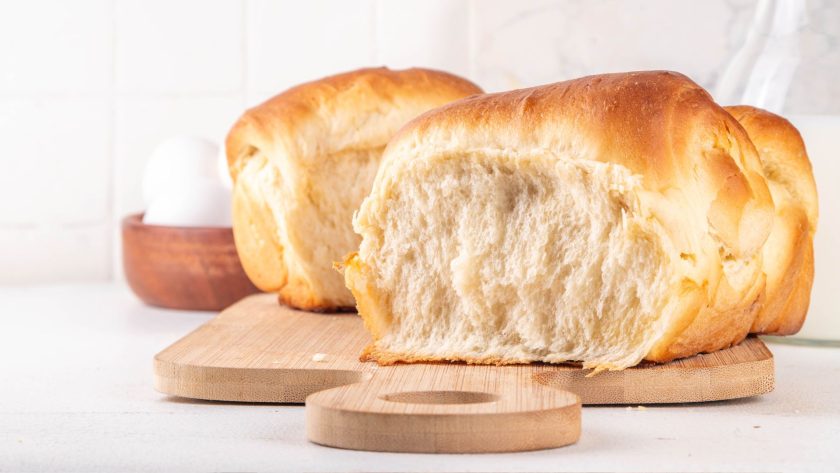
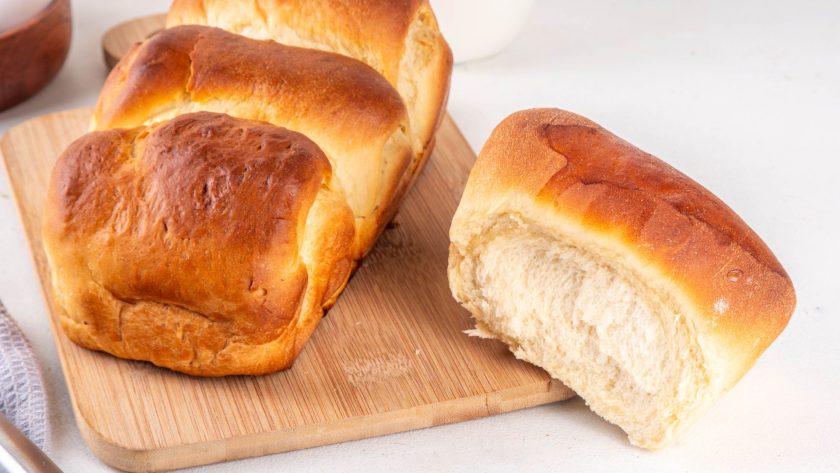
The finished loaf should pull apart in soft, feathery layers.
The crumb will be finer and tighter than regular sourdough, but more open and tender than conventional milk bread.
You’ll notice the subtle tang from the sourdough starter, balanced by the slight sweetness from the sugar and milk. It makes exceptional toast, amazing sandwiches, and frankly, it’s pretty dangerous to have around because you’ll keep tearing off “just one more piece.”
This bread stays soft at room temperature for 3-4 days when stored in a plastic bag or airtight container. You can also slice and freeze it for up to three months, toasting slices straight from the freezer.
Making sourdough Japanese milk bread does require some planning and patience, but not constant attention. Once you’ve made it a few times, the rhythm becomes familiar, and you’ll find yourself working it into your weekly routine.
You’ll create something genuinely special – soft, flavorful, and satisfying in a way that’s hard to describe until you’ve tried it yourself.
Print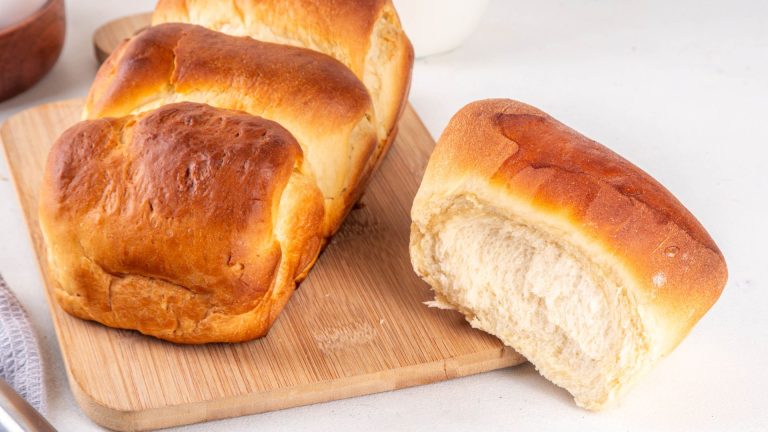
Sourdough Japanese Milk Bread Recipe
- Total Time: 7-12 hours (mostly hands-off)
- Yield: 1 loaf 1x
Ingredients
Tangzhong
- 25g bread flour
- 125ml whole milk
Dough
- 150g active sourdough starter (100% hydration)
- 360g bread flour
- 50g sugar
- 6g salt
- 1 large egg (50g)
- 120ml whole milk (room temperature)
- 45g unsalted butter (softened)
- All of the cooled tangzhong
- Butter for greasing pan
Instructions
- Make tangzhong: Whisk flour and milk in saucepan. Cook over medium-low heat, stirring constantly, until thickened (3-5 minutes). Cool to room temperature.
- Mix dough: Combine tangzhong, starter, flour, sugar, salt, egg, and milk. Mix until shaggy. Rest 30 minutes.
- Add butter: Knead dough until smooth (5 minutes), then add butter one tablespoon at a time. Continue kneading 12-15 minutes until smooth and elastic (passes windowpane test).
- First rise: Place in greased bowl, cover. Rise 4-8 hours at room temperature until 50-75% larger.
- Shape: Divide dough into 3-4 pieces. Rest 15 minutes. Roll each into rectangle, fold sides in, roll up tightly. Place seam-side down in greased 9×5 inch pan.
- Final proof: Cover and proof 3-4 hours until dough rises 1 inch above pan rim (or refrigerate overnight, then bring to room temperature 1 hour before baking).
- Bake: Preheat oven to 175°C (350°F). Optional: brush with egg wash. Bake 30-35 minutes until golden brown and internal temperature reaches 90°C (195°F). Tent with foil if browning too quickly.
- Cool: Remove from pan immediately. Brush top with butter. Cool 1 hour before slicing.
Notes
- Room temperature 3-4 days in airtight container, or freeze up to 3 months.
- Prep Time: 30 minutes (active)
- Cook Time: 30-35 minutes
- Category: bread