
Last updated on May 19th, 2026
With baking sourdough, it seems timing is everything! And timing your sourdough starter is one of the trickier parts of sourdough baking. Not because it’s complicated, but because there’s no universal clock. Use it too early and your dough won’t rise. Wait too long and the starter is past its prime and will give you a dense, over-acidic loaf.
So, once the sourdough starter gets fed and rises, we ask the million-dollar question: when’s the perfect moment to put that bubbly beast to work in your bread? How soon after feeding can you actually use your starter?
To determine how soon after feeding your sourdough starter is the right time to use it, you’re going to need some guidance, so read up and listen close!
Easy Answers
- Use your starter 4–12 hours after feeding, once it reaches peak activity.
- Peak signs: roughly doubled in size, domed top, bubbles throughout, passes the float test.
- Temperature is the biggest variable: warmer kitchens peak faster (4–6 hrs), cooler ones slower (8–12 hrs).
- A brand-new starter from scratch takes 7–14 days before it’s strong enough to bake with.
- Do not use an airtight lid at room temperature, as gas buildup can crack or blow off the jar.

When To Use Your Starter After Feeding
The general window is 4 to 12 hours after feeding, but the real answer is: use it at peak activity, not by the clock.
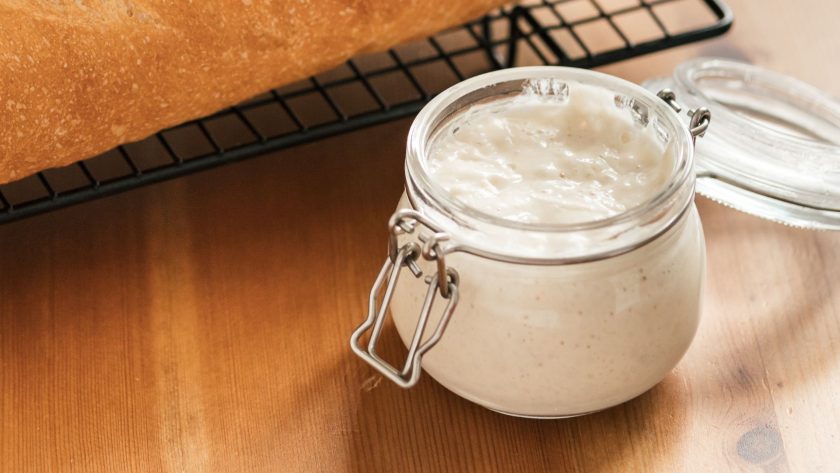
Peak activity is when yeast and bacteria are most productive: your starter has doubled, the top is domed, and bubbles are visible throughout.
| Time | What’s Happening |
|---|---|
| 0 hrs | Fed with fresh flour and water. Fermentation begins slowly. |
| 2-3 hrs | First small bubbles appear. Starter begins to rise. Not ready yet. |
| 4-8 hrs [PEAK] | Most starters reach peak at room temperature (70-75F / 21-24C). Best time to bake. |
| 8-12 hrs | Cooler kitchens may still be at or near peak. Check before using. |
| 12+ hrs | Starter begins to fall. More acidic, weaker rise. Feed again before using. |
Once the starter hits peak, it holds there for a couple of hours before it starts to fall, so you have a window, not just a moment. Using it slightly after peak (but before it collapses) is still fine and can actually add more acetic acid, which deepens flavor.
Signs Your Starter Is At Peak Activity
Check your starter every hour starting around hour 3 or 4. Here are the four things to look for:
- Volume doubled. It should be roughly twice the height it was right after feeding. Some starters triple, which is great.
- Domed or flat top. A slightly domed surface means it’s at or near peak. A sunken or concave top means it has already passed peak.
- Bubbles throughout. Bubbles on the surface and visible through the jar walls. Thicker starters show larger bubbles; thinner ones show smaller but more plentiful ones.
- Passes the float test. Drop a small spoonful into a glass of room-temperature water. If it floats, it’s aerated enough to leaven bread. If it sinks, give it more time.
The float test is a useful cross-check but not a hard rule. Some active starters don’t float due to hydration level. Use it alongside the visual checks, not instead of them.
What About Smell?
A ready starter smells pleasantly tangy, slightly yeasty, somewhere between yogurt and a bakery.
A sharp nail polish or strong vinegar smell means it’s overfed or past peak.
No smell at all usually means it hasn’t become active yet.ed once a week or less, storing the starter in the refrigerator between feedings.

How Temperature Changes Your Timeline
Temperature is the single biggest factor in how quickly your starter peaks. The same starter can peak in 4 hours on a warm day and take 10+ hours in a cold kitchen.
| Kitchen Temperature | Expected Time To Peak | Notes |
|---|---|---|
| Below 65F / 18C | 10-16+ hours | Very slow. Move to a warmer spot. |
| 65-70F / 18-21C | 8-12 hours | Slower but produces complex flavor. |
| 70-75F / 21-24C | 4-8 hours | Ideal range for most home bakers. |
| 75-85F / 24-29C | 2-5 hours | Faster activity. Monitor closely. |
| Above 85F / 29C | Under 2 hours | At risk of over-fermenting quickly. Cool it down. |
Tip: If your kitchen is cold, place the starter in your oven with just the light on (no heat). This usually holds around 75-78F / 24-26C, which is close to ideal. A proofing box works even better if you have one.
How To Learn Your Starter’s Exact Peak Time
Because every starter behaves a little differently, the best approach is to track it once so you know your own timeline going forward.
- Use a tall, straight-sided glass jar (clear is best so you can see through it).
- Feed your starter as usual. Mark the starting level with a rubber band or dry-erase marker.
- Note the time and place it somewhere at your usual baking temperature.
- Check every hour and mark the new height each time.
- The highest point before it starts to fall is your peak. Note how long it took.
Run this a few times at the same temperature and you’ll have a reliable number to work with. When baking, feed your starter that many hours before you need it.
How Long Does A New Starter Take Before It’s Ready?
This is one of the most common questions for new sourdough bakers, and the original article didn’t answer it. So here it is clearly.
Time from scratch to first loaf: 7-14 days
Most starters built from scratch are ready to raise a loaf somewhere in this window, though many bakers find their starter stronger and more reliable after 3-6 weeks of consistent feeding.
| Days | What You’ll See | Can You Bake? |
|---|---|---|
| Days 1-3 | A few bubbles, possible liquid separation, odd smells (this is normal) | No |
| Days 4-6 | More bubbles, some rise and fall activity, still unstable | No |
| Days 7-10 | Consistent doubling, yeasty smell, passes float test reliably | Possibly (test it) |
| Days 10-14 | Doubles within 4-8 hours of feeding, strong and predictable | Yes |
| 3-6 weeks | Fully mature, robust flavor development, very reliable | Yes, at full strength |
Note: Using a starter before day 7 usually results in bread that doesn’t rise well and has a gummy crumb. Wait until it’s consistently doubling within 4-8 hours of feeding for several days in a row before you rely on it for bread.

Storing Your Starter
| Situation | Lid Recommendation |
|---|---|
| Room temp, feeding daily | Loose lid, plastic wrap (flexible), or a paper towel secured with an elastic band |
| Refrigerator storage | Snug lid is fine. Fermentation slows dramatically and gas production is minimal. Make sure there’s headroom in the jar. |
| Long-term storage | Dry the starter flat on parchment paper, break into flakes, and store in an airtight bag or container |
Feeding Your Starter (The Basics)
For anyone newer to sourdough, here’s what feeding actually involves:
- Remove (discard) a portion of the existing starter, typically half.
- Add equal parts fresh flour and water by weight (a 1:1:1 ratio of starter, flour, water is standard).
- Mix thoroughly until no dry flour remains.
- Cover loosely and leave at room temperature until it peaks.
How often you feed depends on how you store it. A room-temperature starter needs feeding once or twice a day. A refrigerator-stored starter only needs feeding once a week. Take it out, bring it to room temperature, feed it, and let it peak before using.
Flour Choices All-purpose flour works well as a base. Adding a portion of whole wheat or rye flour speeds up fermentation because these flours carry more wild yeast. If your starter is sluggish, swap 20-30% of the flour for rye and see if it wakes up.
Common Starter Problems and What to Do
- Starter won’t rise. Feed more often (every 12 hours), try adding rye flour, check your water source (chlorinated tap water can slow things down, so use filtered), and move it to a warmer spot.
- Smells like nail polish remover. Your starter is hungry. This acetone smell means it’s over-fermented. Feed it more frequently and discard more before feeding.
- Liquid on top (hooch). Gray or brown liquid forming on top is just a sign your starter is hungry. Pour it off (or stir it in for more sourness) and feed right away.
- Smells like rotten eggs. Unwanted bacteria have taken hold. Discard most of the starter, keep a small amount (10-20g), and feed with fresh flour and water twice a day until it smells yeasty again.
- Too sour. Feed more frequently. The sourness comes from lactic acid that builds up when a starter sits too long between feedings.
- No smell at all (new starter). Normal in the first few days. Try adding a tablespoon of rye flour and placing it somewhere slightly warmer.
Tips so Sourdough Starter Success!
- Don’t put a new starter in the fridge too soon. Wait at least 3-4 weeks before refrigerating. Young starters stored in the fridge too early can take much longer to mature.
- Feed at the same time each day. Consistency helps the microbial balance in your starter stabilize, which makes its rise-and-fall cycle more predictable.
- Use a clear, straight-sided jar. Seeing the rise and fall clearly makes a real difference. Mark the post-feeding level each time.
- Use filtered or room-temperature water. Chlorine in tap water can inhibit fermentation. Leaving tap water out for 30 minutes before using it also works.
- Keep a backup. Spread a thin layer of active starter on parchment paper, let it dry completely (1-2 days), break it into flakes, and store in an airtight container. To revive, mix with flour and water and feed over several days.

Sourdough Starter Readiness
There’s no single magic hour to use your sourdough starter, but there is a clear window.
Feed it, watch it rise, and use it when it doubles and the top is domed. That’s the peak, and that’s where the best bread comes from.
Three things to remember:
- 4-12 hours after feeding is your working window (temperature determines where in that range)
- A brand-new starter needs 7-14 days of consistent feeding before it can raise a loaf
- Always use a loose lid at room temperature, never airtight
Once you’ve baked with a properly peaked starter a few times, you’ll start to recognize the rhythm of it without needing to check the clock at all.
FAQs
Can I use my starter right after feeding it?
Not ideally. The starter needs time to work through the fresh flour, producing gas and multiplying its yeast. Using it immediately after feeding means weak leavening power. Wait until it doubles and shows good bubble activity, typically 4-8 hours.
How long does sourdough starter need to sit after feeding?
You can give your sourdough starter frequent feedings, feeding it at regular intervals, whether it is after 8 hours or 12 hours, then allowing it to sit in an air tight container, under cooler temperatures, until it is time to be fed again.
Do you feed sourdough starter right before you use it?
You should wait at least 2 to 4 hours, or until the starter has reached its peak before using it in baking.
How long should I wait after feeding before using my starter?
At least 4 hours at average room temperature (70-75F). In a cooler kitchen, 8-12 hours is more realistic. Use the visual signs (doubling, bubbles, domed top) rather than a fixed time.
What if I missed the peak?
If your starter has already fallen, you can still use it, but expect a less predictable rise. For best results, give it another feed, let it peak again, and use it then. Alternatively, use the fallen starter in discard recipes (pancakes, waffles, crackers) where active leavening isn’t required.
How do I know my starter is strong enough for bread?
It should double consistently within 4-8 hours of feeding, on multiple days in a row. If it does this reliably, it’s ready to leaven bread. If it only doubles occasionally or takes longer, keep feeding daily and give it more time.
How many days does a sourdough starter take to be ready from scratch?
Most starters are usable by days 7-14. However, starters continue to strengthen for the first 3-6 weeks. If your starter isn’t ready at 14 days, keep feeding. Patience and consistency are the fix.
Related Articles:
 50+ Creative Sourdough Starter Name Ideas
![Easy recipes using sourdough starter [with step by step guide]](https://www.mydailysourdoughbread.com/wp-content/uploads/2025/05/10-Recipes-Using-Sourdough-Starter-Beyond-Basic-Bread-120x120.jpg "10 Recipes Using Sourdough Starter (Beyond Basic Bread!) 7") 10 Recipes Using Sourdough Starter (Beyond Basic Bread!)
10 Recipes Using Sourdough Starter (Beyond Basic Bread!)
 Sourdough Cinnamon Coffee Cake Recipe: 9 Steps to Irresistible Bakery-Style Results
 Strawberry Cinnamon Rolls Recipe: A Sweet Twist on a Classic Favorite
 Sourdough Cinnamon Banana Bread: Easy, Moist & Delicious Recipe

Hi.. is this a contradictory statement? I’m a bit confused.
Do you feed sourdough starter right before you use it?
You should wait at least 2 to 4 hours, or until the starter has reached its peak before using it in baking.
How long before I can use my sourdough starter?
Before making sourdough bread, you need to wait 4 to 12 hours after feeding before using the starter in your sourdough recipe.
Published July 12, 2022