Last updated on August 16th, 2026
You’ve shaped the perfect boule, and it’s ready for the oven. That satisfying moment when the blade glides through and creates a clean, dramatic ear? It all comes down to using the right sourdough scoring tools. The right lame gives you control, precision, and consistent results every single time you bake. Whether you’re just starting or looking to level up your decorative scoring game, there’s a tool built for exactly where you’re at. From beginner-friendly picks to pro-grade options, here’s everything needed to score with confidence and get loaves that look as good as they taste.
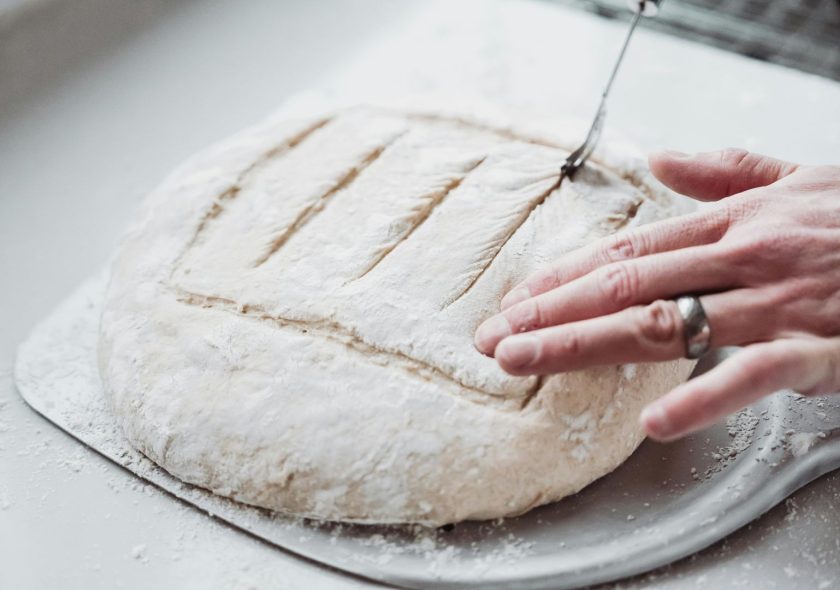
UFO Bread Lame
The UFO lame’s handle is round and flat, and it sits directly in your palm rather than being gripped like a pen or stick. This gives you a wider contact surface with the tool, which means better stability during the cut. When your dough is fully proofed, you have only a few seconds before it starts to relax, and a stable grip helps you make one clean, decisive slash instead of a shaky or dragging one.
Most UFO lames hold a standard double-edge razor blade, and replacing it takes seconds—usually a twist or pop-open mechanism, no tools required. Keep spare blades on hand, since a dull blade is the most common cause of dragging or uneven scores.
The stainless steel blade, combined with the stable grip, gives you precise control over both the depth and angle of your cut. This works well for a single functional slash to create an “ear,” and it also works for shallow, controlled cuts used in decorative patterns like wheat stalks or leaves.
Pros:
- The wide, flat handle improves grip stability and control
- Blade replacement is fast and doesn’t require tools
- Stainless steel construction is more durable than plastic or wood alternatives
- Suitable for both functional and decorative scoring
Cons:
- The round handle shape requires some adjustment if you’re used to a straight-stick lame
Wire Monkey Bread Lame
Wire Monkey is a small manufacturer based in Fairfield, Connecticut, and its standard lame uses a long-handled design rather than the round UFO shape. The handle is long enough to reach into a hot Dutch oven, and you can hold it either in a full grip for a confident slash or like a pencil for fine detail work. It comes with a magnetic wooden sheath that covers the blade between uses and can stick to any metal surface, including a refrigerator, so it stays within reach in the kitchen. The lame is built from solid American hardwood with stainless steel components, and it holds a standard double-edge razor blade.
- Long handle provides safe reach into a hot Dutch oven
- Magnetic sheath keeps the blade covered and easy to store
- Works for both a single functional slash and finer detail scoring
- Made in the USA from hardwood and stainless steel
- Costs more than mass-produced plastic lames
Saint Germain Bread Lame
Saint Germain Bakery makes a hand-crafted wood-handled lame with a stainless steel stick that holds a replaceable razor blade. It ships with 10 blades, and the company backs the blades with a lifetime replacement warranty. A leather cover is included for safe storage. The handle is shorter than some other wooden lames, which makes it easier to control in one hand, and reviewers note that it performs well on both loaves and baguettes at a lower price point than premium competitors.
- Comes with 10 blades and a lifetime warranty on replacements
- Leather cover included for safe, compact storage
- Shorter handle offers more direct control
- Lower price point than premium hand-crafted alternatives
- Not designed for the curved or angled cuts some decorative scoring requires
Wire Monkey UFO Lame
This is the original circular UFO design, invented and still made by Wire Monkey in Connecticut. It’s built from solid American black walnut or maple with stainless steel hardware, measures about 46mm in diameter, and includes an Astra platinum-coated double-edge blade. The blade sits between two discs that twist to tighten or release it, so it can be tucked away for safe storage or exposed for use. It’s ambidextrous and comes with a one-year warranty. Because Wire Monkey created this design, it’s often used as the reference point against which other UFO-style lames are compared.
- Original UFO design, made in the USA
- Solid hardwood construction with stainless steel hardware
- Blade tucks away safely between the two discs when not in use
- Backed by a one-year warranty
- Higher price than imitation UFO-style lames made overseas
Related: Sourdough Scoring Designs: How to Score Sourdough Bread + Best Tips
Mure & Peyrot Grignette
Mure & Peyrot is a French manufacturer that has produced industrial knives and blades since 1904 and has made bread scoring tools since 2005. Its grignettes, such as the Adour and Bordelaise models, use a locking mechanism that holds the blade securely and allows it to be set either straight or in a gentle curve, depending on the type of cut needed. The blades are sharp on all four corners, so a single blade can be rotated and reused before it needs replacing. A removable protective cover is included for safe storage between uses.
- Locking mechanism secures the blade and prevents wobble or accidental release
- Blade can be adjusted between straight and curved cuts
- Four-sided blades extend the life of each blade
- Trusted by professional bakeries in more than 70 countries
- Higher cost than basic lames aimed at home bakers
Wooden Handle Bread Lame
This is the traditional lame style: a straight wooden stick with a metal fitting at one end that holds a standard razor blade. It’s the classic design most home bakers picture when they hear the word “lame,” and it’s widely available at a range of price points. The straight handle requires a sweeping motion across the dough rather than the more controlled angle possible with curved or disc-style lames, but it’s straightforward to use once you’re used to the motion.
- Simple, familiar design that’s easy to learn
- Widely available at low to moderate price points
- Uses standard razor blades, which are cheap and easy to find
- Straight stick shape offers less angle control than curved or disc-style lames
- Fewer safety features than models with a locking or retractable blade
Simple Razor Blade Holder
This is the most minimal option: a small clip or holder that grips a bare double-edge razor blade with no dedicated handle, sheath, or safety cover. Some bakers, including professional ones, prefer this approach because it’s inexpensive and lets them use whatever blade they already have on hand. Double-edge blades cost only a few cents each when bought in bulk, and a bare blade can be sharper and more responsive than a blade mounted in a bulkier housing.
- Very low cost, especially when buying blades in bulk
- Minimal design gives direct feedback and control over the cut
- Compatible with widely available, inexpensive double-edge blades
- No protective cover, so the exposed blade requires careful handling
- Lacks the ergonomic grip and safety features of a full lame
Related: Fall Sourdough Scoring: A Complete Guide to Seasonal Designs
Buying Guide + Final Verdict
Choosing the right scoring tool depends on your experience level, budget, and the results you want.
Beginners should choose a comfortable, forgiving tool. A UFO-style lame or the Saint Germain lame are both easy to control and don’t require an awkward sweeping motion.
- Look for a wide, stable handle
- Choose a tool with a safety cover or retractable blade
- Avoid harder-to-control options like a bare razor blade holder
Advanced bakers benefit from more precision and durability. A Mure & Peyrot grignette or a Wire Monkey lame holds up to frequent use and gives consistent results.
- Choose a lame with a locking mechanism for stable blade positioning
- Consider a curved option for deeper cuts
- Reusable, multi-sided blades reduce long-term cost
Decorative scoring works best with a UFO-style disc design, since it can be held at any angle without a handle in the way.
- Choose a tool with minimal blade exposure for shallow, controlled cuts
Budget picks include a wooden handle lame or a simple razor blade holder.
- Buy double-edge blades in bulk to lower costs
- Expect less ergonomic support with these options
Pick Your Perfect Lame and Score Like a Pro
There’s no single “best” bread lame—it’s all about what works for you. Some tools are precise and comfortable, built to last, and made with care. Others keep things budget-friendly with replaceable blades and solid warranties. If you want pro-level results, look for a locking mechanism and durable, reusable blades. Prefer something classic and no-fuss? A simple wooden handle gets the job done. And if you just want the bare basics, a plain blade holder is cheap and effective. At the end of the day, every option helps you control how your dough opens up while baking.
FAQs – Best Sourdough Scoring Tools
What is the best way to score my sourdough bread?
Use a sharp lame held at a 30-45 degree angle for one confident, quick slash about half an inch deep. Score right before baking, not before proofing finishes. A shallow, hesitant cut causes dragging and uneven rising. Practice on a few loaves to find your angle, and always keep your blade sharp for the cleanest results.
What can I use instead of a scoring tool for sourdough?
A sharp paring knife, a box cutter, or a bare double-edge razor blade all work as substitutes. Serrated bread knives aren’t ideal since they tend to drag and tear the dough. Whatever you use, make sure it’s sharp and thin enough to make a clean, quick cut without deflating your loaf.
How to score sourdough without a scoring tool?
Hold a sharp paring knife or razor blade at a slight angle and make one quick, decisive cut across the top of the dough. Keep the motion fast and shallow, about half an inch deep. Flour your blade lightly if the dough is sticky, and always score right before the loaf goes into the oven.