Last updated on March 10th, 2026
Sourdough is a type of bread that is famous for its distinct, tangy flavor. Now, with how much people discuss it, you may be curious to eat sourdough bread. Of course, everyone loves freshly baked bread. But due to sourdough’s particular flavor profile, would you like to know first how it tastes before you take your first bite?
Sourdough’s Taste
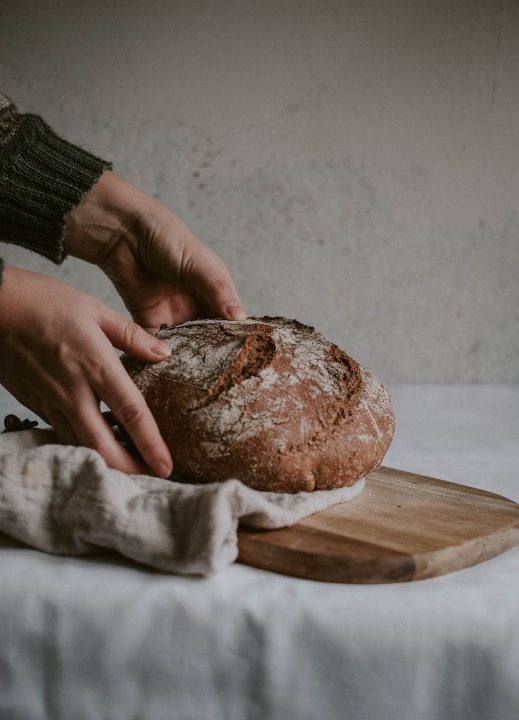
Sourdough bread has a distinctively tangy, slightly sour flavor. This comes from the fermentation process using wild yeast and lactic acid bacteria.
The sourness can range from mildly tangy (like a hint of yogurt) to intensely sour, depending on fermentation time, starter age, and preparation methods.
Unlike regular bread made with commercial yeast, sourdough’s complex fermentation creates acetic acid, giving it that characteristic tartness that makes it so recognizable.
- What does sourdough taste like? Tangy and slightly sour, similar to regular bread but with a distinctive acidic note that ranges from subtle to intense.
- Is sourdough always sour? No – sourness varies widely based on fermentation time, starter maintenance, and preparation methods.
- Why is sourdough sour? The wild yeast and bacteria in the starter produce acetic acid during fermentation, creating the tangy flavor.
- How sour should good sourdough be? There’s no “right” level – it depends on personal preference, ranging from barely noticeable tang to bold sourness.
Getting Started with Sourdough
If you’re curious about sourdough but unsure about the sourness:
- Experiment: Try different flour types and fermentation times
- Start mild: Look for bakery sourdough labeled as “mild” or “country”
- Try variations: Sourdough pancakes or waffles offer gentler introduction
- Make your own: You control the sourness level completely
Is Sourdough Right for You?
Sourdough appeals to people who enjoy:
- Complex, developed flavors
- Artisanal, handcrafted foods
- Breads with character and tang
- Traditional baking methods
It might not suit those who prefer:
- Very mild, neutral flavors
- Consistent, predictable results
- Quick, convenient preparation
- Ultra-soft textures
What Is Sourdough Bread?
Sourdough represents one of humanity’s oldest bread-making techniques, predating commercial yeast by thousands of years. The miracle happens through a living culture called a starter – a mixture of flour and water that captures wild yeast and beneficial bacteria from the environment.
This starter acts as both the rising agent and flavor developer. Unlike commercial yeast that simply makes dough rise, sourdough’s complex ecosystem creates acids that give the bread its signature taste.
Basic Sourdough Components
- Sourdough starter (flour, water, wild yeast, bacteria)
- Flour
- Salt
- Water
That’s it. No commercial yeast, no additives – just four simple ingredients creating complex flavors.
The Sourdough Flavor Spectrum
| Sourness Level | Description | Taste Notes | Best For |
|---|---|---|---|
| Mild | Barely noticeable tang | Hint of yogurt, slightly sweet | Beginners, sandwich bread |
| Medium | Balanced sour-sweet | Tangy but approachable | Most versatile, general use |
| Strong | Bold, assertive sourness | Sharp, wine-like acidity | Artisan breads, experienced palates |
| Intense | Very sour, almost vinegary | Mouth-puckering tartness | Specialty breads, specific recipes |
What Controls Sourdough’s Sourness?
The thing that makes sourdough so awesome is the control you have over the final flavor.
Here are what can determine how sour your bread will taste:
Fermentation Time and Temperature
Longer fermentation = more sour flavor
The relationship between time, temperature, and sourness:
| Temperature | Fermentation Speed | Resulting Flavor | Timeline |
|---|---|---|---|
| Cold (35-45°F) | Very slow | Most sour | 24-48+ hours |
| Cool (60-70°F) | Slow | Moderately sour | 12-18 hours |
| Room temp (70-75°F) | Moderate | Balanced | 8-12 hours |
| Warm (80-85°F) | Fast | Mild tang | 4-8 hours |
Starter Maintenance Impact
How you care for your starter dramatically affects flavor:
For More Sourness:
- Feed less frequently (every 2-3 days)
- Keep the “hooch” (dark liquid that forms on top)
- Use an older, more mature starter
- Maintain a stiffer consistency
For Milder Flavor:
- Keep it more liquid
- Feed more frequently (daily)
- Discard the hooch
- Use a younger starter
Flour Types and Their Impact on Flavor
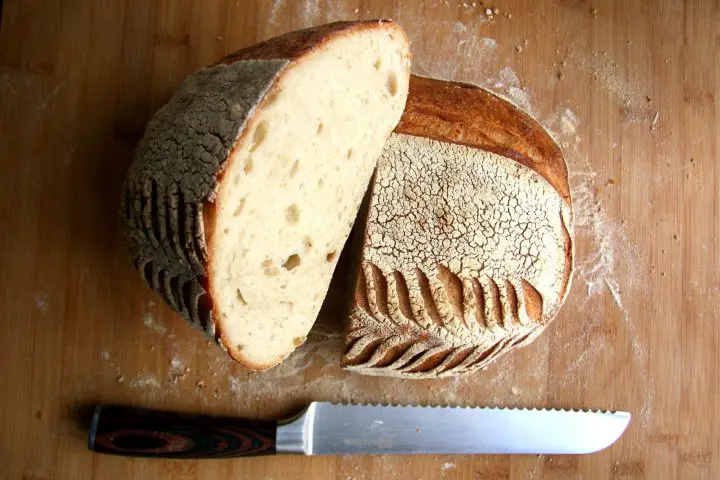
Different flours create different flavor profiles:
| Flour Type | Sourness Level | Flavor Notes | Texture Impact |
|---|---|---|---|
| White bread flour | Mild | Clean, straightforward | Light, airy |
| Whole wheat | Medium-strong | Nutty, complex | Denser, heartier |
| Rye flour | Strong | Earthy, robust | Dense, chewy |
| Spelt | Medium | Sweet, nutty | Tender crumb |
How to Change Up Sourdough’s Flavor
Hydration Levels
- Lower hydration (65-70%): More concentrated flavors, denser texture
- Higher hydration (75-85%): Milder flavors, more open crumb
Starter Ratios
- Less starter used: Longer fermentation, more sour
- More starter used: Faster fermentation, milder flavor
The Role of Salt
Salt doesn’t just add flavor – it controls fermentation speed and strengthens gluten. More salt slightly slows fermentation, potentially increasing sourness.
Sweet Sourdough Options
Not all sourdough has to be sour. You can create:
- Enriched doughs: Adding butter, eggs, or milk mellows the tang
- Sweet variations: Cinnamon raisin, chocolate chip, or fruit sourdoughs
- Neutralized versions: A pinch of baking soda reduces acidity
Flavor Issues
Too Sour?
- Feed your starter more frequently
- Use warmer fermentation temperatures
- Add a small amount of baking soda to the dough
- Try enriched recipes with fats
Not Sour Enough?
- Extend fermentation time
- Use cooler temperatures
- Feed starter less frequently
- Try whole grain flours
- Keep the hooch when feeding
Off Flavors?
- Consider your flour quality
- Check starter health – it should smell tangy, not putrid
- Ensure proper hydration levels
- Verify fermentation temperatures aren’t too extreme
Answered: What Does Sourdough Bread Taste Like?
Whilst sourdough bread is known for the sour taste there is some variety. What this means is that some options will be slightly tangy whilst others are much more distinctly sour.
Now, this type of bread isn’t necessarily the thing for everyone. But a sourdough loaf is uniquely delicious. Most people find sourdough more flavorful and satisfying than regular bread, even if they initially worry about the sourness.
Some sourdough can be sweet, too, if other ingredients are added. Such examples are Sourdough Hot Cross Buns and Sourdough Babka.
Ready to try sourdough? Start with a mild version from a local bakery, or dive in and create your own starter.
Either way, you’re in for a treat that’s been pleasing people for thousands of years.
FAQ – What Does Sourdough Bread Taste Like?
Does sourdough taste different than normal bread?
Sourdough bread is a type of loaf that will use a sourdough starter instead of the typical commercial yeast. As such, the fermentation of the starter along with the lack of yeast and baking soda will bring in some extra sour or tangy flavours. Now of course these will vary in intensity with some being strongly sour and others only really having a light tang.
Is sourdough bread supposed to taste sour?
Sourdough bread is a type of loaf that will use a sourdough starter instead of commercial yeast to rise. As such, it will use the gases of fermentation for the leavening process. Meanwhile this process will also bring in some acetic acid and by proxy a more sour taste. Naturally, the flavour of different sourdough loaf recipes will vary greatly. On the more mild end of the spectrum, there are some sourdough loafs which have a light tangy taste to them. Meanwhile on the other end of the spectrum some sourdough loaves will be incredibly sour tasting. Of course though, there will be some in the middle of this spectrum and many will also incorporate some additional flavours.
Does sourdough bread taste nice?
Sourdough bread is a type of loaf that is known for it’s distinctly sour flavour. The reason being that sourdough bread will use a sourdough starter instead of commercial yeast to rise. As a result, it will employ the gases created in fermentation for the leavening process. Meanwhile, this process will also bring in some acetic acid and by proxy a more sour taste. Naturally, this will be something of a subjective thing since some people will prefer a more sour taste it provides. Meanwhile some people will not find it all that pleasant. That said though, the level of sourness can greatly vary. As such, whilst you may not like a strongly sour one, you may enjoy one that is only mildly tangy in flavour.
Does sourdough bread taste bad?
Sourdough bread a variety of bread loaf that is often associated with it’s uniquely sour taste. The cause of this is that sourdough bread uses a sourdough starter as opposed to commercial yeast in order to rise. The result of this is that it will use the gas created during fermentation as part of the leavening process. At the same time, this fermentation also creates some acetic acid, thereby bringing out a more sour taste in the final loaf. Whether this tastes bad though it a subjective thing as some people will find the more sour taste it provides repusive. Meanwhile some people will not find it delicious. That being said though, this level of sourness can also vary greatly, meaning that whilst you may not like a strongly sour one, you may enjoy one that is only mildly tangy in flavour.
Does sourdough bread taste like white bread?
Sourdough bread is a type of bread that uses a sourdough starter instead of commercial yeast. As such it will not be identical in taste in flavour due to the fermentation from this starter bringing acetic acid and therefore a sour taste. That said though, the level of sourness these loaves can have will greatly vary. As such the spectrum can range from slightly tangy bread to incredibly sour. Additionally, some people’s loaves will also incorporate other flavors into their sourdough loaves which makes them more unique.
Does sourdough bread always taste sour?
Sourdough bread is a bread type that is known for it’s sour flavour profile. This being something that results from the use of a sourdough starter rather then commercial yeast. The result of which being that the starter will create acetic acid which brings in some sour flavour. That said though, some sourdough bread loaves will be incredibly intense in their sour flavour. However, there are some very other types of sourdough bread that will only have slightly tangy flavour. Additionally, like with any other type of bread, there are an assortment of other flavours and textures that can be incorporated into the loaf.
How would you describe the taste of sourdough bread?
Sourdough bread has a distinctive tangy, slightly sour flavor that sets it apart from regular bread. The taste comes from natural fermentation that produces acetic acid, creating a pleasant tartness that can range from a subtle yogurt-like tang to a bold, wine-like acidity depending on how it’s made. Beyond the signature sourness, sourdough often has more complex, developed flavors with nutty or earthy notes, making each bite more interesting than standard commercial bread.




![[video] from the seed to the peasant bakery with nicolas supiot](https://www.mydailysourdoughbread.com/wp-content/uploads/2022/11/image-16-120x120.jpeg "[Video – Part 2] Entering Into Peasant Bakery 7")
