Last updated on May 18th, 2026
There’s nothing more satisfying than pulling a sourdough loaf out of the oven to a crust that shatters when you squeeze it. A golden, crackling crust isn’t luck — it’s technique. Once you understand what actually creates that crunch — steam, heat, fermentation timing, hydration — you can nail it every single time.
These five crunchy sourdough bread recipes cover everything from a forgiving beginner loaf to a seeded, high-hydration showstopper. Each one is built around the same core principles that separate a pale, soft loaf from the real deal. Let’s bake something worth bragging about.
What Makes Sourdough Bread Crunchy
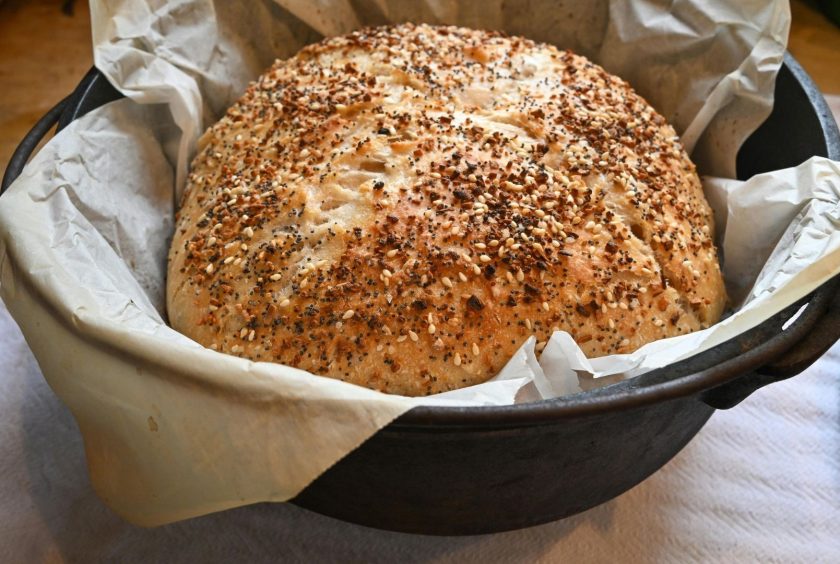
Crunchy sourdough bread comes down to two things working in perfect sync: steam and heat. When your dough hits a screaming hot oven, steam keeps the surface pliable long enough for the loaf to spring up fully. Then, as the steam clears, the Maillard reaction kicks in — the same browning process behind a perfect sear on a steak — building that deep amber, shatter-worthy crust.
Your sourdough starter and fermentation time matter just as much. The wild yeast and acids produced during fermentation tighten the gluten structure, giving the dough the strength to hold its shape and develop a defined, crispy crust, bread bakers dream about. A longer, slower ferment also means more flavor layered into that crust — that complex, slightly tangy bite you get from a great artisan sourdough loaf isn’t an accident. It’s patience, paid back with crunch.
Key Tips Before You Start Baking
- Use bread flour. Its higher protein content builds a stronger gluten network, which means better structure and a crunchier crust compared to all-purpose flour.
- Hydration matters. Aim for 70–75% hydration. Higher hydration creates steam from inside the dough, helping blister and crisp the crust naturally.
- Preheat your Dutch oven for at least 45 minutes at 500°F. A properly heated pot mimics a professional bread oven and is the single biggest upgrade most home bakers can make.
- Don’t rush bulk fermentation. Your dough should grow 50–75% and look domed before you shape it. Cutting this short leads to a dense loaf with a crust that never fully crisps.
- Cold proof overnight. Refrigerating your shaped dough slows fermentation, builds flavor, and firms up the dough — making it easier to score and giving you better oven spring.
- Score with confidence. One decisive slash at a 30–45° angle lets the loaf expand where you want it to. Hesitation leads to uneven bursting and a compromised crust.
- Cool completely before slicing — at least one hour. The crumb is still setting inside, and cutting early turns a perfect crust into a gummy disappointment.
Easy Beginner Crunchy Sourdough
Ingredients:
- 450g (3½ cups) bread flour
- 325g (1⅓ cups) lukewarm water
- 90g (⅓ cup) active sourdough starter
- 9g (1½ tsp) fine sea salt
Instructions:
- Mix flour and water until no dry flour remains. Cover and rest 45 minutes (autolyse).
- Add starter and salt. Squeeze and fold until fully incorporated, about 4 minutes.
- Over the next 2 hours, perform 4 sets of stretch-and-folds every 30 minutes. Then leave the dough to bulk ferment until it’s grown 50–75% and looks domed, about 4–6 hours total.
- Turn out onto a floured surface, pre-shape into a round, rest 20 minutes, then final shape — fold edges to center, flip seam-side down, and drag gently to build tension.
- Place seam-side up in a floured proofing basket, cover, and refrigerate 8–16 hours.
- Preheat the Dutch oven at 500°F for 45 minutes. Score the cold dough with one confident slash, bake covered 20 minutes, then uncovered 20–25 minutes until deep amber, cool one full hour before slicing.
High-Hydration Artisan Sourdough
Ingredients:
- 450g (3½ cups) bread flour
- 360g (1½ cups) lukewarm water (80% hydration)
- 90g (⅓ cup) active sourdough starter
- 9g (1½ tsp) fine sea salt
Instructions:
- Combine flour and water, mix until shaggy. Cover and autolyse for 60 minutes — wetter dough needs more time for gluten development to get a head start.
- Add starter and salt. Work into the dough using the “pincer method” — pinch through the dough repeatedly, then fold. Repeat for 5 minutes until fully incorporated.
- Over the first 3 hours of bulk fermentation, perform 6 sets of stretch-and-folds every 30 minutes. Switch to coil folds for the final 2 sets — these are gentler and better suited to high-hydration dough.
- Continue bulk fermenting until dough is 75% larger, jiggly, and domed — roughly 5–7 hours total at room temperature.
- Wet your hands before handling (never flour — it stiffens the dough). Turn out, pre-shape loosely, bench rest 30 minutes, then final shape using confident, deliberate folds.
- Proof in a well-floured banneton overnight in the fridge. Bake in a preheated Dutch oven at 500°F — 20 minutes lid on, 25 minutes lid off. Cool fully before cutting.
Dutch Oven Crunchy Sourdough
Ingredients:
- 450g (3½ cups) bread flour
- 315g (1⅓ cups) lukewarm water (70% hydration)
- 90g (⅓ cup) active sourdough starter
- 9g (1½ tsp) fine sea salt
Instructions:
- Mix flour and water until combined. Rest 45 minutes for autolyse.
- Add starter and salt, and incorporate fully. Perform 4 sets of stretch-and-folds over 2 hours, then bulk ferment until the dough has grown 60–75%.
- Shape into a tight boule, place seam-side up in a floured proofing basket, and cold proof in the fridge for 10–16 hours.
- Place your Dutch oven lid in the oven and preheat at 500°F for a full 60 minutes. Don’t rush this.
- Remove cold dough from the fridge, flip onto parchment, score immediately with one deep slash, and lower into the blazing hot pot.
- Bake covered at 500°F for 20 minutes, then uncover and reduce to 475°F for 20–25 minutes until the crust is a deep, burnished brown.
Whole Wheat Crunchy Sourdough
Ingredients:
- 340g (2¾ cups) bread flour
- 110g (scant 1 cup) whole wheat flour
- 330g (1⅓ cups) lukewarm water (75% hydration)
- 90g (⅓ cup) active sourdough starter
- 9g (1½ tsp) fine sea salt
Instructions:
- Combine both flours with water, mix until no dry flour remains. Autolyse for 60 minutes — whole wheat flour needs longer to fully hydrate.
- Add starter and salt, and incorporate thoroughly. Perform 5 sets of stretch-and-folds over the first 2.5 hours of bulk fermentation.
- Bulk ferment at room temperature until dough is 60–70% larger — whole wheat moves faster than white dough, so start checking at the 4-hour mark.
- Shape into a tight boule or batard, place in a well-floured proofing basket, and cold proof 8–12 hours in the fridge.
- Preheat the Dutch oven at 500°F for 45 minutes. Score cold dough, bake covered 20 minutes, then uncovered at 475°F for 20–22 minutes until deeply browned.
- Cool on a wire rack for at least 90 minutes — whole wheat loaves need extra time for the crumb to fully set.
Related: Sourdough vs Whole Wheat: Main Differences
Seeded Crunchy Sourdough
Ingredients:
- 450g (3½ cups) bread flour
- 325g (1⅓ cups) lukewarm water
- 90g (⅓ cup) active sourdough starter
- 9g (1½ tsp) fine sea salt
- 30g (3 tbsp) mixed seeds for the dough — sesame seeds, flaxseed, sunflower seeds
- 30g (3 tbsp) mixed seeds for the crust coating
Instructions:
- Mix flour and water, autolyse for 45 minutes. Add starter, salt, and the interior seed mix. Incorporate fully — seeds will try to escape, keep folding them back in.
- Perform 4 sets of stretch-and-folds over 2 hours. Bulk ferment until 60–75% grown, about 4–6 hours.
- Lightly wet the surface of your shaped loaf, then roll it directly in the crust seed mixture, pressing gently so seeds adhere. This is your crunch layer.
- Place seam-side up in a well-floured banneton and cold proof in the fridge 8–16 hours.
- Preheat the Dutch oven at 500°F for 45 minutes. Score the cold dough — angle the blade carefully around seeds — and bake covered 20 minutes.
- Remove lid and bake 20–25 minutes until the seeded crust is deeply toasted and crackling. Cool fully before slicing.
Your Crunchiest Loaf Is One Bake Away
A shattering crust comes down to a few non-negotiables — active starter, proper fermentation, the right hydration, and a screaming hot Dutch oven. Whether you’re a first-time baker tackling the beginner recipe or going all-in on a seeded high-hydration loaf, the same core principles apply.
Steam builds the rise. Heat builds the crust. Patience builds the flavor. Pick a recipe, trust the process, and don’t you dare cut into that loaf before it’s fully cooled. The crunch you’ve been chasing? It’s already waiting for you on the other side of your next bake.
FAQs – Crunchy Sourdough Bread Recipes
How do I make my sourdough more crunchy?
The biggest factors are steam, heat, and a proper bake in a Dutch oven. Preheat your Dutch oven at 500°F for at least 45 minutes, bake with the lid on for 20 minutes, then uncover for 20–25 minutes to dry out and deeply brown the crust. An active starter and adequate fermentation time are equally important — don’t rush either.