
Last updated on February 18th, 2026
Once you know the difference between a starter that needs feeding and one that’s genuinely gone bad, you’ll stop second-guessing yourself every time something looks a little off.
Here are 15 common problems with clear fixes for each, and a checklist so you always know exactly what you’re working with.
What to Know
The short answer: Most sourdough starter problems (gray liquid, vinegar smells, acetone odor, sluggish bubbles, separation) are not signs of a bad starter. They’re signs of a hungry one.
Only two things truly mean you need to throw it out: pink or orange streaks and fuzzy mold growth. Everything else is fixable with consistent feeding and the right temperature (74–76°F).
What a Healthy Sourdough Starter Looks Like
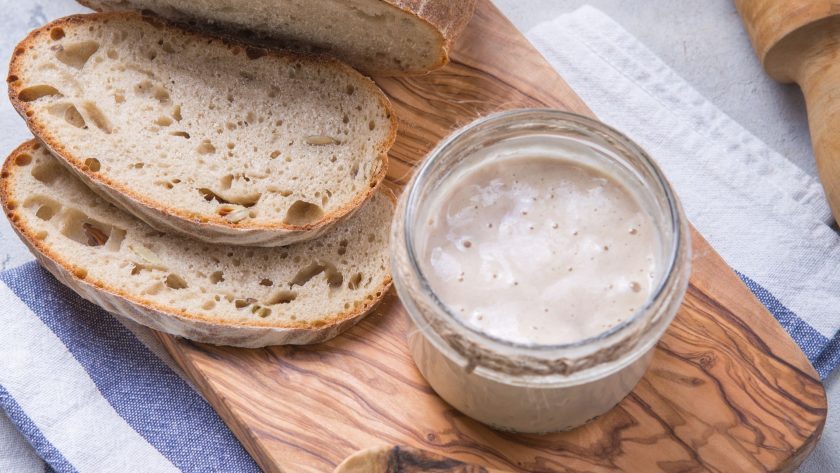
A thriving starter is an active one. Here’s what you’re looking for:
- Bubbles within 4 to 12 hours of feeding. Bubble size doesn’t matter much. Small bubbles scattered throughout are just as valid as the dramatic mousse-like texture you see in photos.
- Doubles or triples in volume. CO2 gas from fermentation is physically lifting your starter up the jar, pushing against the gluten network like tiny inflated balloons. That’s the rise you want.
- A pleasant, tangy aroma. Think somewhere between yogurt and fresh bread dough. It might smell fruity one day and mildly vinegary the next. Both are normal.
- Rise-and-fall streaks on the jar. Those residue marks on the glass where your starter peaked and then fell back down? That’s your starter doing exactly what it should.
- Creamy off-white or beige color. That’s the natural color of a healthy, active culture.
The Two Real Warning Signs (Discard These Immediately)
Your starter can handle a lot of neglect. It’s survived refrigerators, forgotten corners, and months without feeding. But these two things are genuinely unrecoverable:
Pink or orange streaks. This is bacterial contamination, often from a bacteria called Serratia marcescens, and it’s not the kind you can scoop around. The streaks look smooth and wet, sometimes slightly slimy. If you see this, the whole batch goes.
Fuzzy mold growth. Mold shows up as velvety or thread-like patches and can be green, black, white, or pink. The tricky part is that those filaments extend well below whatever you can see on the surface. Scraping the top layer off doesn’t fix it.
Truly rotten smell. Not sour, not vinegary, not sharp. Genuinely putrid, like something has died in your jar. Normal fermentation has an edge to it, but this is a completely different category.
What Is My Starter Telling Me?
| What You’re Seeing or Smelling | Verdict | What to Do |
|---|---|---|
| Gray or black liquid on top (hooch) | Safe | Stir or pour it off, feed normally |
| Acetone or nail polish smell | Fixable | Discard half, feed 1:1:1 for a few days |
| Vinegary or sour smell | Fixable | High-ratio feedings (1:5:5) to dilute the acidity |
| Cheesy or yogurt-like smell | Safe | Normal, especially in young starters. Feed 1:2:2 |
| No bubbles or sluggish rise | Fixable | Warm to 74 to 76F, add rye flour, feed twice daily |
| Water separation or runny texture | Fixable | Add more flour, reduce water, feed more often |
| Hard crust on top | Safe | Scrape it off and cover better going forward |
| Rises and falls too quickly | Fixable | Cool it down, reduce water, never re-feed before peak |
| Rotten egg or sulfur smell | Fixable* | Transfer 1 tsp to a clean jar, feed 2 to 3 times daily. Start fresh if no improvement after a week |
| Pink or orange streaks | Discard | Throw everything out, sterilize the jar, start fresh |
| Fuzzy mold in any color | Discard | Throw everything out, sterilize the jar, start fresh |
| Unusual bright colors (green, blue, red, yellow) | Discard | Mold contamination. Discard and start fresh |
| Putrid or rotten smell | Discard | Serious contamination. Discard and start fresh |
Fermentation Temperature Guide
Temperature is the single variable that throws more people off than anything else. A starter that looks dead in a cold kitchen might be perfectly healthy once it warms up.
| Temperature | What’s Happening | What to Do |
|---|---|---|
| Below 65F (18C) | Very slow or no visible activity. Yeast struggles to do much | Move to a warmer spot |
| 65 to 70F (18 to 21C) | Sluggish bubbles. May take 18 to 24 hours to peak | Feed less frequently and be patient |
| 74 to 76F (23 to 24C) | Active and predictable. Peaks in 6 to 8 hours after feeding | This is the sweet spot. Keep it here |
| 80 to 85F (27 to 29C) | Rises fast, burns through food quickly, favors acid over yeast | Feed more often or refrigerate between bakes |
| Above 120F (48C) | Yeast dies | Never use water this hot when feeding |

15 Common Sourdough Starter Problems (and How to Fix Them)
Problem 1: It Smells Like Nail Polish or Acetone
That sharp chemical smell is your starter announcing that it’s starving. When yeast and bacteria run out of nutrients, they start breaking down waste products, which produces those acetone-like compounds. The good news is that acetone evaporates completely in the oven, so this won’t affect your bread at all.
- Discard half your starter.
- Feed in a 1:1:1 ratio by weight (starter, water, flour).
- Keep it between 68 and 75F and feed every 12 to 24 hours.
- Repeat for a few days. The smell will fade as the culture rebalances.
Problem 2: There’s Gray or Black Liquid on Top (Hooch)
Hooch is alcohol produced by wild yeast during fermentation, and it’s completely harmless. The dark color comes from oxidized proteins and sugars sitting in the liquid over time. It looks alarming, but it’s really just your starter’s way of waving a flag and asking for food.
- Either stir the hooch back in (many bakers do this since the alcohol adds flavor complexity) or pour it off before feeding.
- Feed with fresh flour and water at your normal ratio.
- If hooch is showing up regularly, your starter is burning through its food too fast. Try feeding at a 1:2:2 or 1:3:3 ratio to give it more to work through, or move it to a cooler spot to slow fermentation down.
Related: Sourdough Starter Liquid
Problem 3: There’s Mold or Pink/Orange Discoloration
This is the one situation where there’s no saving what you’ve got. Pink or orange indicates bacterial contamination. Fuzzy patches in any color mean mold has taken hold, and those filaments go much deeper than the surface.
- Look carefully before assuming. True mold is fuzzy or velvety. Hooch is liquid and smooth.
- If it’s mold or pink or orange discoloration, discard the entire batch. Don’t try to save a spoonful.
- Wash your jar thoroughly with hot soapy water or run it through the dishwasher.
- Start a new starter using fresh flour, clean water, and properly sterilized equipment.
Problem 4: It’s Not Rising or Bubbling
Before assuming your starter is dead, check the temperature. A starter kept below 68F will ferment so slowly it can look completely inactive. At 75F or warmer, a healthy starter should double within 6 to 8 hours of feeding.
- Move it to a warmer spot. An oven with just the light on often holds around 75F.
- Use a kitchen scale rather than volume measurements. Accuracy in the feeding ratio matters more than most people realize.
- Swap in 10 to 20% whole grain rye or whole wheat flour at your next feeding. Rye in particular is packed with wild yeast and minerals that give sluggish starters a real boost.
- Feed twice daily and give it several days. A neglected starter doesn’t bounce back overnight, but it usually does bounce back.
Problem 5: It Smells Like Rotten Eggs or Very Strong Cheese
A mild cheesy or yogurt smell is lactic acid and completely normal. A sulfur or rotten egg smell is a different story and usually means the starter is seriously underfed or has developed an imbalance of unwanted bacteria.
- Transfer just one teaspoon of starter to a clean, sterilized jar.
- Add 100g of water and 100g of flour, stir well, and leave for 24 hours.
- Feed 2 to 3 times per day for the next 2 to 3 days and watch for improvement in smell, texture, and bubble activity.
- If it still smells foul after consistent care, start fresh. Some contamination runs deep.
Problem 6: No Activity After Several Days of Feeding
A starter with no activity after several days of feeding is most likely dormant rather than dead. Cold temperatures and inconsistent feeding are the two biggest culprits.
- Move it to a consistently warm spot (74 to 76F) and keep it there.
- Include some whole grain rye at each feeding for an added nutrient boost.
- Feed twice daily, right when the starter is at or just past its peak activity.
- If a full week of proper warm feeding produces nothing, it’s time to start fresh.
Problem 7: It Has Separated Into Layers
Water separation happens when a starter hasn’t been fed recently and the liquid components settle out. It’s not a contamination issue; it’s a texture and hydration issue. A healthy starter should be thick, like warm peanut butter.
- Stir in additional flour and let it sit until the next feeding to thicken up.
- Aim for a ratio of roughly 1 part flour to 0.75 parts water by weight, rather than equal parts.
- Don’t discard and re-feed before the starter shows any signs of activity. Wait for bubbles first.
- Feed twice daily until the texture strengthens and the separation stops.
Problem 8: It Always Smells Extremely Sour or Vinegary
Some sourness is good. Too much acidity actually chokes off yeast activity and leads to slow fermentation, gummy crumb, and flat loaves. If the vinegary smell is constant even right after feeding, the acidity level is too high.
- Use a higher feeding ratio like 1:5:5 or 1:10:10 (starter, flour, water) to dilute the acids significantly.
- Feed peak to peak, meaning you discard and re-feed right when the starter hits its highest point before it starts to fall.
- Keep the temperature at 74 to 76F, which favors yeast over acid-producing bacteria.
- Work some whole grain flour into your feedings for better microbial balance.
Related: Sourdough Starter Smells Like Vinegar?
Problem 9: It’s Turned a Strange Color (Green, Blue, Red, Yellow)
Any color beyond the normal off-white base or brownish hooch is mold. Bright or unusual colors mean contamination, full stop.
- Don’t taste it, don’t try to scoop around it, don’t save any portion of it.
- Discard everything immediately.
- Sterilize your jar and all utensils that came into contact with the starter.
- Start fresh with clean equipment, fresh flour, and filtered or boiled water.
Problem 10: It Rises and Falls Too Quickly
A starter that peaks within an hour or two of feeding and then collapses is working too fast. This usually means it’s too warm, or the feeding ratio is too small relative to how active the culture is.
- Move it somewhere cooler, ideally below 80F.
- Never discard and re-feed before the starter has reached its peak. Re-feeding early actually weakens the culture over time.
- Reduce the water slightly to slow fermentation down.
- In summer, refrigerating between bakes and feeding once before you plan to use it is a completely reasonable strategy.
Problem 11: It Smells Fine but Won’t Double in Size
A starter can be healthy and active without putting on a dramatic show. If it’s covered in bubbles and smells good but isn’t visibly doubling, the issue is often flour type or hydration rather than a weak culture.
- Try reducing the water in your next feeding. A wetter starter tends to spread out rather than rise up.
- Switch to bread flour or add whole wheat or rye, which have more protein and hold gas better than all-purpose.
- Look at the full picture: active bubbles, good smell, and a loose consistency are all signs of health. Dramatic rise is just one data point.
- A vigorously bubbling starter that doesn’t double can absolutely make great bread.
Problem 12: Mold Keeps Coming Back After Cleaning
If mold returns after you’ve cleaned and started over, the contamination source is somewhere in your inputs or environment, not just the jar.
- Switch to filtered or boiled-and-cooled water. Tap water quality varies a lot and can introduce unwanted microbes.
- Try a different flour brand or bag. Flour can carry mold spores if it’s been improperly stored.
- Sterilize your container more aggressively, especially if it’s plastic. Hot water and soap sometimes isn’t enough.
- Store your starter away from fruit bowls, compost bins, or anything else that might harbor mold spores nearby. Keep it covered but not completely airtight.
Problem 13: It’s Runny and Smells Like Yogurt
A yogurt-like smell is lactic acid, which is a natural and healthy byproduct of fermentation. The runniness is a hydration issue, not a contamination one.
- A mild yogurt or cheesy smell is normal, particularly in young starters. It tends to mellow out with consistent feeding.
- Add more flour to bring it to a thicker, pancake batter consistency.
- Bread flour builds more structure than all-purpose, so it’s worth switching if runniness is a persistent issue.
- Bump your feeding ratio up to 1:2:2 or 1:3:3 to give the yeast more to work with.
Problem 14: There’s a Hard Crust on Top
This is pure dehydration. The surface of your starter dried out from air exposure. The culture underneath is completely fine.
- Scrape off and discard the hard crust.
- Transfer the soft starter underneath to a clean jar.
- Cover it with a loose-fitting lid, a damp cloth, or anything that allows some airflow without letting the surface dry out.
- Feed normally. The crust won’t come back if the starter is covered properly.
Problem 15: It’s Turned Very Dark Brown or Black
Extremely dark hooch from prolonged neglect. Oxidized starch, sugars, and undigested flour particles have been sitting long enough to turn nearly black. It’s not dangerous on its own, but it does mean the starter needs real attention before it’s usable.
- Pour off the dark liquid entirely. At this stage it’s all waste products and won’t contribute anything useful.
- Transfer a portion of the lighter-colored starter from underneath to a clean jar.
- Plan for at least two days of twice-daily feedings before it’s ready to bake with.
- If there’s any mold, pink, or orange alongside the dark liquid, discard everything and start fresh.
Final Checklist: Is Your Sourdough Starter Safe to Use?
| Check | Looks Good | Start Fresh |
|---|---|---|
| Smell | Sour, tangy, yeasty, or mildly vinegary | Rotten, putrid, or genuinely foul |
| Color | Creamy off-white or beige. Dark hooch is fine | Pink, orange, green, blue, red, or bright yellow |
| Texture | Thick like warm peanut butter. Some separation is normal | Slimy, fuzzy, or wet colored streaks |
| Activity | Bubbles and rises within 4 to 12 hours of feeding | Zero activity after a full week of proper warm feeding |
| Surface | Clean with no fuzzy patches | Any fuzzy or velvety growth in any color |
These are all fixable: hooch, acetone smell, vinegary aroma, sluggish bubbles, water separation, hard crust, rising too fast or too slow.
These mean starting fresh: pink or orange streaks, fuzzy mold in any color, truly putrid smell, unusual bright colors.
Keep Your Starter Thriving
Your starter is more resilient than it gets credit for.
Consistent feeding, the right temperature range (74 to 76F), and a little patience will fix the overwhelming majority of problems you’ll ever run into.
Trust what you’re seeing, use this guide as your reference, and know that great homemade bread is a lot closer than it might feel right now.
FAQs – How to Know If Sourdough Starter Is Bad
How do you know if your sourdough starter has gone bad?
A bad sourdough starter shows pink or orange streaks indicating bacterial contamination, fuzzy mold growth in various colors (green, black, white, or pink), or emits a truly rotten, putrid smell like something died in your kitchen. These are the only signs requiring you to discard and start fresh. Gray or black liquid (hooch), acetone smells, and vinegary odors are normal and fixable with proper feeding.
What does an unhealthy starter look like?
An unhealthy starter displays fuzzy or velvety mold patches on the surface, smooth wet pink or orange streaks, or unusual bright colors like green, blue, red, or yellow. The mold has thread-like filaments penetrating deep below the surface. Gray or black liquid (hooch) and water separation are actually normal signs of hunger, not contamination, and don’t indicate an unhealthy starter.
What does a bad sourdough starter smell like?
A truly bad sourdough starter smells rotten, putrid, or like garbage—distinctly different from normal fermentation odors. This foul smell indicates serious contamination requiring disposal. Acetone or nail polish smells, vinegary or sour aromas, and even cheesy or yogurt-like scents are normal and harmless, simply signaling your starter is hungry and needs feeding. These common smells don’t mean your starter has gone bad.




![[video] from the seed to the peasant bakery with nicolas supiot](https://www.mydailysourdoughbread.com/wp-content/uploads/2022/11/image-16-120x120.jpeg "[Video – Part 2] Entering Into Peasant Bakery 8")
