
Last updated on February 19th, 2026
You’re elbow-deep in sourdough that’s sticking to your hands, your counter, and pretty much every surface in your kitchen. If you’re wondering why your dough is so sticky, the answer is simpler than you think. Your dough is actually talking to you, telling you exactly what needs adjusting. The culprit could be your hydration ratio, the flour you chose, weak gluten development, fermentation timing, or even your kitchen temperature. Let’s decode what your sticky dough is trying to tell you and get you back to baking beautiful loaves.
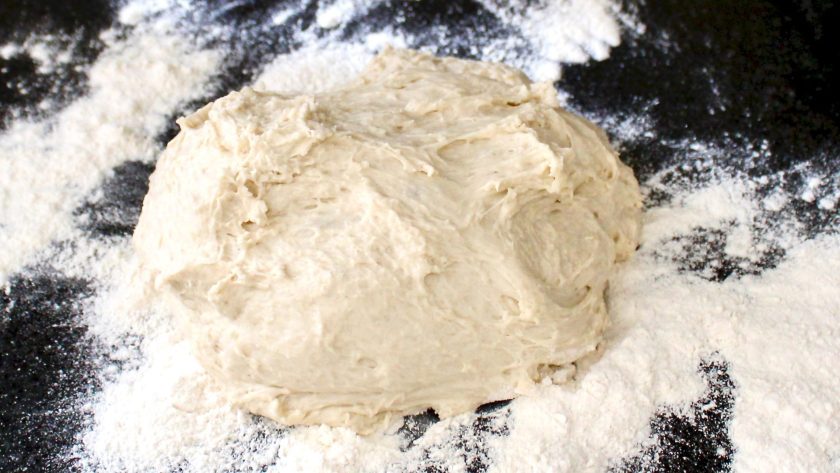
Why Is My Sourdough So Sticky?
The good news is that it almost always comes down to one of five fixable causes: too much water, the wrong flour, weak gluten development, fermentation timing, or your kitchen environment.
Let’s figure out what might be the cause clearly so you can diagnose your dough and bake a better loaf next time.
Quick Sticky Dough Causes and Fixes
| Cause | Signs | Quick Fix |
|---|---|---|
| Too much water | Dough spreads, hard to handle | Reduce water by 10-20g per 500g flour |
| Wrong flour | Weak structure, tears easily | Switch to bread flour (12%+ protein) |
| Weak gluten | Dough tears instead of stretches | Do 4-6 sets of stretch and folds |
| Under-fermentation | Dense, pale, poor oven spring | Extend bulk ferment until 50% volume increase |
| Over-fermentation | Dough collapses, won’t spring back | Use cold proofing to slow fermentation |
| Kitchen environment | Inconsistent results by season | Track temp and humidity in a baking journal |
1. Too Much Water (High Hydration)
Hydration is the ratio of water to flour in your dough, expressed as a percentage. Most sourdough recipes fall between 70% and 80% hydration, which is already wetter than a typical yeast bread at around 65%.
How to calculate hydration: Water weight / Flour weight x 100 = Hydration %
Example: 350g water / 500g flour x 100 = 70% hydration
Higher hydration creates that open, airy crumb you see in artisan loaves, but it also makes the dough harder to handle.
One important thing to note: hydration percentages are not universal. An 80% hydration dough made with whole wheat flour will feel much less sticky than the same percentage made with white bread flour, because whole grains absorb significantly more moisture.
Fixes for high hydration stickiness
- Start between 65-70% hydration if you are newer to sourdough
- Reduce water by 10-20g per 500g of flour in your next bake
- Hold back 50ml of water when mixing and add gradually until the dough feels manageable
- If using whole wheat flour, expect to use more water than a white flour recipe calls for
Related: Why Is My Sourdough Starter Not Rising?
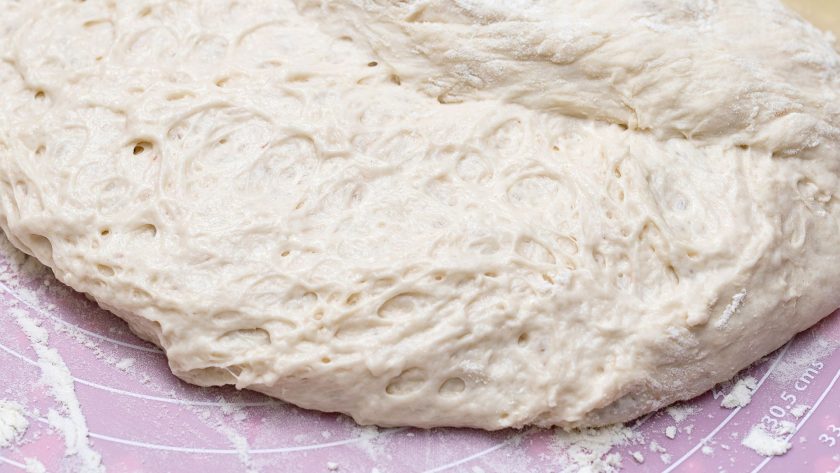
2. Wrong Flour for the Job
The flour you choose has a huge impact on how sticky your dough feels. The key factor is protein content, because protein forms gluten, and gluten gives your dough structure.
| Flour Type | Protein Content | Water Absorption | Best For |
|---|---|---|---|
| All-purpose flour | 8-12% | Lower | Cakes, cookies, lighter breads |
| Bread flour | 11-13% | Higher | Sourdough, artisan breads |
| Whole wheat flour | 13-15% | Very high | Added nutrition, denser loaves |
When a recipe is designed for bread flour and you use all-purpose instead, the lower protein content means the flour cannot absorb water as efficiently. The result is excess surface moisture and a stickier, harder-to-manage dough.
Fixes for flour-related stickiness
- Use bread flour with at least 12% protein for best results
- If you prefer all-purpose flour, reduce water by 15-30g from the recipe
- Add 10-15g of vital wheat gluten per 500g of all-purpose flour to boost its strength
- Always check the protein percentage on your flour’s nutrition label as it varies between brands
3. Weak Gluten Development
Sticky dough is not always a water problem. Sometimes the flour and water ratio is fine, but the gluten has not been developed enough to hold moisture properly.
When flour and water combine, proteins link together to form gluten strands. These strands create a web-like structure that traps water and gas bubbles. Without enough development, water sits loose in the dough instead of being incorporated into that structure, which makes everything feel sticky.
How to test your gluten development:
The windowpane test is your best tool here. Pull a small piece of dough and stretch it slowly. If it stretches thin enough to see light through without tearing, your gluten is well developed. If it tears immediately, keep working.
Fixes for weak gluten
- Perform 4-6 sets of stretch and folds during bulk fermentation, spaced 30 minutes apart
- Move quickly and confidently when handling the dough (hesitation = more sticking)
- Use the windowpane test during bulk fermentation to track progress
- Allow enough rest time between folds so the gluten can relax and strengthen
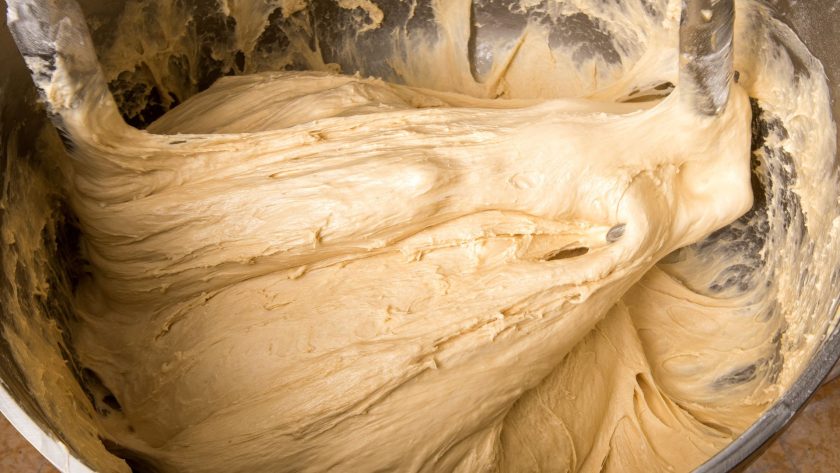
4. Under-Fermentation
Sometimes what feels like a hydration problem is actually a timing problem. When dough has not fermented long enough, the gluten structure is still weak and the dough stays sticky and tight.
Signs your dough is under-fermented:
- Still feels dense and sticky after bulk fermentation
- Springs back immediately when poked (no slow release)
- Pale crust after baking
- Tight, gummy crumb
- Little to no oven spring
Your starter also plays a role here. If it is not fully active and doubling or tripling after each feeding, it will not have the strength to ferment your dough properly.
Fixes for under-fermentation
- Extend bulk fermentation until the dough increases by about 50% in volume and shows visible bubbles
- Make sure your starter passes the float test before using it
- Use the poke test: properly fermented dough springs back slowly, under-fermented dough springs back immediately
- Look for a domed, slightly airy surface on your dough as a sign it is ready
Related: Why is My Sourdough Bread Gummy?
5. Over-Fermentation
Going too far in the other direction creates its own problems. As fermentation progresses, the acidity in sourdough gradually breaks down gluten. That is normal and desirable up to a point, but cross that line and the dough loses its structure entirely.
Signs your dough is over-fermented:
- Flat or collapsed surface instead of a dome
- Deflates when tipped out of the banneton
- Fails the poke test (indent never springs back)
- Pale crust after baking (yeast has consumed all sugars)
- Impossible to shape properly
Fixes for over-fermentation
- Watch the surface of your dough closely. A dome means strength. Flat or spreading means you have waited too long.
- Use the poke test regularly during proofing
- Move shaped dough to the refrigerator for cold proofing to give yourself more control over timing
- Set a timer and check the dough on a schedule rather than relying on guesswork
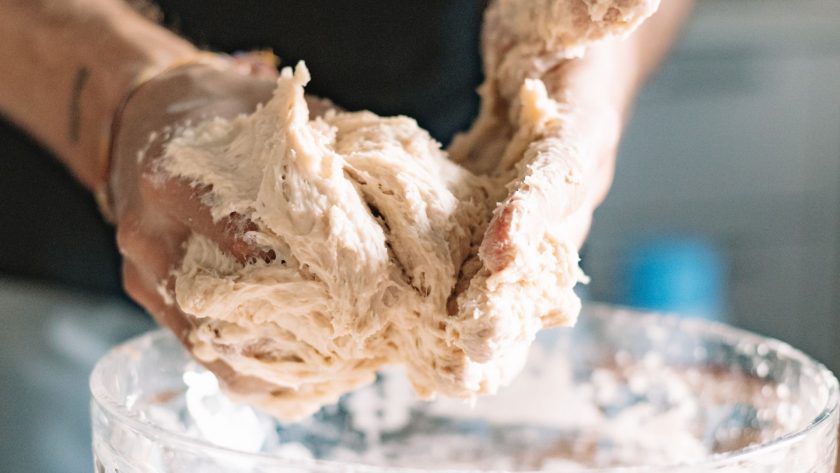
6. Kitchen Temperature and Humidity
Your kitchen environment affects your dough more than most bakers realize. Temperature speeds up or slows down fermentation, and humidity can change how much water your flour absorbs before you even start mixing.
Temperature guide for bulk fermentation:
| Kitchen Temp | Approximate Bulk Fermentation Time |
|---|---|
| 68-72°F (20-22°C) | 5-6 hours |
| 73-77°F (23-25°C) | 4-5 hours |
| 78-82°F (26-28°C) | 3-4 hours |
| 83°F+ (28°C+) | 2-3 hours (watch closely) |
Times are approximate and will vary based on your starter strength and recipe.
On humid days, flour absorbs moisture from the air before baking even begins, which means you may need slightly less water than usual.
Fixes for environmental stickiness
- Track your kitchen temperature and adjust fermentation times accordingly
- On humid days, reduce water by 10-20g and add more gradually as needed
- Use a proofing box or your oven with just the light on to create a consistent warm environment
- Keep a baking journal noting temperature and humidity alongside your results so you can spot patterns over time
Your Sticky Dough Checklist
Before your next bake, run through these quick checks:
- Hydration is between 65-70% if you are still building experience
- Using bread flour with at least 12% protein
- Performed 4-6 sets of stretch and folds during bulk fermentation
- Starter doubled or tripled before mixing
- Dough increased by 50% in volume during bulk ferment
- Poke test shows a slow, gradual spring back
- Noted kitchen temperature and adjusted fermentation time accordingly
Your Sticky Sourdough Solution
Sticky sourdough doesn’t have to be a mystery anymore. Now each issue has clear solutions for your next bake.
Your next loaf is gonna be the one where everything clicks!
FAQs – Why Is My Sourdough So Sticky?
How to fix a sticky sourdough dough?
Reduce your water by 10-20g per 500g of flour, or switch to bread flour with at least 12% protein. Perform 4-6 sets of stretch and folds during bulk fermentation to build gluten strength. When handling the dough, use wet hands rather than flour and work with quick, confident movements.
Is my sourdough overproofed if it’s sticky?
Not necessarily. Stickiness on its own usually points to hydration or weak gluten, not overproofing. Overproofed dough has specific signs: it deflates when tipped out, the surface is flat or collapsed, and the poke test indent never springs back. If your dough is sticky but still holds its shape and passes the poke test, it is most likely a hydration or flour issue.


![[video] from the seed to the peasant bakery with nicolas supiot](https://www.mydailysourdoughbread.com/wp-content/uploads/2022/11/image-16-120x120.jpeg "[Video – Part 2] Entering Into Peasant Bakery 9")
