
Last updated on May 26th, 2026
Many who follow a low carb or ketogenic diet can only consume a small set amount of carbs a day. So small pleasures like consuming a couple slices of sourdough for breakfast may easily kick you out of ketosis. If you’ve been missing bread on keto, this is the recipe to try.
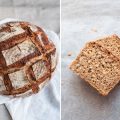
![Is keto sourdough bread low carb – what you need to know [plus bonus recipe]](https://www.mydailysourdoughbread.com/wp-content/uploads/2022/10/blog-images-2023-02-10T215050.221-720x405.jpg "Is Keto Sourdough Bread Low Carb? (Plus How To Make A Low-Carb Loaf) 126")
![Is keto sourdough bread low carb – what you need to know [plus bonus recipe]](https://www.mydailysourdoughbread.com/wp-content/uploads/2022/10/blog-images-2023-02-10T215120.035-768x432.jpg "Is Keto Sourdough Bread Low Carb? (Plus How To Make A Low-Carb Loaf) 127")
Keto Sourdough-Style Bread Recipe
A low-carb sourdough-style bread made with almond flour, coconut flour, and psyllium husk. It has a firm, golden crust, a springy interior, and a mild tang from apple cider vinegar and buttermilk. Close enough to the real thing to satisfy a bread craving without breaking ketosis.
- Total Time: 50 mins
- Yield: 4–6 small loaves 1x
Ingredients
Dry Ingredients
- 1½ cups almond flour
- ½ cup coconut flour
- ⅓ cup psyllium husk powder
- ½ cup flaxseed meal
- 1 tsp baking soda
- ½ tsp baking powder
- 1 tsp sea salt or kosher salt
- 1 tsp Italian seasoning (optional)
Wet Ingredients
- 2 whole eggs
- ¾ cup egg whites
- ¾ cup buttermilk
- ½ cup apple cider vinegar
- ½ cup warm water
Finishing
- 3 tbsp melted butter
- Pinch of flaky salt
Instructions
- Preheat oven to 350°F. Line a baking sheet with parchment paper.
- Whisk all dry ingredients together in a large bowl.
- In a separate bowl, whisk eggs, egg whites, buttermilk, apple cider vinegar, and warm water until slightly frothy.
- Pour wet into dry gradually, stirring until a smooth, lump-free dough forms.
- Divide into 4–6 equal portions and shape into small rounds or ovals. Score the tops with 2–3 diagonal cuts.
- Bake for 30 minutes until edges are golden and loaves sound hollow when tapped.
- Brush tops with melted butter, sprinkle with flaky salt, and broil on high for 3 minutes until deep golden brown.
- Cool on a wire rack for at least 15 minutes before slicing.
Notes
- Use psyllium husk powder, not whole husks — whole husks don’t hydrate properly and leave a grainy texture
- Don’t skip the cooling time; cutting too early makes the inside gummy
- The dough will be softer and stickier than conventional bread dough — this is normal
- Scoring the tops isn’t just aesthetic; it helps the loaves expand evenly in the oven
- Watch the broil step closely — it goes from golden to burnt fast
- For protein powder: add 1–2 scoops of unflavored whey isolate to the dry ingredients and reduce almond flour by 2 tbsp per scoop to keep the dough balanced
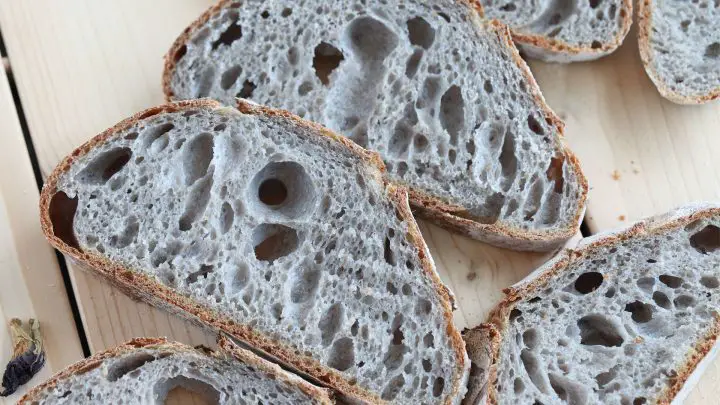
- Sunflower seeds turn the bread green when they react with baking soda — harmless, but worth knowing before you add them
- Filtered water is better than tap for the starter; chlorine can slow fermentation
Storage
- Room temp (up to 2 days): wrap in paper bag or plastic wrap
- Fridge (up to 5 days): wrap tightly
- Freezer (up to 3 months): slice first, freeze flat, then bag
- Prep Time: 15 mins
- Cook Time: 33 mins
- Category: bread
Can You Eat Sourdough Bread on Keto?
Righ out, standard sourdough bread isn’t keto-friendly.
A single slice made with whole wheat flour contains around 19g of carbs, nearly a full day’s allowance if you’re keeping to a strict 20g daily limit.
That said, sourdough does have slightly fewer carbs than regular bread.
During fermentation, the wild yeast and bacteria partially break down the starches and sugars in the dough. This lowers the final carb count a little, but not enough to make it safe for most people in ketosis.
Let’s compare regular bread and sourdough:
| Bread Type | Total Carbs per Slice |
|---|---|
| White bread | 20.5g |
| Sourdough white bread | 18.5g |
| Whole wheat bread | 18.8g |
| Sourdough whole wheat bread | 16.8g |
| German rye bread | 18g |
| Sourdough German rye bread | 16g |
As you can see, the difference isn’t dramatic.
For anyone sticking to 20–50g of carbs per day, even one slice of traditional sourdough takes up a significant chunk.
The solution: use low-carb flours to make a keto-friendly version that mimics sourdough’s tangy flavor and open crumb without spiking your carb intake.
What Makes a Keto Sourdough Starter Different
A traditional sourdough starter uses regular flour and water, which means it’s loaded with carbs before it even goes into a recipe.
A keto starter swaps high-carb flour for coconut flour, which is naturally low in carbohydrates and gluten-free.
The starter is what gives sourdough its signature tang. Even in a keto version, a live starter produces the lactic acid that creates that familiar sour flavor. Using this means you’re not sacrificing much in terms of taste.
How to Make a Keto Sourdough Starter
Makes: Enough starter for ongoing use
Time: 5 minutes active + 24–48 hours to develop
Ingredients
- 4 oz coconut flour
- ½ cup filtered water
How to
- Combine the coconut flour and filtered water in a tall glass jar or mixing bowl. Whisk until smooth. The texture should resemble a thin pancake batter.
- Cover the jar loosely with a tea towel or cloth, leaving a small gap for airflow.
- Place the jar somewhere warm around 70°F (21°C) and leave it undisturbed.
- Feed the starter every 8–12 hours by discarding half and adding fresh coconut flour and water in equal parts. Within 24–48 hours, you should start to see bubbles forming, which means fermentation is active.
Tips for a healthy Keto starter
- Filtered water works better than tap water, as chlorine can slow fermentation.
- Consistent temperature matters. Too cold and the starter will be sluggish.
- A rise-and-fall pattern (the starter puffs up then deflates between feedings) means it’s active and ready to use.
Keto Sourdough Bread Recipe
If you’re someone who loves bread as much as I do, but don’t want the additional carbs to throw you out of ketosis, then try this keto-friendly, sourdough bread recipe!
Ingredients
- 1 ½ cup almond flour
- ⅓ cup psyllium husk
- ½ cup coconut flour
- ½ cup flaxseed meal
- ½ tsp baking powder
- 1 tsp baking soda
- 1 tsp sea salt/kosher salt
- ¾ cup egg whites
- 2 whole eggs
- ¾ cup buttermilk
- ½ cup apple cider vinegar
- ½ cup warm water
- 3 tbsp melted butter
- 1 tsp Italian seasoning
Instructions
- Preheat the oven to 350 degrees F, meanwhile line a baking sheet with parchment paper.
- Add almond flour, psyllium powder, coconut flour, flax meal, salt, baking soda and powder, then whisk to combine.
- In a separate bowl, add egg whites buttermilk, apple cider vinegar, and water.
- Whisk until the surface starts to froth.
- Slowly drop your wet ingredients into your dry ingredients. Mix until you have a lump free dough.
- Divide and portion the dough into small loaves of equal size.
- Score the tops of each loaf with a sharp knife. Bake in the preheated oven for 30 minutes until the edges are golden brown.
- Remove the loaves from the oven, and brush the tops with melted butter, followed by a sprinkle of salt.
- Place them back into the oven, set to broil for 3 minutes, till the tops are a deep brown color.
Keto Sourdough Bread Recipe
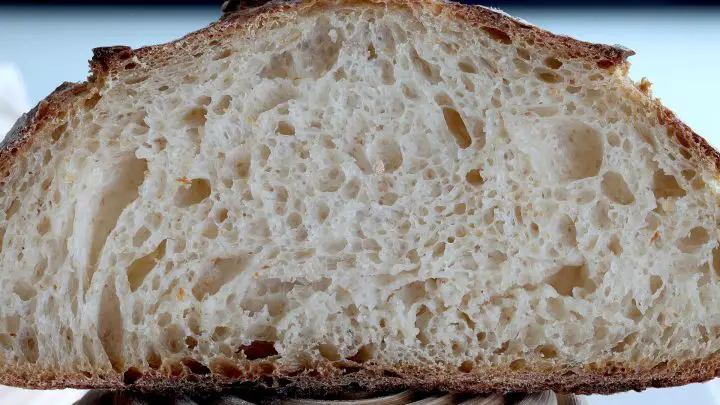
This recipe produces small individual loaves with a firm crust, open crumb, and light tang. It uses a combination of almond flour, coconut flour, and psyllium husk to replicate the structure that gluten provides in traditional bread.
Yield: 4–6 small loaves
Prep time: 15 minutes
Bake time: 33 minutes
Total time: ~50 minutes
Ingredients
Dry ingredients:
- 1½ cups almond flour
- ½ cup coconut flour
- ⅓ cup psyllium husk powder
- ½ cup flaxseed meal
- 1 tsp baking soda
- ½ tsp baking powder
- 1 tsp sea salt or kosher salt
- 1 tsp Italian seasoning (optional)
Wet ingredients:
- 2 whole eggs
- ¾ cup egg whites
- ¾ cup buttermilk
- ½ cup apple cider vinegar
- ½ cup warm water
Finishing:
- 3 tbsp melted butter
- Pinch of flaky salt
Optional add-ins:
- 1–2 scoops unflavored or lightly flavored protein powder (add to dry ingredients; see note below)
How to Make
1. Preheat the oven Set the oven to 350°F (175°C). Line a baking sheet with parchment paper.
2. Mix the dry ingredients In a large bowl, whisk together the almond flour, coconut flour, psyllium husk powder, flaxseed meal, baking soda, baking powder, salt, and Italian seasoning (if using). If adding protein powder, whisk it in at this stage.
3. Mix the wet ingredients In a separate bowl, combine the eggs, egg whites, buttermilk, apple cider vinegar, and warm water. Whisk until the mixture begins to froth slightly on the surface.
4. Combine Pour the wet ingredients into the dry ingredients gradually, stirring as you go. Mix until a smooth, lump-free dough forms. The dough will be thicker than a batter but softer than typical bread dough and his is expected with psyllium husk.
5. Shape the loaves Divide the dough into 4–6 equal portions. Shape each into a small round or oval loaf and place on the lined baking sheet. Score the tops with a sharp knife (2–3 diagonal cuts) to allow for oven spring.
6. Bake Bake at 350°F for 30 minutes, until the edges are golden and the loaves sound hollow when tapped on the bottom.
7. Butter and broil Remove the loaves from the oven. Brush the tops with melted butter and add a small pinch of flaky salt. Return to the oven and broil on high for 3 minutes, watching closely, until the tops turn deep golden brown.
8. Cool Let the loaves cool on a wire rack for at least 15 minutes before cutting. Cutting too early causes the interior to become gummy.
Recipe Notes
About Protein Powder
Adding 1–2 scoops of unflavored protein powder boosts the protein content per loaf without significantly affecting the texture. Whey protein isolate works best since it blends into the dry ingredients smoothly.
Avoid flavored varieties unless you want a sweeter result. Add it with the other dry ingredients in Step 2 and reduce the almond flour by a small amount (about 2 tablespoons per scoop) to keep the dough consistency balanced.
About Psyllium Husk
Psyllium husk powder is a fiber-rich ingredient that acts as a binder in gluten-free and keto baking. It holds the loaf together the way gluten would in a conventional dough, and it creates a springier, more bread-like texture.
It’s also prebiotic, supporting gut bacteria. This is an added benefit since sourdough fermentation already has digestive advantages.
Use psyllium husk powder, not whole psyllium husks. The powder integrates better and produces a smoother crumb.
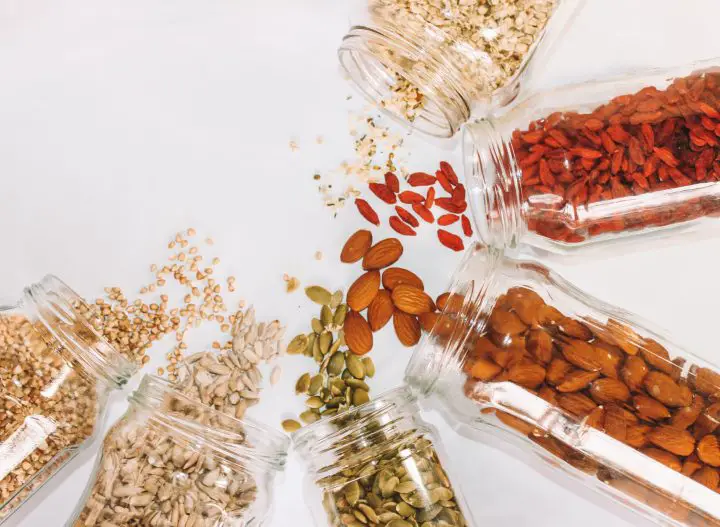
Optional Add-Ins: Nuts and Seeds
Adding raw nuts or seeds to the dough gives the bread more texture and flavor. Mix them in just before shaping the loaves.
| Add-In | Flavor Profile | Notes |
|---|---|---|
| Raw pecans | Mild, buttery | Easy to blend in; won’t overpower |
| Brazil nuts | Bold, crunchy | Chop roughly for texture |
| Sunflower seeds | Neutral, slightly earthy | May turn bread green due to a reaction with baking soda. Safe to eat, just unexpected |
You can add homemade yogurt or homemade butter to this recipe. I have a recipe using pumpkin seed pesto on my pesto sourdough, if you wanted to check it out!
How to Store Keto Sourdough Bread
| Timeframe | Storage Method |
|---|---|
| Up to 2 days | Wrap in paper bag or plastic wrap; leave at room temperature |
| 3–5 days | Wrap tightly and refrigerate |
| Up to 3 months | Slice, freeze flat on a plate, then transfer to an airtight bag or container |
To reheat from frozen, toast individual slices directly from frozen or warm in a 300°F oven for 8–10 minutes.
FAQs
Is sourdough bread keto-friendly?
Standard sourdough is not recommended on a strict keto diet. It contains 16–19g of carbs per slice depending on the flour used, which can exceed a full day’s carb limit for people targeting 20g per day. A homemade keto version using almond flour and coconut flour brings the carb count down significantly.
Does sourdough have fewer carbs than regular bread?
Yes, but only marginally. The fermentation process breaks down some of the starches and sugars, which reduces the carb content slightly. It’s not enough of a difference to make traditional sourdough low-carb.
Can you use almond flour in a sourdough starter?
Almond flour can be used in a starter and works well for low-carb and gluten-free versions. Coconut flour is used in the starter recipe above, but almond flour is a reasonable substitute if that’s what you have on hand.
Is sourdough bread healthy?
Compared to most commercial white bread, sourdough has some advantages. It has a lower glycemic index, supports gut health through fermentation, and is easier to digest for some people. That said, it’s still a carbohydrate-rich food and doesn’t fit a strict keto diet without modifications.




Hello Natasha, I’m very excited to try this recipe. Do you think it can be adapted to make focaccia?
The ingredients list Italian Seasoning but then it is not used in the procedure. Also, you talk about making the Sourdough Starter with the coconut flour but does not say how to use it when the starter is ready.
Excitedly making this recipe. There is no indication when to add the 2 whole eggs. Just went ahead and added with the other wet and dry ingredients. Hoping for the best!!
Hi Beth! I’m glad you’re excited to try the recipe! While this keto sourdough recipe is designed for bread, you can adapt it for focaccia by spreading the dough into a well-oiled pan, pressing it out gently, and adding your favorite toppings before baking. Let me know how it turns out! 😊