
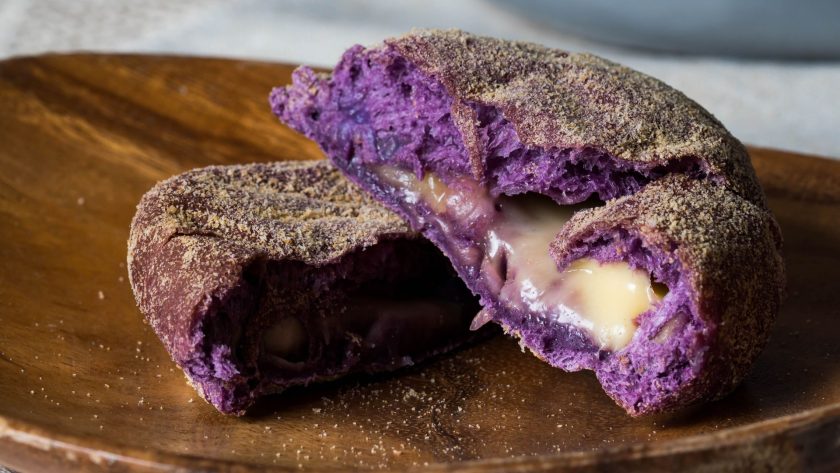
You will get a full recipe for ube pandesal stuffed with melted cheese, a Filipino bread roll with a vivid purple crumb, a lightly sweet dough, and a gooey savory center. By the end, you will have everything you need to bake these from scratch at home!
What Is Ube Bread?
When people search for ube bread, they are usually after one of two things: a loaf or a roll. This recipe delivers the roll version, specifically ube pandesal, and it is the better starting point many.
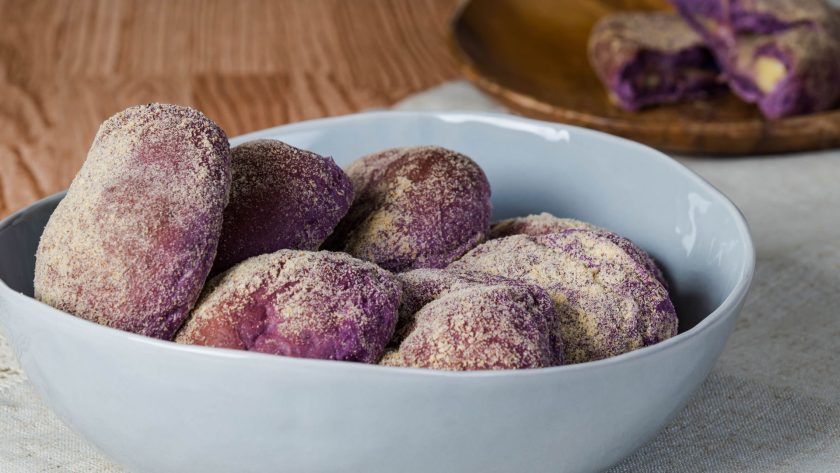
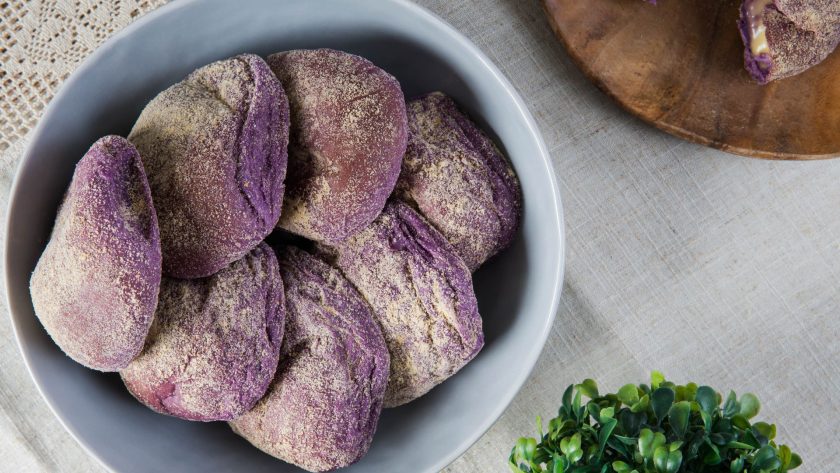
Pandesal is the most common bread in the Philippines. The name translates to “salt bread,” which is slightly misleading since these rolls are actually mildly sweet, not salty. They are soft, fluffy, and coated in fine breadcrumbs that give the outside a faint crust while the inside stays pillowy.
Ube pandesal takes that same roll and works ube into the dough, turning it a vivid purple and adding a subtly earthy, vanilla-like sweetness.
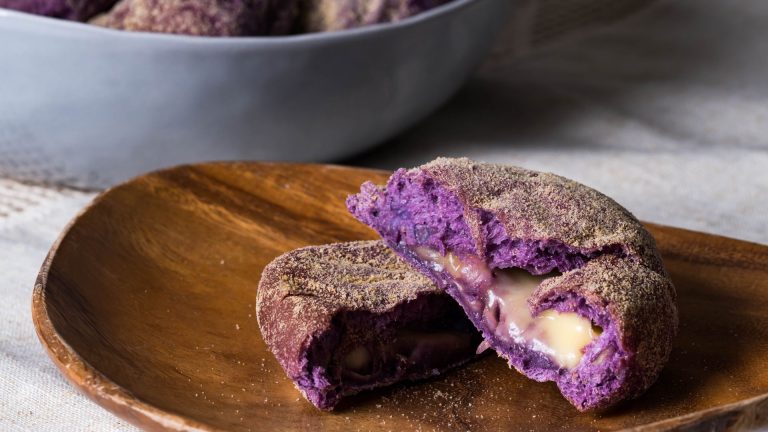
The cheese filling is not optional in the way a garnish is optional. It is the whole point. The salt from the melted cheese cuts through the sweet ube dough in a way that makes each bite more interesting than the last.
Filipino bakeries sell these filled with processed quick-melt cheese, and that combination has built a devoted following for a reason.
What Is Ube?
Ube is a purple yam (Dioscorea alata) that grows across Southeast Asia and is deeply embedded in Filipino food culture. It shows up in ice cream, cakes, jam, kakanin (rice cakes), and bread.
The flavor is mild and slightly sweet with a nutty, vanilla-adjacent quality that is distinct from taro or purple sweet potato, which are sometimes sold as substitutes.
For baking, ube most commonly appears in three forms:
| Form | What It Is | Best Use |
|---|---|---|
| Ube halaya | Cooked, sweetened ube jam | Dough, fillings, swirl patterns |
| Ube extract | Concentrated flavoring and color | Intensifying color and flavor |
| Ube powder | Dehydrated ube, needs rehydrating | Substitute when halaya is unavailable |
| Fresh ube | Steamed and mashed | Most natural flavor, requires prep |
For these pandesal, ube halaya combined with a small amount of ube extract gives the best result. The halaya adds genuine flavor and body to the dough. The extract helps the purple color survive the oven, since ube’s anthocyanin pigments are sensitive to heat and tend to fade without some help.

Which Cheese Please?
Not all cheese behaves the same inside a bread roll. Here is how the most common options compare:
| Cheese | Melt Quality | Flavor | Notes |
|---|---|---|---|
| Quick-melt cheese (Eden, Velveeta) | Excellent | Mild, salty, creamy | The classic Filipino bakery choice |
| Sharp cheddar, sliced | Good | Tangy, pronounced | More contrast against the sweet dough |
| Gouda | Very good | Buttery, mild | Melts cleanly with a smooth finish |
| Mozzarella | Good | Mild, stretchy | Goes stringy when eaten warm |
| Cream cheese | Soft, stays in pockets | Tangy, rich | Does not melt flat; gives a cheesecake-like center |
Quick-melt cheese is the traditional pick and the one most Filipino ube pandesal recipes use. It melts into a smooth, creamy layer that distributes evenly through the roll. Sharp cheddar is a good substitute if you want a more assertive cheese flavor. Use about 1 teaspoon to 1 tablespoon of filling per roll, depending on the size of your dough balls.
Ingredients
For the Dough
| Ingredient | Amount |
|---|---|
| Bread flour | 300g (about 2 1/2 cups) |
| Granulated sugar | 50g (1/4 cup) |
| Salt | 5g (1 tsp) |
| Instant yeast | 6g (2 tsp) |
| Whole milk, warm | 120ml (1/2 cup) |
| Large egg | 1 |
| Ube halaya | 120g (about 1/2 cup) |
| Ube extract | 1/2 tsp |
| Unsalted butter, softened | 40g (3 tbsp) |
For the Filling
| Ingredient | Amount |
|---|---|
| Quick-melt cheese or sharp cheddar | 100g (about 3.5 oz), cut into 12 small cubes or pieces |
For the Coating and Egg Wash
| Ingredient | Amount |
|---|---|
| Fine breadcrumbs | 60g (about 1/2 cup) |
| Egg yolk | 1 |
| Milk | 1 tbsp |
How to Make Ube Pandesal with Cheese
Step 1: Bloom the Yeast
- Warm the milk to around 38°C (100°F). It should feel comfortably warm when you touch it, not hot. Above 46°C (115°F) will kill the yeast.
- Stir in 1 tablespoon of the measured sugar and all of the yeast. Let sit for 5 to 10 minutes until the surface is foamy and active.
- If the mixture does not foam, the yeast is inactive or the milk was too hot. Start over with fresh yeast before continuing.
Step 2: Mix the Dough
- In a stand mixer bowl, whisk together the bread flour, remaining sugar, and salt.
- Add the yeast mixture, egg, ube halaya, and ube extract.
- Mix on low speed with the dough hook until a rough, shaggy dough comes together, about 2 minutes.
- Increase to medium speed and knead for 5 minutes.
- Add the softened butter one tablespoon at a time. Wait for each piece to fully incorporate before adding the next. The dough will look rough and might come apart briefly during this process; keep going.
- Once all the butter is in, continue kneading on medium-high for another 8 to 10 minutes. The dough is ready when it is smooth, elastic, and slightly tacky but not sticky. It should pass the windowpane test: stretch a small piece gently between your fingers until it is thin enough to see light through without tearing.
Step 3: First Rise
- Shape the dough into a smooth ball and place it in a lightly oiled bowl. Turn it once to coat.
- Cover with plastic wrap or a clean damp towel.
- Let rise at room temperature, around 24 to 27°C (75 to 80°F), until doubled in size. This takes 1 to 1.5 hours. If your kitchen is cold, place the covered bowl in an oven with just the light on.
Step 4: Prepare the Cheese Filling
- While the dough rises, cut the cheese into 12 small, equal-sized cubes or pieces, roughly 8g each.
- Keep the cheese cold in the refrigerator until you are ready to stuff the rolls. Cold cheese is much easier to work with and holds its shape better during shaping.
Step 5: Divide and Shape the Rolls
- Gently punch down the risen dough and turn it out onto a lightly floured surface.
- Divide into 12 equal pieces, roughly 50 to 55g each. A kitchen scale makes this easier and gives you uniform rolls that bake at the same rate.
- Take one piece of dough and flatten it into a small disc, about 8 cm (3 inches) across.
- Place one piece of cold cheese in the center.
- Pull the edges of the dough up and around the cheese, gathering them together at the top and pinching firmly to seal. Roll the filled dough ball between your palms to smooth it out.
- Roll the ball in breadcrumbs until fully coated, pressing lightly so they stick.
- Repeat with the remaining dough and cheese.
Step 6: Arrange and Second Rise (Proof)
- Place the coated rolls on a parchment-lined baking sheet, leaving about 3 to 4 cm (1.5 inches) between each.
- Cover loosely with plastic wrap and let proof for 45 minutes to 1 hour, until the rolls have puffed noticeably and are touching or nearly touching.
- Do not rush this step. Rolls that have not proofed long enough will bake up dense and the cheese will not melt as smoothly into the crumb.
Step 7: Egg Wash and Bake
- Preheat your oven to 180°C (355°F).
- Whisk the egg yolk and milk together and brush lightly over the tops of the rolls. A gentle touch here avoids deflating them.
- Bake for 14 to 18 minutes, until the tops are golden brown and the rolls feel set when you press them lightly.
- The cheese inside will be fully melted. Let the rolls rest for 5 minutes before eating so the filling settles slightly.
Recipe Tips
Getting the Purple to Stay
Ube’s color comes from anthocyanins, plant pigments that break down under heat and acidic conditions. A few things help the purple survive baking:
- Use ube extract alongside halaya. Extract contains concentrated, more heat-stable color. Without it, the dough often bakes up muted brown or gray-purple.
- Do not overbake. Higher heat and longer bake times accelerate color loss. Pull the rolls as soon as they are golden.
- Avoid acidic additions. Lemon juice, vinegar, and buttermilk all push the color toward brown. Standard dairy ingredients are fine.
Getting the Texture Right
| Problem | Likely Cause | Fix |
|---|---|---|
| Dense, heavy rolls | Under-proofed or yeast failed | Confirm yeast is active; proof until rolls are visibly puffed |
| Gummy interior | Under-baked | Add 2 to 3 more minutes; the cheese can slow heat transfer |
| Dry, tough crumb | Too much flour or overbaked | Spoon and level flour; do not add extra during kneading |
| Flat rolls that spread | Over-proofed | Watch the second rise; bake when rolls are puffed but still hold shape |
| Cheese leaking out | Seams not sealed | Pinch the top closure firmly and roll smooth before coating |
Measuring Flour Correctly
Adding too much flour is the most common reason ube pandesal comes out dry. Do not scoop the cup directly into the flour bag, which compacts it significantly. Instead, spoon flour into the measuring cup and level off the top with a straight edge. Better yet, use a kitchen scale.
Working with Ube Halaya
Jarred ube halaya varies a lot by brand. Some are thick and stiff; others are looser and wetter. If yours is on the runny side, reduce the milk in the dough by 15 to 20ml. If it tastes very sweet, cut the sugar in the recipe back by 1 tablespoon. The dough should feel soft and slightly sticky before the butter goes in, not wet or sloppy.
Hand Kneading
A stand mixer makes this easier but is not required. If kneading by hand, plan for 15 to 20 minutes total. The dough will feel very sticky at first from the ube halaya and butter. Resist adding flour and use the slap-and-fold method on the counter to develop the gluten. It will come together.
Storing Ube Pandesal
| Storage | How Long | Notes |
|---|---|---|
| Room temperature, airtight | 1 to 2 days | Best eaten the same day or the next morning |
| Refrigerator | Up to 5 days | Reheat in a 160°C (320°F) oven for 5 minutes before eating |
| Freezer | Up to 2 months | Freeze fully cooled rolls; reheat from frozen at 175°C (350°F) for 10 to 12 minutes |
Ube pandesal is best eaten warm when the cheese is still soft. Day-old rolls reheat well in the oven and taste very close to fresh.
Serving Ideas
Ube pandesal with cheese is a complete snack on its own, but a few combinations are especially good:
- Warm from the oven with butter: The butter melts into the breadcrumb crust and the cheese inside is still gooey.
- With a cup of hot chocolate or barako coffee: The classic Filipino breakfast pairing. The bitterness of the coffee balances the sweet dough well.
- Split and spread with more ube halaya: Leans fully into the ube flavor and makes a good afternoon snack.
- With scrambled eggs on the side: Rounds out the meal and the savory cheese ties the whole plate together.
- Split and used as a small sandwich: The soft crumb holds up well to fillings like corned beef, spam, or longganisa.
Related:
- What to Eat With Sourdough Bread?
- 26 Sourdough Recipes for 2026
- Whole Grain Wheat Sourdough Hamburger Buns With Tarragon
Ooh Baby, Ube!
Ube pandesal with cheese does not need a long explanation for why it works. Sweet, fluffy dough meets melted savory cheese, and the combination has made these rolls a staple in Filipino tables for decades. The purple color is a bonus that makes them hard to resist before you even take a bite.
Make a batch, eat them warm, and keep the leftovers sealed tightly for breakfast the next day.
Frequently Asked Questions
Can I use all-purpose flour instead of bread flour?
Yes, but the texture will be slightly less chewy and the rolls will be a bit more tender. Bread flour has higher protein content which gives pandesal its characteristic slight chew. If all-purpose is all you have, it works fine.
Can I use ube jam from a jar?
Yes. Brands like Jufran, Clara Ole, and Goldilocks ube halaya are all widely available in Asian grocery stores. Quality and sweetness varies between brands, so taste your halaya before using it and adjust the sugar in the dough if needed.
Can I skip the breadcrumb coating?
You can, but the coating is part of what makes pandesal pandesal. The fine breadcrumbs give the outside a slightly crisp layer and the mild toasty flavor that distinguishes it from a plain dinner roll. If you do not have fine breadcrumbs, pulse regular breadcrumbs briefly in a food processor.
Why did my cheese leak out during baking?
The seam was not sealed tightly enough. Make sure you gather all the dough edges completely and pinch them firmly before rolling the ball smooth. Also keep the cheese cold before filling, which makes it easier to handle and less likely to start melting before the dough sets around it.
Can I make these ahead and bake them the next morning?
Yes. After shaping and coating the rolls, place them on the baking sheet, cover tightly with plastic wrap, and refrigerate overnight. The next morning, let them sit at room temperature for 30 to 45 minutes before baking. This cold fermentation actually develops more flavor in the dough.
My dough is not purple enough. What happened?
Ube halaya alone often produces a muted gray-purple or brownish dough, especially if the halaya itself is not deeply colored. Adding ube extract (start with 1/2 tsp and add more if needed) brings out the vivid color before and during baking. The baked rolls will always be slightly less intense than the raw dough, which is normal.
Can I make a larger or smaller batch?
This recipe scales easily. For 6 rolls, halve everything. For 24 rolls, double it. Keep the yeast amount proportional and note that larger batches will need slightly longer kneading time.
Ube Bread Recipe
- Total Time: 0 hours
- Yield: 12 rolls 1x
Ingredients
Dough
- 300g (2 1/2 cups) bread flour
- 50g (1/4 cup) sugar
- 5g (1 tsp) salt
- 6g (2 tsp) instant yeast
- 120ml (1/2 cup) warm whole milk
- 1 large egg
- 120g (1/2 cup) ube halaya
- 1/2 tsp ube extract
- 40g (3 tbsp) softened unsalted butter
Filling
- 100g quick-melt cheese or sharp cheddar, cut into 12 pieces
Coating
- 60g (1/2 cup) fine breadcrumbs
- 1 egg yolk + 1 tbsp milk, for egg wash
Instructions
- Dissolve yeast and 1 tbsp sugar in warm milk (38°C / 100°F). Let sit 5 to 10 minutes until foamy.
- Mix flour, remaining sugar, and salt. Add yeast mixture, egg, ube halaya, and ube extract. Knead 5 minutes.
- Add butter one tablespoon at a time, kneading until fully incorporated. Continue kneading 8 to 10 minutes until smooth and elastic.
- Place in an oiled bowl, cover, and let rise until doubled, about 1 to 1.5 hours.
- Divide dough into 12 pieces (about 50g each). Flatten each into a disc, place one piece of cold cheese in the center, wrap dough around it, and pinch firmly to seal.
- Roll each ball in breadcrumbs and place on a lined baking sheet. Cover and proof 45 to 60 minutes until puffy.
- Brush with egg wash. Bake at 180°C (355°F) for 14 to 18 minutes until golden.
- Rest 5 minutes before serving.
Notes
- Keep cheese cold before filling so it is easier to handle
- Seal seams tightly to prevent leaking
- Best eaten warm; reheat leftovers in the oven at 160°C (320°F) for 5 minutes
- Prep Time: 30 min, Rise: 2 hrs
- Cook Time: 16 min
- Category: Breakfast, Side Dish
- Method: Baking
- Cuisine: Filipino
Related Articles:
 5 Keto Bread Recipes That Actually Taste Like Bread (No Cardboard Here!)
 7 Lavash Bread Recipes to Master This Ancient Flatbread at Home
 How to Make Quinoa Sourdough Bread (Plus Why You’ll Love It)
 5 Amazing Bread Machine Recipes for Perfect Homemade Loaves
 9 Irresistible Bread Bowl Recipes You Can Make at Home
