
Last updated on December 22nd, 2025
I’ll admit, stollen intimidated me for years. The ingredient list looks long, the dough needs multiple rises, and traditional recipes call for techniques that seem fussy. But after making it once and then more often, I can tell you that this bread is far more forgiving than it appears. The hands-on time is minimal, and most of the work happens while you’re doing other things.
The History Behind This Holiday Classic
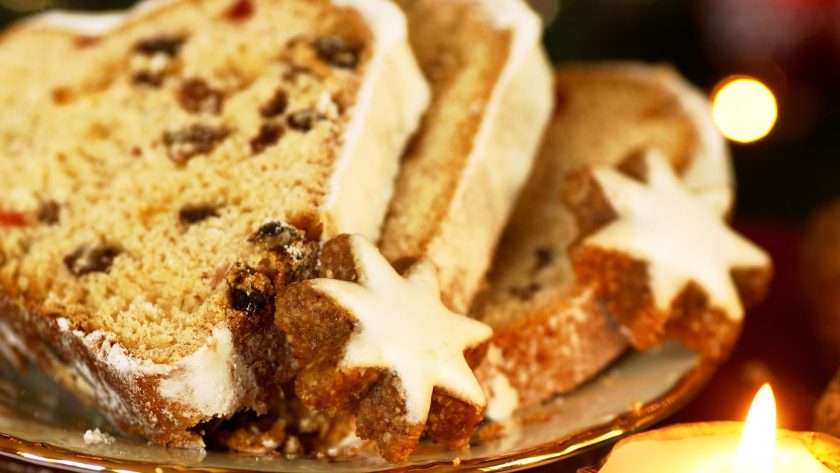
There’s a reason Christmas stollen has survived centuries as one of Germany’s most beloved holiday traditions. This rich, fruit-studded bread wrapped in a snowy blanket of powdered sugar delivers everything you want in a festive bake: warm spices, rum-soaked fruits, and a tender crumb that improves with age.
Stollen originated in Dresden, Germany, in the 1400s. The original versions were much simpler with just flour, water, and yeast, since butter and milk were forbidden during Advent fasting. When Pope Innocent VIII issued the “Butter Letter” in 1490, allowing Saxon nobility to use butter during fasting periods, stollen transformed into the rich bread we know today.
The shape matters too. Traditional stollen gets folded to represent the baby Jesus wrapped in swaddling clothes. The white powdered sugar coating symbolizes the purity of the infant Christ. Dresden still holds an annual Stollenfest, where bakers create a massive stollen weighing several tons and parade it through the streets.
You’ll find variations across Germany and beyond. Some versions include marzipan in the center, others add more or fewer fruits, and some prefer different spice combinations.
This recipe we have today stays close to the Dresden tradition but somewhat adapted for home baking.
Why Make Stollen at Home
The dough enriched with butter and eggs creates a bread that sits somewhere between cake and traditional yeast bread. The dried fruits macerate in rum for hours (or days), plumping up and infusing the entire loaf with flavor.
And after baking, you brush it with melted butter and coat it generously with powdered sugar, which forms a protective layer that keeps the bread moist.
Bakery stollen can be excellent, but making it yourself gives you control over the quality of ingredients and the intensity of flavors. You can use better dried fruits, real vanilla, and rum that you’d actually drink. You can adjust the sweetness, add more or fewer spices, and decide how generous you want to be with the butter coating.
Home-baked stollen also makes remarkable gifts. Wrapped in parchment and tied with ribbon, a loaf of stollen tells someone you invested real time and care into their present. The bread actually improves over several weeks, so you can bake ahead without any loss of quality. In fact, it’s known that stollen tastes better after a week or two of aging.
The process itself has become part of my holiday ritual. Mixing the dough, smelling the spices, and coating the warm loaf in butter and sugar puts me in a festive mood like few other activities. There’s something meditative about the whole process, and the house smells incredible for days.
What’s in a Stollen?
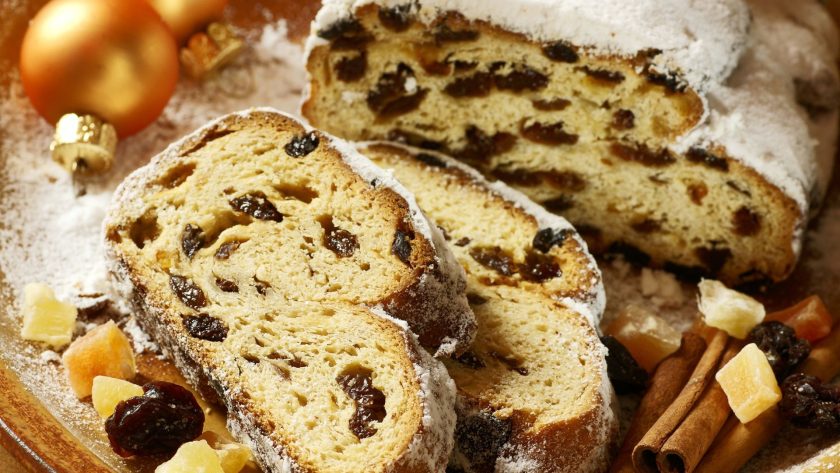
Dried Fruits and Candied Peels This mix creates layers of flavor that unfold as you chew. Raisins and currants bring natural sweetness, apricots add subtle tartness, and candied citrus peels deliver bright, intense bursts that cut through the richness. Using multiple fruits instead of just raisins makes each bite different and interesting.
Dark Rum The rum isn’t just for flavor—it’s doing real work. As the fruits soak, they plump up and become juicy enough to stay moist during baking instead of stealing moisture from the dough around them. Ever had a rock-hard raisin in a muffin? That’s what we’re preventing. The alcohol also extracts flavor compounds that water can’t touch, and helps preserve the finished bread. Most of the boozy taste bakes off, leaving behind warmth and complexity.
Cardamom, Nutmeg, and Mace This trio creates that distinctly European holiday aroma. Cardamom brings floral notes that smell expensive. Nutmeg adds cozy warmth. Mace—the delicate outer coating of nutmeg seeds—contributes a refined sweetness. Together they make your kitchen smell like a German Christmas market without the cinnamon-heavy profile of American holiday baking.
Butter (The Double Dose) Butter works twice in this recipe. Mixed into the dough, it coats flour proteins and creates that tender, almost cake-like texture. Brushed on after baking, it soaks into the crust and glues the powdered sugar in place, forming a protective seal that keeps the bread moist for weeks. This isn’t excess—it’s preservation technique that German bakers have used for centuries.
Eggs Eggs give structure and richness without making the bread heavy. Their proteins help the loaf hold together despite all those fruits and nuts, while the yolks add fat for tenderness and create that golden interior color. They also help the massive amount of butter blend smoothly into the dough instead of turning greasy.
Whole Milk Milk makes the dough soft and stretchy, which matters when you’re folding it into that traditional shape. The natural sugars help the crust brown beautifully, and the fat adds another layer of richness. Water would make this chewier and more bread-like—fine for a baguette, wrong for stollen.
Fresh Citrus Zest While candied peels provide chewy texture and concentrated flavor, fresh zest adds aromatic oils you can actually smell when you slice the bread. These bright, volatile compounds keep stollen from tasting heavy and one-note despite all the butter and dried fruit. It’s the difference between smelling perfume and smelling the actual flower.
Almonds Roughly chopped almonds give you both fine pieces that disappear into the dough and larger chunks that provide surprise crunch. They bring subtle nuttiness that complements the stone fruits and citrus without competing for attention. They also contain oils that help the bread stay fresh longer.
Powdered Sugar That thick white coating does more than look pretty. The cornstarch in powdered sugar helps it cling to the buttered surface and form a barrier against air, which is why properly coated stollen stays moist for weeks. Over time, the sugar absorbs some butter and creates a sweet, slightly crispy shell. Granulated sugar would just roll off and leave your bread exposed.
Yeast Yeast creates the rise and develops complex flavors during those long fermentation periods that you can’t replicate with baking powder. It produces carbon dioxide that lightens what would otherwise be a fruit cake-dense loaf. The slow fermentation also builds gluten structure strong enough to support all those heavy mix-ins without making the bread tough or chewy.
Ingredients You’ll Need
For the Fruit Mixture
- 1 cup raisins
- 1 cup currants
- ½ cup chopped dried apricots
- ½ cup chopped candied orange peel
- ¼ cup chopped candied lemon peel
- ⅓ cup dark rum
- Zest of 1 lemon
- Zest of 1 orange
For the Dough
- 4 cups all-purpose flour, plus more for kneading
- ⅓ cup granulated sugar
- 2¼ teaspoons instant yeast (1 packet)
- 1 teaspoon salt
- 1 teaspoon ground cardamom
- ½ teaspoon ground nutmeg
- ¼ teaspoon ground mace (or additional nutmeg)
- ¾ cup whole milk, warmed to 110°F
- 2 large eggs, room temperature
- 1 teaspoon vanilla extract
- ½ teaspoon almond extract
- 10 tablespoons unsalted butter, softened
- ⅔ cup sliced almonds, roughly chopped
For Finishing
- 4 tablespoons unsalted butter, melted
- 1 cup powdered sugar, plus more as needed
How to Make Christmas Stollen
- Prepare the fruit mixture. Combine raisins, currants, dried apricots, candied orange peel, candied lemon peel, rum, lemon zest, and orange zest in a bowl. Stir well, cover tightly, and let sit at room temperature for at least 4 hours or overnight. The fruits will absorb most of the liquid and become plump and flavorful.
- Mix the dry ingredients. In a large bowl or the bowl of a stand mixer, whisk together flour, sugar, yeast, salt, cardamom, nutmeg, and mace until evenly combined.
- Combine the wet ingredients. In a separate bowl or large measuring cup, whisk together the warm milk, eggs, vanilla extract, and almond extract.
- Form the dough. Pour the wet ingredients into the dry ingredients. Mix on low speed with a dough hook (or stir with a wooden spoon) until a shaggy dough forms. Add the softened butter one tablespoon at a time, mixing until each addition is fully incorporated before adding the next. This will take about 5 minutes with a mixer.
- Knead the dough. Once all the butter is incorporated, increase mixer speed to medium and knead for 8-10 minutes. The dough should become smooth, elastic, and slightly sticky. If kneading by hand, turn the dough onto a lightly floured surface and knead for about 12-15 minutes.
- Add the fruits and nuts. Drain any excess liquid from the macerated fruits. With the mixer on low speed (or by hand), gradually add the fruit mixture and chopped almonds to the dough. Knead just until evenly distributed throughout the dough, about 2-3 minutes.
- First rise. Form the dough into a ball and place it in a lightly greased bowl. Cover with plastic wrap or a damp towel and let rise in a warm spot until doubled in size, about 1½ to 2 hours.
- Shape the stollen. Punch down the dough and turn it onto a lightly floured surface. Pat it into an oval about 10 inches long and 8 inches wide. Fold the dough lengthwise, bringing one long side just past the center. The fold should be slightly off-center, creating a distinctive hump on one side. Press gently to seal.
- Second rise. Transfer the shaped stollen to a parchment-lined baking sheet. Cover loosely with plastic wrap and let rise for 45-60 minutes. The dough will puff up but won’t double in size.
- Bake the stollen. Preheat your oven to 350°F. Bake the stollen for 35-40 minutes, until golden brown and an instant-read thermometer inserted into the center reads 190°F. If the top browns too quickly, tent it loosely with aluminum foil.
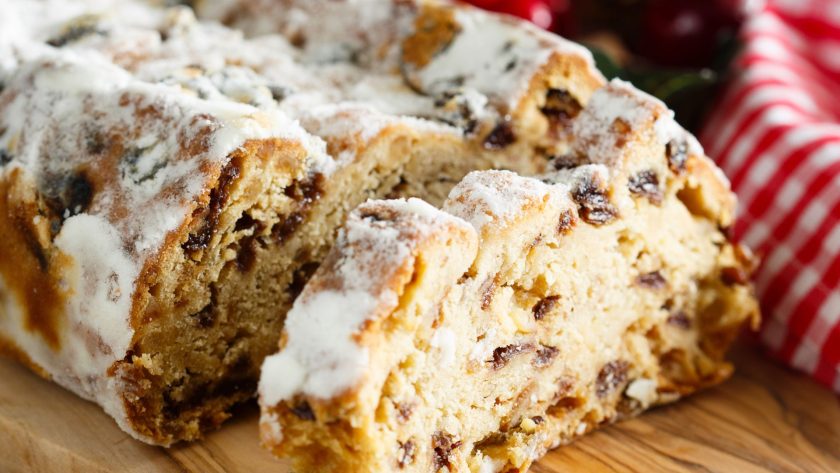
- Finish with butter and sugar. While the stollen is still hot from the oven, brush it generously all over with melted butter. Dust heavily with powdered sugar, using about ½ cup. Let cool for 10 minutes, then dust again with the remaining powdered sugar. The butter helps the sugar adhere and creates a protective coating.
- Age the stollen. Once completely cool, wrap the stollen tightly in plastic wrap, then in aluminum foil. Store at room temperature for at least 3 days before slicing. The bread will continue to improve for up to 3 weeks.
Secrets to a Successful Stollen
Give the fruits enough soaking time. The longer your dried fruits soak in rum, the more flavorful your stollen will be. I usually start this process the night before I plan to bake. If you’re short on time, warm the rum slightly before pouring it over the fruits to speed up absorption.
Watch your dough temperature. Rich doughs with lots of butter and eggs can be temperature-sensitive. If your kitchen is cold, the dough will rise slowly. If it’s too warm, the butter might start to leak out. Aim for a room temperature around 70-75°F for the best rise.
Don’t skip the off-center fold. This isn’t just for looks, actually! The traditional fold creates a layered structure inside the bread that gives stollen its characteristic texture. One side should be noticeably higher than the other when you’re done shaping.
Use enough powdered sugar. That thick white coating isn’t just decorative. It seals in moisture and helps preserve the bread. Don’t be shy with the sugar.. In this case, you want a coating thick enough that it almost looks like snow.
Resist cutting too early. I know waiting is hard when your kitchen smells amazing, but stollen really does taste better after a few days of rest. The flavors meld, the texture becomes more tender, and the bread slices more cleanly.
Store properly for maximum shelf life. Wrapped tightly, stollen keeps for 3-4 weeks at room temperature. You can also freeze it for up to 3 months. Thaw overnight in the refrigerator, then bring to room temperature before serving.
Slice it thin. This is a rich bread, and a little goes a long way. Cut slices about ½ inch thick. The dense, fruit-packed texture and sweet coating mean that thin slices are satisfying.
Warm it slightly before serving. A few seconds in the microwave or a few minutes in a low oven makes the butter in the bread a bit more fragrant and brings out the spice flavors.
Variations to Try
- Experiment with different fruits and nuts. Try dried cherries instead of currants, or swap the apricots for dried figs. Why not add candied ginger for extra spice? Or a rope of marzipan in the center before folding the dough.
- You can adjust the spices to your taste. More cardamom gives an intensely aromatic bread, while additional nutmeg creates a warmer flavor. A pinch of ground cloves adds depth, though go easy (clove can quickly overpower other flavors).
- For a non-alcoholic version, soak the fruits in orange juice instead of rum. The flavor will be different but still delicious. You can add a splash of vanilla to the juice to give it more complexity.
Serving Suggestions
Stollen traditionally appears at breakfast or afternoon coffee, sliced and served plain or with butter. The Germans pair it with coffee or tea, letting the bread’s sweetness balance the bitterness of the drink.
I also like to serve it as a dessert, perhaps with a small glass of dessert wine or port. The rich, fruity bread stands up well to sweet wines. Some people enjoy it with a dollop of whipped cream or a thin slice of good cheese.
During the holidays, I’ll put out a plate of stollen slices alongside cookies and other treats. It offers something different from the usual sugar cookies and brownies, and guests always ask about it.
Why This Recipe Works
The combination of milk, eggs, and butter creates what bakers call an enriched dough. This gives stollen a tender, almost cake-like crumb while maintaining enough structure to hold all those fruits and nuts. The yeast provides flavor and a light texture, but this isn’t a fluffy bread! Stollen should be dense and satisfying.
Macerating the fruits in rum serves two purposes. First, it adds flavor throughout the bread. Second, it prevents the dried fruits from stealing moisture from the dough during baking, which would create dry spots around each piece of fruit.
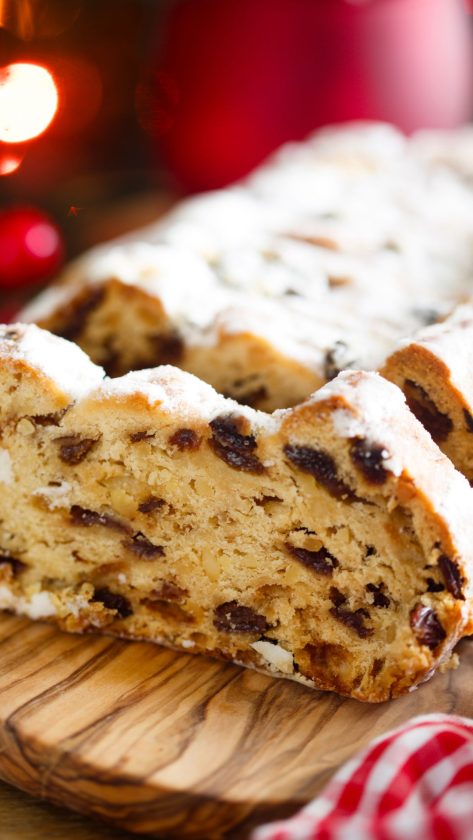
The unusual shaping method, with the off-center fold, creates layers in the bread that give each slice an interesting cross-section. You’ll see swirls of dough and fruit rather than a uniform distribution.
That generous coating of butter and powdered sugar isn’t just about looks or extra richness. It creates a seal that keeps the bread moist for weeks. This preservation technique has been around for centuries.
Make It Your Holiday Tradition
After you’ve made stollen once or twice, it becomes less daunting and more routine. You’ll develop a rhythm: soak the fruits on Thursday, mix the dough on Friday morning, shape it in the afternoon, and bake Friday evening. By the following weekend, your stollen has mellowed into something truly special.
Making stollen doesn’t require professional skills or equipment. You need time, decent ingredients, and patience. The reward is a bread that tastes like the holidays, looks impressive, and fills your home with the scent of spices and citrus.
Once you pull that first loaf from the oven and coat it in butter and sugar, you’ll understand why this tradition has endured for so long.
Related Articles:
 5 Recipes Worth Your Time Learning the Art of Bread Rolls
 5 Keto Bread Recipes That Actually Taste Like Bread (No Cardboard Here!)
 7 Lavash Bread Recipes to Master This Ancient Flatbread at Home
 How to Make Quinoa Sourdough Bread (Plus Why You’ll Love It)
 Easy Bread Recipes for Beginners: 6 Simple Loaves Anyone Can Bake

I liked the way this was explained. Simple, clear, and still detailed enough to be useful.