Last updated on October 13th, 2026
Protein focaccia is everything you love about the classic, with a serious protein boost. Think a golden, olive oil–crisp bottom, a soft and bubbly crumb, and nearly double the protein per square, so every slice keeps you fuller for longer. It’s the kind of bread that fits right into a high-protein lifestyle without giving up a single bit of flavor.
Below, you’ll find the best high-protein ingredients, a simple formula, easy tricks for an airy crumb, tasty topping ideas, and quick fixes for any hiccups along the way. Grab your favorite pan and get ready to bake something seriously good.
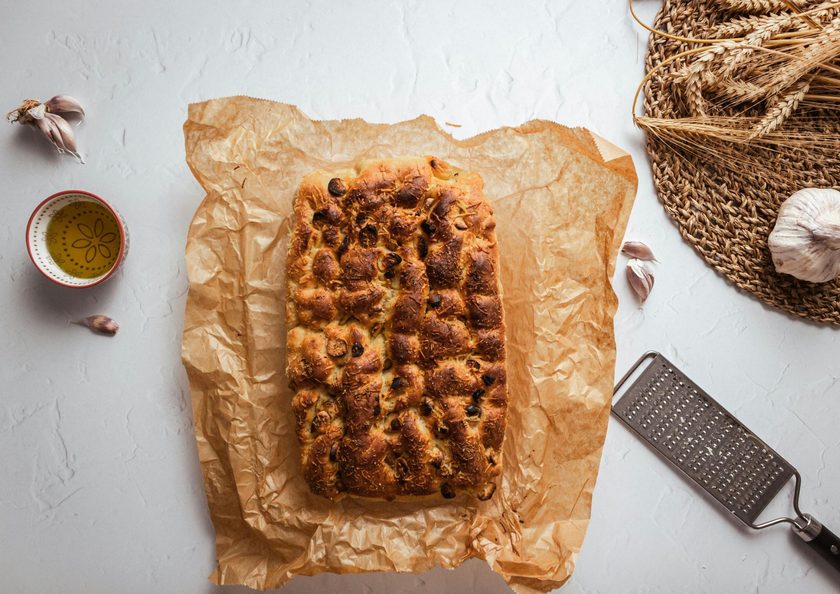
Protein Focaccia: What Makes It Different
Classic focaccia is about as simple as bread gets: wheat flour, water, yeast, salt, and a generous pour of olive oil. Protein focaccia keeps the soft, bubbly crumb and crispy bottom but adds ingredients that raise the protein per slice, like bread flour, Greek yogurt, cottage cheese, egg whites, or vital wheat gluten. A slice of regular homemade focaccia has about 5 to 6 grams of protein. High-protein focaccia can nearly double that.
The tricky part is texture. Wheat proteins form gluten, the stretchy network that traps gas and creates those big airy holes. Dairy and egg proteins don’t form gluten, and they absorb water, so too much of them makes the bread dough dense and dry. The goal is to add as much protein as the dough can carry while it still tastes like focaccia. Protein powder isn’t the only way to do that. Whole-food ingredients often give a softer, better protein-rich bread.
Ingredients
- 400 g (3¼ cups) bread flour
- 20 g (2 tbsp) vital wheat gluten
- 225 g (1 cup) nonfat Greek yogurt
- 190 g (¾ cup + 1 tbsp) lukewarm water
- 7 g (2¼ tsp) instant yeast
- 10 g (1¾ tsp) fine sea salt
- 6 tbsp extra-virgin olive oil
- Optional: rosemary, flaky salt, pumpkin seeds
Related: Simple Sourdough Focaccia Recipe
How to Make Protein Focaccia
Here’s how to make protein focaccia, from the mixing bowl to the oven.
- Mix the dry ingredients. Whisk the flour, vital wheat gluten, instant yeast, and salt in a large bowl so the gluten doesn’t clump.
- Add the wet ingredients. Stir together the Greek yogurt, lukewarm water (about 95°F), and 1 tablespoon of olive oil until smooth. Pour this into the dry ingredients and mix until no dry flour remains. The dough will look shaggy and sticky.
- Rest, then develop the gluten. Cover and rest for 15 minutes. With a wet hand, squeeze and fold the dough in the bowl for 2 to 3 minutes, until it turns stretchy.
- First rise with stretch and folds. Cover and let the dough ferment at room temperature for about 2 hours. During the first 90 minutes, do 3 to 4 sets of stretch and folds, 30 minutes apart. For each set, grab one edge with a wet hand, stretch it up, fold it over the center, and repeat on all four sides. For deeper flavor, refrigerate the dough for 12 to 24 hours after the last fold.
- Transfer to the pan. Pour 3 tablespoons of olive oil into a 9×13-inch baking pan. Use a dough scraper to ease the dough in, flip it once to coat, and gently stretch it toward the corners. If it springs back, wait 10 minutes and try again.
- Second rise. Cover and proof for 1 to 2 hours (longer if the dough was chilled), until it fills the pan, looks puffy, and jiggles when you shake it. Preheat the oven to 425°F halfway through.
- Dimple. Drizzle the remaining 2 tablespoons of olive oil over the top. With oiled fingers, press straight down to the bottom of the pan all over the dough.
- Top and bake. Add your toppings and bake on the lower-middle rack for 22 to 28 minutes, until deep golden and 205 to 210°F inside.
- Cool. Let it rest in the pan for 5 minutes, then move it to a wire rack and wait 20 minutes before slicing.
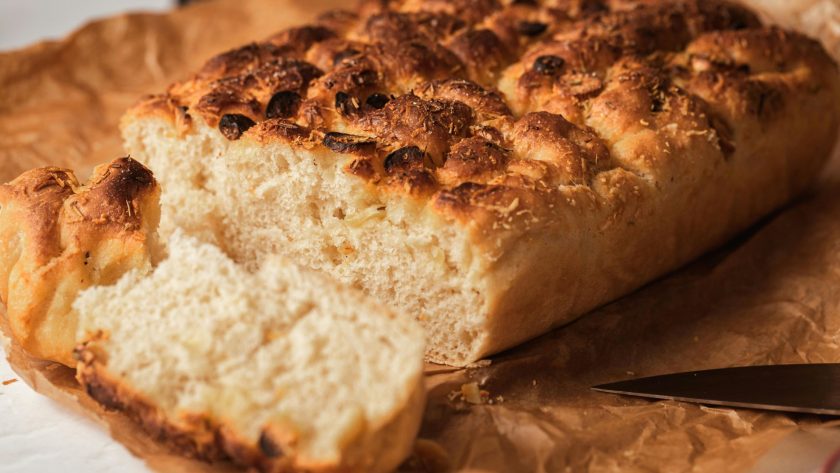
How to Get an Airy Crumb
Extra protein makes the dough heavier, so an airy protein focaccia takes a little more care. These five habits make the biggest difference:
- Don’t overload the dough with protein ingredients. Yogurt, egg whites, and protein powder don’t form gluten, so too much of them weighs down the gluten network and keeps the bubbles small. Bread flour and a little vital wheat gluten are the exception, since they strengthen gluten development. If you want more protein, add it with toppings instead of mixing it into the dough.
- Allow adequate fermentation. Dairy and extra protein slow the yeast down. Judge the dough by how it looks, not by the clock. It’s ready when it’s domed, wobbly, and bubbly at the edges. Underproofed dough bakes into a tight, bready crumb.
- Maintain sufficient hydration. Protein absorbs water, so this dough needs more water than plain focaccia. If yours feels stiff like pizza dough, add water a tablespoon at a time until it’s loose and sticky. Wet dough produces more steam in the oven, and steam opens up the crumb.
- Avoid excess flour during shaping. Extra flour lowers the hydration and leaves dry, raw-tasting streaks in the crumb. Use oiled or wet hands and a dough scraper instead. They keep the dough from sticking without changing the recipe.
- Handle the dough gently. After the first rise, the dough is full of gas. Pour it into the pan instead of punching it down, stretch it carefully, and dimple only once. Every rough move pops bubbles the yeast spent hours making.
Baking Protein Focaccia
The right bake gives you a crisp bottom and a golden top.
- Pick a metal pan. A metal 9×13-inch focaccia pan or a rimmed sheet pan bakes most evenly. A 12-inch cast iron pan holds heat well and gives an extra-crunchy bottom. Glass and ceramic tend to leave the base pale and soft.
- Be generous with the olive oil. Three tablespoons in the pan may look like too much, but that oil shallow-fries the bottom of the dough, and that’s what makes focaccia crispy.
- Bake at 425°F. Yogurt and extra protein brown faster than plain dough, so the best protein focaccia baking temperature is a bit lower than the 450°F many traditional recipes use. You get a golden crust without burning the top before the center is done.
- Use the lower-middle rack. Being closer to the heat crisps the bottom while the top browns.
- Bake for 22 to 28 minutes. If the top browns too quickly by the 15-minute mark, tent it loosely with foil.
- Check for doneness. Look for a deep golden top, edges pulling away from the pan, and a browned bottom when you lift a corner. An instant-read thermometer should read 205 to 210°F in the center.
- Cool on a rack. After 5 minutes in the pan, move the focaccia to a wire rack so steam doesn’t soften the bottom.
Topping Ideas
Protein toppings should add flavor without weighing the dough down, so use a light hand. Shredded rotisserie chicken adds about 7 grams of protein per ounce. Toss it with a little pesto and add it during the last 8 to 10 minutes of baking so it warms through without drying out. Cooked ground turkey seasoned with fennel and red pepper flakes tastes a lot like Italian sausage, with less grease. Sprinkle it on lightly before baking so the dimples don’t flatten.
Smoked salmon goes on after baking, since heat makes it rubbery and salty. Spread on some whipped cottage cheese, then add the salmon, capers, dill, and red onion for a bagel-and-lox twist. For brunch, crack eggs into the deepest dimples during the last 10 to 12 minutes of baking. Each egg adds about 6 grams of protein and sets up jammy.
Cottage cheese also works before baking. Drain it in a fine sieve, then dot it over the dough, where it turns creamy and lightly browned, almost like ricotta. Finely grated Parmesan has about 10 grams of protein per ounce and gives you the crispy, lacy edges of a great cheesy focaccia. Pumpkin seeds add 8 to 9 grams of protein per ounce. Press them gently into the dough, along with sesame, sunflower, or hemp seeds if you like.
Finish with herbs and vegetables. Rosemary focaccia is a classic because rosemary holds up to the heat. Cherry tomatoes, olives, red onion, and roasted peppers add color without much weight. Keep wet vegetables to a single light layer so the top doesn’t turn gummy.
Related: How to Make Sweet Focaccia Bread: A Complete Guide
Common Problems
Dense Focaccia
A dense protein focaccia usually has one of three causes. The first is underfermentation: the dough should be visibly domed and jiggly before baking, which usually takes 1 to 2 hours in the pan. The second is too much non-gluten protein: keep Greek yogurt or cottage cheese at no more than about 60% of the flour weight, and protein powder at no more than 10%. The third is low hydration: if the dough holds its shape like pizza dough, add 2 to 3 tablespoons of water next time.
Dry Crumb
Protein powder and egg whites absorb water that would otherwise stay in the crumb. As a starting point, add 15 to 20 g of extra water for every 10 g of protein powder, and use no more than two egg whites per batch. Overbaking also dries the bread. Take it out once the center reaches 205 to 210°F.
Gummy Center
A gummy center comes from underbaking (an internal temperature below about 200°F), from slicing before the bread has cooled for at least 20 minutes, or from too much moisture. Undrained cottage cheese and a heavy layer of wet vegetables are the most common sources of that moisture.
Dough That Won’t Rise
Test your yeast first. Stir 1 teaspoon into ¼ cup of warm water with a pinch of sugar. If it doesn’t foam within 10 minutes, it’s dead. Water above 120°F can also kill yeast. A kitchen below 70°F slows the rise significantly, so proof the dough in the oven with only the light on (about 75 to 80°F). Dough straight from the refrigerator needs 2 to 3 hours to proof.
Tough Texture
Toughness comes from too much gluten-strengthening or protein-dense ingredients. Keep vital wheat gluten at 5% of the flour weight or less (20 g for 400 g of flour), protein powder at 10% or less, and egg whites at no more than two.
Excessively Greasy Dough
Three tablespoons of oil is plenty for a 9×13-inch pan. More than that pools instead of crisping. Make sure the oven is fully preheated to 425°F, because dough in a cooler oven absorbs oil instead of frying in it.
Too Much Protein Powder
Signs of too much protein powder include a top that turns dark brown before 15 minutes, a dry and crumbly crumb, a sweet dairy smell, and very little rise. Cap the powder at 40 g for this recipe and add the extra water described above. You can also replace it entirely with Greek yogurt: 225 g of nonfat Greek yogurt provides about 23 g of protein, roughly the same as 25 g of whey isolate.
How to Store and Serve Protein Focaccia
Here’s how to store protein focaccia so it stays soft, plus a few ways to serve it.
- Room temperature: Wrap plain or seed-topped focaccia in foil, or keep it in an airtight container, for up to 2 days. Store it cut side down.
- Refrigerator: Cold temperatures make bread go stale faster, so refrigerate only focaccia with perishable toppings like chicken, eggs, salmon, or cottage cheese. It keeps for 3 to 4 days.
- Freezer: To freeze protein focaccia, wrap individual squares in plastic wrap and store them in a freezer bag for up to 3 months. Thaw at room temperature for about an hour.
- Reheating: Warm slices in a 350°F oven for 8 to 10 minutes, or 12 to 15 minutes from frozen. An air fryer at 350°F takes 3 to 4 minutes and re-crisps the bottom. Skip the microwave, which makes the bread chewy.
- Sandwich base: Slice a square in half horizontally and fill it with turkey, arugula, and garlicky Greek yogurt, or with grilled chicken, roasted peppers, and mozzarella.
- Soup pairing: Serve it with lentil or white bean soup for a filling, high-protein meal, or use it to mop up shakshuka.
- Salad pairing: Set it alongside a chicken Caesar or a chickpea and feta salad.
Protein, Meet Pillowy
Here’s the deal: protein focaccia doesn’t have to taste like a gym snack. Pick the right high-protein ingredients, go easy on the powder, and you’ll get bread that’s soft, bubbly, and crisp on the bottom, with more staying power than the classic version. The magic isn’t in cramming in as much protein as possible. It’s in keeping the dough wet, giving it plenty of time to rise, and treating it gently so all that air sticks around.
Get the bake right, and you’ll have a golden, crunchy slab that’s ready for whatever toppings you love. Even if a batch goes sideways, every problem has a fix. Fire up the oven and give it a shot. Your favorite bread is waiting.
FAQs
Does focaccia have any protein?
Yes, but not a ton. Since focaccia is made mostly from wheat flour, a typical slice has around 4 to 6 grams of protein, depending on size and thickness. Most of that comes from the gluten in the flour. Want a bigger boost? Use bread flour, swap in some whole wheat, top it with cheese and seeds, or serve it with hummus.
What bread is the highest in protein?
Sprouted grain breads, like Ezekiel bread, are some of the top picks, with around 5 grams of protein per slice. Breads made with whole grains, seeds, nuts, or added protein like whey or pea protein can pack even more. For a homemade option, cottage cheese flatbread is hard to beat, since the cottage cheese and eggs deliver a serious protein punch without much effort.
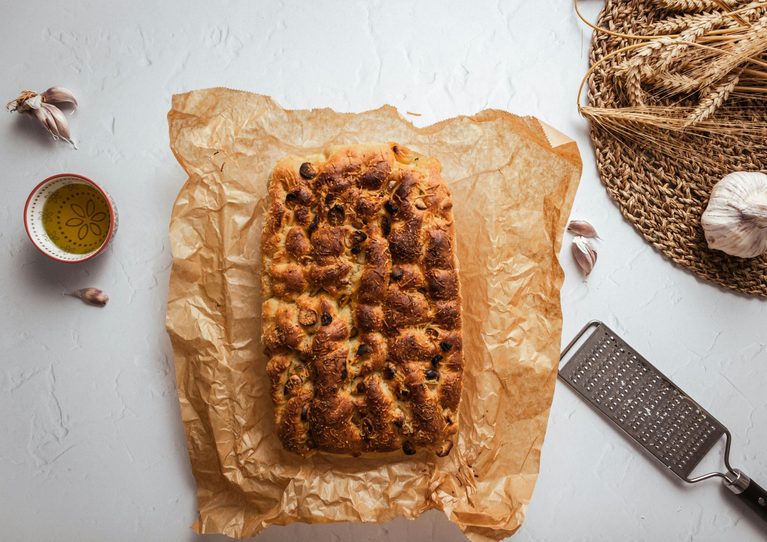
Protein Focaccia
A slice of regular homemade focaccia has about 5 to 6 grams of protein. High-protein focaccia can nearly double that.
Ingredients
- 400 g (3¼ cups) bread flour
- 20 g (2 tbsp) vital wheat gluten
- 225 g (1 cup) nonfat Greek yogurt
- 190 g (¾ cup + 1 tbsp) lukewarm water
- 7 g (2¼ tsp) instant yeast
- 10 g (1¾ tsp) fine sea salt
- 6 tbsp extra-virgin olive oil
- Optional: rosemary, flaky salt, pumpkin seeds
Instructions
- Whisk flour, vital wheat gluten, instant yeast, and salt.
- Stir together Greek yogurt, 95°F water, and 1 tablespoon olive oil, then mix into the dry ingredients until shaggy.
- Rest 15 minutes, then squeeze and fold with a wet hand for 2–3 minutes until stretchy.
- Rise about 2 hours, doing 3–4 sets of stretch-and-folds 30 minutes apart. Optionally refrigerate 12–24 hours.
- Ease the dough into a 9×13-inch pan with 3 tablespoons oil, flip, and stretch it to the corners.
- Proof 1–2 hours until puffy and jiggly, preheating the oven to 425°F halfway through.
- Drizzle with 2 tablespoons oil and dimple all over with oiled fingers.
- Add toppings and bake 22–28 minutes until deep golden and 205–210°F inside.
- Cool 5 minutes in the pan, then 20 on a rack.
Notes
Dairy and extra protein slow the yeast down. Judge the dough by how it looks, not by the clock. It’s ready when it’s domed, wobbly, and bubbly at the edges. Underproofed dough bakes into a tight, bready crumb.
- Category: bread
- Method: Baking