
Last updated on October 15th, 2025
Imagine your kitchen filled with the intoxicating aroma of freshly baked bread – that golden, crusty loaf with incredible flavor and texture. The secret lies in understanding how four simple ingredients and time-honored techniques combine to create bakery-quality results. This reveals the science behind perfect Parmesan garlic artisan bread, achieving that coveted crispy crust and developing those beautiful air pockets that make each bite irresistible.

Why Artisan Bread?
There’s something magical about artisan bread that just can’t be replicated in a factory. Artisan bread is handcrafted, European-style bread made in the tradition of old-world master bakers, baked fresh from scratch using only the highest quality ingredients with no additives or preservatives. Unlike mass-produced loaves, artisan bread is crafted with care and attention to detail using traditional methods, containing just a few simple ingredients: flour, water, salt, and a leavening agent.
Artisan breads have characteristics like longer fermentation times, fewer ingredients, no additives, and an emphasis on shaping. Those rustic, small-batch loaves develop authentic crusts through proper fermentation, while store-bought versions rely on chemicals to mimic what time creates naturally.
Parmigiano-Reggiano isn’t just cheese – it’s umami royalty. Parmesan contains 1,680 mg of glutamic acid per 100g, the compound that produces that irresistible savory taste. Aged for a minimum of 12 months, this lengthy process creates nutty, fruity flavors, with 36-month aged cheese delivering intense umami notes of rich beef broth and dried mushrooms.
Roasted garlic transforms from a sharp bite to a sweet, mellow, buttery flavor that’s soft and caramelized. Fresh garlic cloves rather than garlic powder are KEY for true garlic flavor. When aromatic garlic meets nutty Parmesan, they create the perfect flavor symphony that makes your kitchen smell incredible while delivering savory depth in every bite.
Related: Garlic Rosemary Sourdough Recipe
Ingredients
- 3¼ cups bread flour
- 1¾ cups lukewarm water
- 2 teaspoons instant yeast
- 2 teaspoons sea salt
Equipment Needed
Essential Equipment:
- Dutch oven with lid
- Large mixing bowl
- Bench scraper
- Bread lame
Nice-to-Have Additions:
- Digital kitchen scale
- Proofing baskets (bannetons)
- Parchment paper
- Heat-resistant silicone gloves
If you don’t have a Dutch oven, alternatives include using a baking stone with a roasting pan as a lid, or the inner bowl of a slow cooker with foil as the cover. The key is creating that steamy environment for perfect crust development.
Step-by-Step Recipe
1. Mix the dough. In a large ungreased mixing bowl, whisk flour, yeast, and salt together. Pour in lukewarm water and gently mix with a wooden spoon until all flour is moistened. The dough will look shaggy and sticky – this is perfect! Don’t add more flour. The dough should be uniform with no dry bits of flour remaining.
2. First rise (fermentation). Cover bowl tightly with plastic wrap and let rise at room temperature for 12-18 hours until doubled in size with a bubbly surface. This slow fermentation develops complex flavors and creates those signature air pockets. Place in a warm, draft-free spot for best results.
3. Add garlic and parmesan. After the first rise, gently fold in minced roasted garlic and grated Parmesan cheese using wet hands to prevent sticking. Be gentle to preserve the air bubbles that formed during fermentation. The dough should remain soft and pliable.
4. Shape the dough. On a generously floured surface, gently shape the dough into a round ball by folding the edges toward the center. Don’t worry about perfect shape – rustic is the goal! Let rest for 30 minutes while the oven preheats. Cover lightly with plastic wrap.
5. Preheat the Dutch oven. Preheat the oven and Dutch oven to 450°F for at least 30 minutes. This creates the intense heat needed for maximum oven spring. Use oven mitts when handling the hot pot.
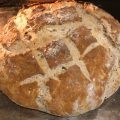
6. Score and bake. Score dough ½-inch deep with a sharp knife or lame in a cross pattern. Using parchment paper, carefully transfer the dough to a hot Dutch oven. Bake 30 minutes covered, then 12-15 minutes uncovered until deeply golden brown.
7. Cool. Cool on a wire rack for at least 20 minutes before slicing. The crust should sound hollow when tapped. Resist cutting too early – the bread continues cooking internally during cooling.
Pro tips:
Use parchment paper for easy transfer. Water temperature should feel like a warm bath. Don’t skip the long fermentation – it’s what creates the incredible flavor and open crumb structure.
Print
Parmesan Garlic Artisan Bread
Artisan bread is handcrafted, European-style bread made in the tradition of old-world master bakers, baked fresh from scratch using only the highest quality ingredients with no additives or preservatives.
Ingredients
- 3¼ cups bread flour
- 1¾ cups lukewarm water
- 2 teaspoons instant yeast
- 2 teaspoons sea salt
Instructions
1. Mix the dough. In a large ungreased bowl, whisk flour, yeast, and salt. Pour in lukewarm water and mix with a wooden spoon until the flour is moistened. The dough will look shaggy and sticky – this is perfect! Don’t add more flour.
2. First rise. Cover bowl tightly with plastic wrap and let rise at room temperature for 12-18 hours until doubled with a bubbly surface. This slow fermentation develops complex flavors and creates signature air pockets.
3. Add garlic and parmesan. After the first rise, gently fold in minced roasted garlic and grated Parmesan using wet hands. Be gentle to preserve the air bubbles formed during fermentation.
4. Shape the dough. On a floured surface, shape the dough into a round by folding the edges toward the center. Rustic is the goal! Rest 30 minutes while the oven preheats.
5. Preheat Dutch oven. Preheat oven and Dutch oven to 450°F for 30 minutes. This creates intense heat for maximum oven spring.
6. Score and bake. Score dough ½-inch deep in a cross pattern. Transfer to a hot Dutch oven using parchment. Bake 30 minutes covered, then 12-15 minutes uncovered until golden.
7. Cool. Cool on a wire rack 20 minutes before slicing. Crust should sound hollow when tapped.
Notes
Use parchment paper for easy transfer. Water temperature should feel like a warm bath. Don’t skip the long fermentation – it’s what creates the incredible flavor and open crumb structure.
Serving Suggestions
Perfect Pasta Pairings
Creamy chicken pasta dishes make for a superb pairing with garlic bread – it’s so satisfying to dip a crispy slice into a rich and velvety cream sauce, such as chicken fettuccine Alfredo. Classic Italian dishes like spaghetti Bolognese, fettuccine alfredo, and lasagna pair wonderfully with garlic bread, as the bread helps soak up rich tomato sauces and creamy alfredo sauces perfectly.
The bread’s open crumb structure absorbs sauces effectively, making it an ideal accompaniment for pasta dishes.
Soup Pairings
Garlic bread complements various soups, including tomato soup, beef stew, chili con carne, and French onion soup. Warm garlic bread serves as an excellent side for soup, as the bread soaks up rich broths effectively.
Italian-Style Dipping Oils
Serve your bread with high-quality olive oil and aged balsamic vinegar, enhanced with garlic, herbs, and Parmesan cheese. Use a 3:1 ratio of olive oil to balsamic vinegar in a shallow bowl for optimal dipping. This combination creates an appetizer suitable for entertaining.
Additional Pairings
Serve with steamed shellfish like mussels or clams – the garlic bread absorbs the seasoned broth well. The bread also works alongside bean soups, roasted vegetables, tender leafy greens, steak, chicken, and seafood.
This bread can add substance to light salads or serve as an alternative to traditional starches with grilled meats. The Parmesan and garlic flavors complement rather than overpower most dishes.
Related: Ultimate Guide to Garlic Bread

Storage & Freezing of Parmesan Garlic Artisan Bread
Short-Term Storage (1-3 Days)
Store artisan-style loaves uncovered, cut-side down on a cutting board for the first two days after baking – this keeps the crust crispy and the crumb soft. Large crusty loaves can be stored unwrapped at room temperature for a day or so, cut side down on the counter to preserve their crispy crust.
After day two, cover the bread to slow down staling – covers do soften the crust, but a quick toasting will crisp it up again. Options include bread boxes, paper bags, or clean kitchen towels.
What NOT to Do
Never store bread in the refrigerator – it will cause it to stale faster than if kept at room temperature. The cool air can cause moisture to condense on the surface of the bread while also drying it out inside.
Long-Term Freezing (Up to 3 Months)
Once the baked bread is fully cool, wrap it tightly in plastic wrap, then place it in a freezer Ziplock bag with as much air pressed out as possible. This will keep the bread fresh for up to 3 months.
For convenience, slice the bread completely and place slices in a freezer bag in alternating patterns, then freeze until solid. This lets you remove individual slices as needed.
Reheating Tips
To thaw frozen whole loaves, place the unwrapped frozen bread in a 325°F oven for 20-30 minutes. For best results, lightly run the thawed loaf under cold water, then bake at 350°F for 10-15 minutes to restore that crispy crust. For frozen slices, simply toast them directly from the freezer.
Variations & Add-ins
- Cheese variations: cheddar cheese, asiago cheese, mozzarella, monterey jack cheese, and parmesan cheese all make wonderful additions. Try mixing different aged cheeses for complex flavor profiles, or add 1/4 cup freshly grated Parmesan cheese or 1/2 cup shredded mozzarella in the last 2 minutes of baking.
- Herb & spice combinations: dried rosemary, basil, and oregano create classic Italian flavors, while fresh herbs can be sprinkled over the dough before baking for aromatic intensity. Consider adding red pepper flakes for heat or extra flaky sea salt on top for a gourmet finish.
- Creative mix-ins: try 4 cloves minced garlic plus 3 tablespoons chopped rosemary, or experiment with diced jalapeños, 3/4-1 cup dried cranberries, and chopped nuts. Mixing in fresh or dried herbs, garlic, shredded cheese, dried fruit, or chopped nuts makes for tasty flavor boosters.
For best results, add dry ingredients to the flour mixture before adding water, and fold wet additions like fresh herbs or cheese gently into the risen dough before shaping.
Ready to Become a Bread Master?
Your journey to bakery-quality Parmesan garlic artisan bread starts with just four simple ingredients and patience. From understanding fermentation science to mastering storage techniques, you now have everything needed to create restaurant-worthy loaves at home.
With endless variations and foolproof methods, there’s no reason to settle for store-bought bread ever again. Your kitchen awaits – it’s time to fill it with the intoxicating aroma of freshly baked artisan bread that’ll have everyone asking for your secret recipe.

I saw one of these in Libya and I bought one.
I tried to attack it but got meatball all over it.