Last updated on October 13th, 2026
Cottage cheese flatbread is the easiest way to enjoy fresh, homemade bread without kneading, rising, or waiting. With a handful of simple ingredients and a blender, you can whip up a soft, protein-packed flatbread that’s ready in about 30 minutes. It’s flexible enough to roll into wraps, sturdy enough for pizza night, and tasty enough to snack on right from the pan.
Here, you’ll find what to use, how to get the perfect soft or crispy texture, and easy tips for nailing it every time. Plus, there are loads of toppings and twists, including a sourdough discard version that’s seriously good.
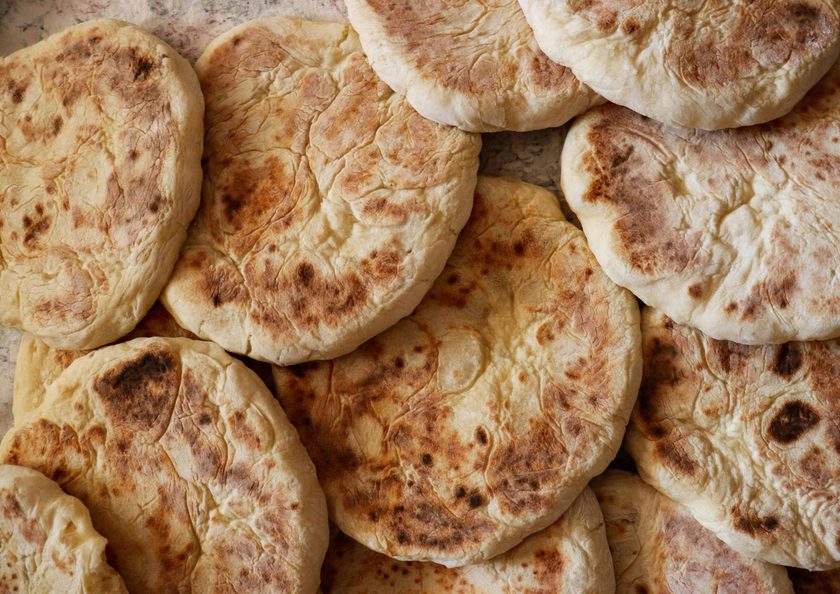
What Is Cottage Cheese Flatbread?
Cottage cheese flatbread is a soft, flexible flatbread made mostly from blended cottage cheese and eggs. Instead of relying on flour and gluten like naan or pita, it gets its structure from eggs, which set like a custard as it bakes. The result is tender and pliable, more like a sturdy crepe than chewy bread, and you can roll it without cracking. Cottage cheese brings moisture, mild tang, and a big protein boost, making this an easy, high-protein flatbread with no kneading or rising. Some versions add a little flour for body or Greek yogurt for extra creaminess.
Ingredients
Here’s everything you need for one large flatbread:
- 1 cup (about 225 g) full-fat cottage cheese
- 2 large eggs
- 2–3 tablespoons all-purpose flour (optional)
- ¼ teaspoon salt
- ½ teaspoon garlic powder
- 1 teaspoon dried herbs like oregano or basil
Full-fat cottage cheese gives the softest, most flavorful result, so it’s worth the splurge.
Related: Sourdough Discard for Your Sourdough Flatbread [Try it!]
How to Make Cottage Cheese Flatbread
Making this easy cottage cheese flatbread takes about 10 minutes of hands-on time. The rest is just waiting for the oven to work its magic.
- Preheat the oven. Heat your oven to 375°F and line a baking sheet with parchment paper. Lightly grease the parchment so the flatbread releases cleanly.
- Blend the cottage cheese and eggs. Add cottage cheese and eggs to a blender and blend for 30 to 60 seconds, until completely smooth with no visible curds. Leftover lumps can cause uneven, damp spots. If your cottage cheese looks watery, drain off excess liquid first.
- Add the dry ingredients. Pulse in the flour, salt, garlic powder, and herbs just until combined. The flatbread batter should look like thick pancake batter. If it’s too runny, add another tablespoon of flour.
- Spread it thin. Pour the batter onto the parchment and spread it into an even layer about ¼ inch thick, roughly a 10-by-12-inch rectangle. An offset spatula makes this easy. Even thickness means even cooking. Don’t worry about perfect edges; rustic is charming.
- Bake until golden brown. Bake for 25 to 35 minutes, until the center looks dry and matte and the edges are golden brown. Ovens vary, so start checking at 25 minutes. If you’d rather cook flatbread on the stovetop, a skillet works too.
- Let it cool. Leave it on the pan for 5 to 10 minutes. The eggs keep setting as it cools, making it easier to peel off the parchment without tearing.
- Slice and serve. Cut it into wraps, squares, or wedges. Store leftovers in an airtight container in the fridge for up to 3 days, with parchment between pieces so they don’t stick.
Doubling the batch? Use two baking sheets instead of one thicker layer, or the center won’t set properly. Want a quick reheat? Warm slices in a dry skillet for 30 seconds per side to bring back their soft, fresh-baked texture.
How to Get the Right Flatbread Texture
Texture makes or breaks this flatbread, and most of it is decided before the pan ever hits the oven.
- Aim for a spreadable batter. It should flow slowly off a spatula, like thick pancake batter. If it’s stiff, add a splash of milk. If it’s runny, blend in flour one tablespoon at a time.
- Keep it thin. About ¼ inch is the sweet spot for a soft flatbread that folds without cracking. Thicker than that, and you’re baking a savory cake with a damp middle.
- Spread it evenly. Use an offset spatula to level the batter edge to edge. Thin spots overbrown while thick patches stay soft, a bit like ironing a shirt with one damp sleeve.
- Check your cottage cheese moisture. Brands vary a lot. Some are thick and creamy, others swim in liquid. If you see pooling, drain it in a fine-mesh strainer for 10 minutes before blending.
- Blend it smooth for wraps. Fully blending creates a uniform, bread-like texture that rolls cleanly. It’s the best choice for sandwiches and tacos.
- Leave it chunky for rustic flavor. Unblended curds make creamy, cheesy pockets with a more rustic texture. The tradeoff is a more fragile flatbread that tears when you roll it, so save this for flat toppings like pizza.
- Use full-fat cottage cheese. Fat keeps the flatbread tender and flexible. Low-fat versions often release more liquid and bake up slightly rubbery.
- Let it rest. Cooling for 5 to 10 minutes lets the texture settle and firm up.
How to Cook Cottage Cheese Flatbread
You’ve got two solid options: the skillet for speed and the oven for hands-off cooking. Here’s how each works.
Skillet method (best for wrap-sized rounds):
- Heat a nonstick skillet or frying pan over medium-low and add a light coating of oil or butter.
- Pour in about ⅓ cup of batter and spread it into a thin round, about 6 inches wide.
- Cook for 3 to 4 minutes, until the edges look set and the top is no longer shiny.
- Flip with a wide spatula and cook another 1 to 2 minutes until golden.
Oven method (best for one big sheet):
- Spread the batter on a parchment-lined baking sheet.
- Bake at 375°F for 25 to 35 minutes, until golden brown and set.
- For color on both sides, flip it onto fresh parchment for the last 5 minutes.
This baked cottage cheese flatbread slices neatly into four wraps. Either way, it’s done when the edges are golden, the center looks dry and matte, and it springs back when gently pressed. A corner should peel away cleanly. Skillet flatbread cooks faster but needs babysitting, and too much heat browns the outside before the middle sets. The oven takes longer but is far more forgiving. When in doubt, give it two more minutes. Slightly darker beats undercooked every time.

Why Is My Cottage Cheese Flatbread Too Wet or Soggy?
Soggy flatbread almost always comes down to moisture that never got the chance to escape. The biggest culprit is whey, the watery liquid in cottage cheese. Some brands carry far more of it than others, so the same recipe can turn out perfect one week and wet the next. Drain watery cottage cheese in a fine-mesh strainer before blending, or add an extra tablespoon of flour to absorb the excess.
Thickness is the next suspect. A thick or unevenly spread layer leaves the center damp while the edges look done. If you’re squeezing a full batch into a small pan, switch to a larger baking sheet or split the batter between two.
Sometimes it simply needs more time. Cottage cheese batter can look set on top while the inside is still soft. If yours won’t cook through, return it to the oven for another 5 to 10 minutes, or flip it and finish it in a hot skillet for a minute per side.
Finally, give it a rest. Fresh from the oven, the flatbread is at its most delicate. Cooling it on a wire rack lets steam escape, the eggs finish setting, and it keeps condensation from softening the bottom.
How to Make It Crispy
Want crunchy edges instead of a soft wrap? A few small tweaks make a big difference.
- Spread it thinner. Go closer to ⅛ inch. Less batter means less moisture to drive off, so the flatbread can move from set to crisp. It won’t roll as well, but it’s perfect for pizza or dipping.
- Turn up the heat. Bake at 400°F to 425°F, or keep your skillet at medium. Higher heat dries the surface fast and triggers browning, the same reaction that gives toast its flavor. Watch closely, since the milk sugars in cottage cheese can burn quickly.
- Bake a little longer. Once it’s set, give it a few extra minutes until the edges turn deep golden brown and start curling.
- Brush with olive oil. A light coat of olive oil during the last 5 to 10 minutes helps the surface brown evenly. Think of it as a gloss, not a bath.
- Finish in a skillet. Bake until set, then crisp it in a hot, lightly oiled skillet for a minute or two per side. You get a fully cooked center with a golden, crunchy exterior. This trick also revives leftovers far better than the microwave, which turns them rubbery.
- Skip the cover. Don’t stack or wrap it while warm, or trapped steam will soften the crust. Cool it uncovered on a rack.
Cottage Cheese Flatbread Toppings and Ways to Serve It
This flatbread is a blank canvas, so it works as a wrap, sandwich, pizza base, or snack. For a healthy lunch, roll it around sliced turkey, lettuce, cucumber, and a swipe of mustard. Leftover chicken tossed in Caesar dressing with romaine and parmesan makes a Caesar wrap that beats anything from a deli counter.
Feeling fancy? Spread it with herbed cream cheese, then layer smoked salmon, arugula, red onion, and capers. Slice it into pinwheels, and you’ve got an appetizer that looks way harder than it is. For a plant-forward option, pair hummus with roasted vegetables like peppers, zucchini, and eggplant, plus a little feta.
It also makes a great pizza night shortcut. Bake the flatbread until set, add marinara, mozzarella, and your favorite toppings, then return it to the oven for 5 to 10 minutes. Pre-baking keeps the sauce from turning the base soggy.
Breakfast is easy too. Top a warm flatbread with mashed avocado, a fried egg, and chili flakes, or fold it into a breakfast taco. One tip for any savory flatbread: put a barrier like cream cheese, hummus, or lettuce between wet fillings and the bread to keep it from softening.
Related: How to Make Aish Merahrah – Traditional Flatbread From Egypt
Cottage Cheese Flatbread Variations
Once you’ve nailed the base recipe, it’s easy to make it your own.
- Gluten-free: The flourless version is already gluten-free. For more structure, swap in a gluten-free flour blend, almond flour, or certified gluten-free oat flour. Let it cool fully, since it’s more fragile.
- Herb and garlic: Blend in garlic powder or a fresh garlic clove plus dried oregano, basil, and parsley. Brush with garlic olive oil after baking for a garlic flatbread that’s perfect with soup.
- Spicy: Add chili flakes, cayenne, or a spoonful of chipotle in adobo to the batter, then scatter diced jalapeños on top. It’s great for breakfast burritos.
- Cheesy: Fold ½ cup shredded mozzarella into the batter for a tender, stretchy bite, or top with grated parmesan for crispy, savory spots.
- Mediterranean-style: Mix in oregano, chopped sun-dried tomatoes, and crumbled feta, then top with kalamata olives. Serve with tzatziki or hummus.
- Higher-protein: Add an extra egg white, swap a few tablespoons of cottage cheese for Greek yogurt, or replace the flour with a scoop of unflavored protein powder. Start small, since too much powder turns it rubbery.
- Sourdough twist: Here at My Daily Sourdough Bread, I can’t resist whisking in a few tablespoons of sourdough discard. It adds deeper tang, a more bread-like texture, and gives your discard a delicious second life.
- Everything bagel: Sprinkle everything bagel seasoning on top before baking for crunch and big savory flavor.
Your New Go-To Bread Is Here
Cottage cheese flatbread is proof that homemade bread doesn’t have to be a big production. With a few simple ingredients and no kneading or rising, you get a soft, protein-packed flatbread that’s ready in no time. Sure, it might come out a little soggy or not crispy at first, but now you know how to fix it and get the texture you want.
Best of all, it plays well with just about anything, whether you’re rolling up a quick lunch, throwing together pizza night, or starting your morning with eggs and avocado. Switch the flavors, play with the toppings, and make it your own. So grab that tub of cottage cheese and get baking. Your new favorite flatbread is waiting!
FAQs
Is cottage cheese flatbread healthy?
For most people, yes! Cottage cheese flatbread is packed with protein, since the whole batch delivers roughly 35 grams from the cottage cheese and eggs alone. It’s also naturally low in carbs and gluten-free when you skip the flour. The one thing to watch is sodium, as some cottage cheese brands run salty, so go easy on added salt and pile on veggies for extra fiber.
Why is my cottage cheese flatbread falling apart?
Your flatbread is probably underbaked or peeled off too soon. Give it a few extra minutes until the center looks dry and matte, then let it cool on the pan for 5 to 10 minutes so the eggs finish setting. Too few eggs or a super-thin, uneven layer can also cause tearing, so stick to two eggs per cup of cottage cheese.
How to make cottage cheese flatbread?
Blend 1 cup of cottage cheese with 2 eggs until smooth, then pulse in a little flour, salt, and seasonings if you like. Spread the batter about ¼ inch thick on a parchment-lined baking sheet and bake at 375°F for 25 to 35 minutes, until golden. Let it cool for a few minutes, then slice it up and enjoy.
Cottage Cheese Flatbread
Cottage cheese flatbread is a soft, flexible flatbread made mostly from blended cottage cheese and eggs. Instead of relying on flour and gluten like naan or pita, it gets its structure from eggs, which set like a custard as it bakes.
Ingredients
- 1 cup (about 225 g) full-fat cottage cheese
- 2 large eggs
- 2–3 tablespoons all-purpose flour (optional)
- ¼ teaspoon salt
- ½ teaspoon garlic powder
- 1 teaspoon of dried herbs like oregano or basil
Instructions
- Preheat the oven to 375°F and line a baking sheet with lightly greased parchment.
- Blend cottage cheese and eggs 30–60 seconds until completely smooth; drain watery cottage cheese first.
- Pulse in flour, salt, garlic powder, and herbs until the batter resembles thick pancake batter, adding flour if it’s runny.
- Spread it about ¼ inch thick into a roughly 10-by-12-inch rectangle, keeping the thickness even.
- Bake 25–35 minutes, until the center is dry and matte and the edges are golden. Start checking at 25 minutes.
- Cool on the pan 5–10 minutes so it sets and peels off cleanly.
- Slice into wraps, squares, or wedges. Refrigerate leftovers in an airtight container, separated by parchment, for up to 3 days.
Notes
- Aim for a spreadable batter. It should flow slowly off a spatula, like thick pancake batter. If it’s stiff, add a splash of milk. If it’s runny, blend in flour one tablespoon at a time.
- Category: bread
- Method: Baking