
Last updated on August 17th, 2026
You drop a spoonful of starter into water, watch it float, and mix up your dough feeling confident. Then the loaf comes out dense. That gap is exactly why the float test isn’t reliable. Floating just means there’s trapped gas in your starter — it doesn’t measure fermentation strength, which is what your dough actually needs.
Here’s what’s coming up: the real reasons floating can trick you, and the fermentation signs worth trusting instead so your next bake turns out exactly how you want it.
What Is the Sourdough Float Test?
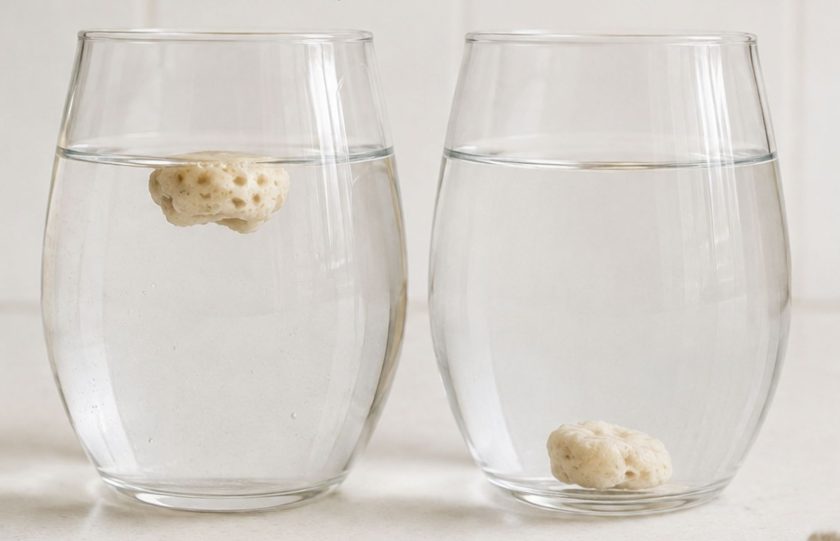
You’ve probably heard this one: scoop a spoonful of your starter, drop it in a glass of water, and see what happens. Sinks? Wait longer. Floats? Time to bake. That’s the sourdough float test, and it’s one of the most repeated tips in the sourdough world.
The idea makes sense on the surface. Your starter is packed with wild yeast, and fermentation produces gas as a byproduct. Enough gas, and the starter should be light enough to float. So bakers started using it as a quick check before mixing dough.
But here’s the catch: floating tells you gas is trapped in there, not that your starter has the fermentation strength to actually leaven a loaf. It’s a clue, not a green light. A starter can float and still fall short of what your dough needs — and we’re about to get into exactly why.
Related: Sourdough Float Test – What to Expect
Why Does Sourdough Starter Float?
To understand why the float test works sometimes, you need to know what’s actually going on underneath.
Fermentation is your wild yeast feeding on flour and water, and carbon dioxide is what comes out the other end. In a healthy starter, that gas gets caught in a web of gluten strands, similar to bubbles trapped in dough. The more gas that gets held onto, the lighter the starter becomes overall.
That lightness — density, technically — is what the float test is really measuring. Water has a set density, and anything lighter floats on top. Simple physics, nothing sourdough-specific about it.
So why does a starter float?
- Fermentation is producing plenty of carbon dioxide
- The gluten structure is strong enough to trap that gas
- Not much gas has escaped through stirring or handling
- The starter’s overall density has dropped below that of water
That last part is where things get tricky, because gas retention depends on more than fermentation alone — it depends on structure. And structure varies a lot between starters.
Floating Doesn’t Prove Your Starter Is Ready
Floating means your starter is buoyant. It doesn’t mean it’s ready. Those are two different things, and mixing them up trips a lot of bakers up.
The float test measures a physical property — density — not the actual strength of the yeast activity inside. It’s a snapshot, not a performance review.
Real readiness comes down to whether your starter has enough active yeast to leaven dough reliably, over the full length of a bake. That shows up in how it rises after feeding, how it smells, and how it behaves over several feeding cycles — not in one quick dunk in a water glass.
So if your starter floats but your loaves keep coming out dense, the float test may have given you a pass it hadn’t actually earned.
Why the Float Test Can Give False Positives
A starter can float even when it isn’t truly ready. Here’s why that happens:
- Recently fed starters can hold air from mixing itself, separate from any fermentation activity
- Thick, stiff starters trap and hold gas differently than loose, liquid ones — often floating more easily regardless of actual yeast strength
- Flour type affects structure, and whole wheat or rye flour behaves differently than bread flour due to bran content and protein levels
- Hydration level shifts density, so two starters with the same fermentation strength can give completely different float results depending on their water-to-flour ratio
None of these factors have much to do with whether the yeast is actually strong enough to leaven your dough.
Why the Float Test Can Give False Negatives
An active, healthy starter can still sink. Here’s why:
- Gas retention isn’t guaranteed by fermentation activity alone — a starter can be fermenting well and still not hold onto its gas
- Liquid starters release gas more freely than stiff ones, so they can sink even at peak activity
- Whole-grain starters behave differently — rye and whole wheat flour contain more bran and less gluten-forming protein, which limits how well the structure traps gas
- Handling knocks gas loose, so scooping out a spoonful to test can deflate a starter that would’ve floated minutes earlier
Related: Sourdough Starter Care: The Complete Beginner’s Guide to Keeping It Healthy
Flour, Hydration, and Starter Consistency Matter
By now there’s a clear pattern: flour and hydration keep messing with the float test. That’s because your starter’s physical makeup affects buoyancy, completely separate from how well it’s actually fermenting.
Different flours absorb water differently. Bread flour has more protein, which builds a stronger gluten network for trapping gas. Whole wheat and rye flour have more bran, which breaks structure down faster and changes how gas gets held.
Hydration matters just as much. A stiffer, lower-hydration starter is naturally denser and tends to trap gas in a concentrated way, making it float more easily. A high-hydration, liquid starter spreads that gas across a looser structure, so bubbles escape more easily.
The bottom line: two starters can be equally healthy and ready to bake with, yet give totally different float results just because of their flour and hydration. Comparing them side by side doesn’t tell you much.
Better Ways to Tell When Starter Is Ready
Skip the water glass and watch for these signs instead:
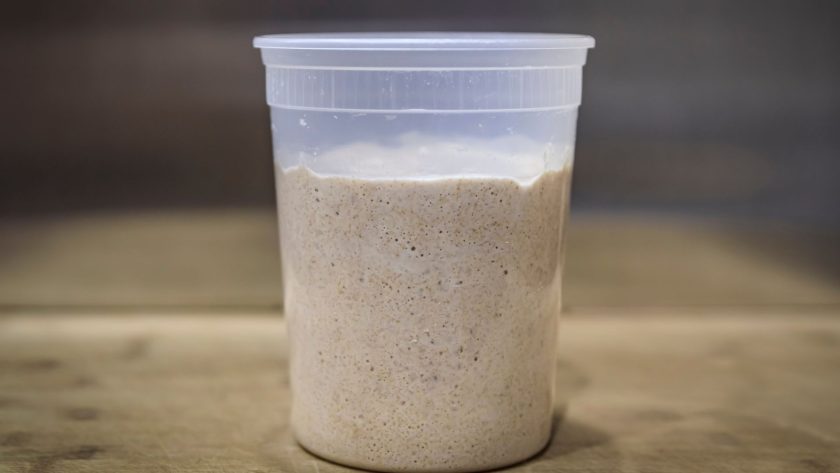
- Consistent rise after feeding — a starter that reliably doubles (or close to it) within a predictable window shows strong, repeatable fermentation
- Bubbles throughout the jar, not just on the surface — a sign fermentation is happening evenly
- A domed or slightly rounded top at peak, which shows gas has built up before it starts to collapse
- A pleasant, tangy aroma — not harsh, overly sour, or flat
- Predictable timing between feeds — a starter that peaks around the same time after each feeding is showing dependable fermentation strength
When Can You Still Use the Float Test?
The float test isn’t completely useless — it just shouldn’t be your only check.
Used as a secondary observation, it can give a rough sense of how aerated your starter is at that moment. It works best paired with other signs, like rise, bubble activity, and aroma, rather than used on its own.
Avoid relying on it in isolation. Don’t discard a healthy, active starter just because it sinks — especially if it’s a whole-grain or high-hydration starter, which behaves that way naturally. And don’t decide to bake purely because your starter floated, without checking that it’s also shown consistent rise and bubble activity. Treated as one data point among several, the float test can still play a small, useful role in your routine.
What This All Means for Your Baking
Floating tells you there’s trapped gas in your starter — nothing more. It’s not confirmation that your starter is ready to bake with, and treating it that way is where a lot of bakers run into trouble.
What actually matters is fermentation behavior over time: how reliably your starter rises, how evenly it bubbles, how it smells at peak, and how predictable its timing is between feedings. Together, these signals give you a far more accurate read on whether your starter has the strength to leaven your dough properly.
So the next time you’re checking your starter, don’t rely on whether it floats. Look at how it’s been rising, bubbling, and smelling over the last few feedings instead — that’s where the real answer is.
FAQs – Why the Float Test Isn’t Reliable
How reliable is a sourdough float test?
It’s only somewhat reliable. Floating shows your starter has trapped gas, but that’s not the same as having strong enough fermentation to leaven bread. A starter can float without being truly ready, or sink while still being active. It’s best used alongside other signs like rise, bubbles, and aroma—not as a standalone test.
What does it mean if my sourdough float test failed?
A failed float test (your starter sinks) doesn’t automatically mean it’s not ready. Liquid starters, whole-grain starters, and recently handled starters often sink even when fermentation is strong, since gas escapes easily from their structure. Check for consistent rise, bubbles, and a pleasant smell before assuming anything’s wrong.
Can I still use my sourdough starter if it doesn’t pass the float test?
Yes, in many cases. Sinking doesn’t always mean your starter lacks fermentation strength—it often just means the structure isn’t holding gas well. If you’re seeing consistent rise, bubbles, and good aroma after feeding, your starter is likely ready to bake with, regardless of what the float test shows.




![[video] from the seed to the peasant bakery with nicolas supiot](https://www.mydailysourdoughbread.com/wp-content/uploads/2022/11/image-16-120x120.jpeg "[Video – Part 2] Entering Into Peasant Bakery 7")
