Last updated on August 18th, 2025
Hosting brunch and need something that’ll wow your guests without complicated baking techniques or fancy ingredients? Monkey bread seems tricky, but it’s one of the easiest crowd-pleasers you can master. This breaks down everything from the mysterious name origins to fool-proof techniques that guarantee perfect pull-apart texture every single time. You’ll discover professional baker secrets, avoid the common mistakes that ruin most attempts, and learn variations that’ll keep your guests coming back for more.
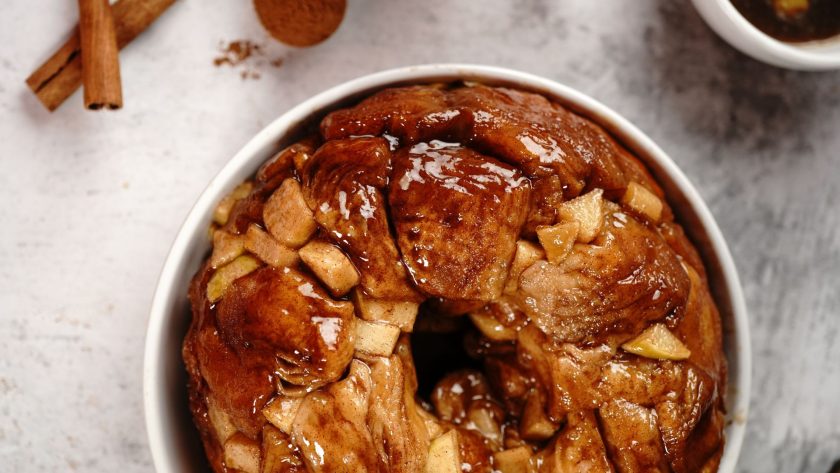
Ingredients
- 3 cans of buttermilk biscuits
- 1 cup granulated sugar + 2-3 teaspoons cinnamon
- 1 stick of butter, melted
- 1/2 cup brown sugar
- 1/2 cup pecans, chopped (optional)
You can substitute other ground spices such as cardamom or a pumpkin spice blend for creative variations, but the classic combo never disappoints.
Step-by-Step Recipe
- Prep your workspace. Preheat your oven to 350°F and generously grease a 12-cup Bundt pan with cooking spray. Think of greasing as insurance – you want every drop of that buttery goodness to release perfectly when you flip your masterpiece.
- Cut the biscuits. Cut each biscuit into quarters (some prefer cutting them into six pieces to make them more bite-sized) and mix your cinnamon sugar in a large zip-top bag.
- Coat the pieces. Add the biscuit pieces to the bag with sugar and cinnamon, seal, and shake until evenly coated. Work in batches if needed – you want each piece thoroughly dressed in that sweet, spicy mixture.
- Make the sauce. Melt butter with brown sugar in a saucepan over medium heat, stirring until the mixture becomes smooth and caramel-like.
- Assemble in the pan. Layer your coated dough balls in the prepared Bundt pan, trying to distribute them evenly, but don’t stress about perfection. Pour the butter-brown sugar sauce over the biscuits.
- Bake to perfection. Bake for 35-40 minutes until the crust is deep brown on top. It’s best to bake towards the bottom of the oven so the top doesn’t burn, and cover loosely with foil if browning too quickly.
- Cool and invert. Cool for just 5 minutes before inverting – don’t wait longer or the sticky glaze will solidify and stick to the pan!
- Add sugar glaze. Whisk together powdered sugar, milk, and vanilla for a simple glaze that’ll drizzle into every nook and cranny.
Related: 7 Delicious High-Protein Banana Bread Recipes
Why Is It Called Monkey Bread?
The origin of the term “monkey bread” is unknown. Some food historians suggest that it comes from the pastry being a finger food, and that those eating it pick apart the bread with their hands as a monkey might. The act of pinching off a piece of bread with your fingers is visually similar to how a monkey would eat. This theory makes the most sense when you watch people gathered around a fresh monkey bread – there’s something primal about the way everyone dives in with their hands.
Some also trace it back to 20th-century slang. In the 1940s, monkey food was Southern slang for casual snacks you could pick at. That, combined with jumble bread—another old-timey term for breads made from small pieces of dough—could have led to monkey bread.
Another quirky theory suggests it comes from the pastry’s resemblance to the monkey puzzle tree, Araucaria araucana. Some people believe that the bread resembles the shape of a monkey puzzle tree, but I feel that these people are out of their heads, perhaps having fallen from the top of one of the trees themselves. There’s also the baobab fruit connection – baobab fruit is also called Monkey Bread, and the similarity is another origin for the name.
Another theory credits silent film star ZaSu Pitts, who reportedly used the term in a 1945 cooking column after bringing the recipe home from Nashville. In the end, monkey bread might just be one of those names that stuck, literally and figuratively.
Popular Variations
Chocolate monkey bread requires precise measurements: mix 1 tablespoon cocoa powder with ⅓ cup granulated sugar for coating, then add 2 tablespoons cocoa to your butter-brown sugar sauce. Use ½ cup mini chocolate chips, layering between dough pieces rather than on top. Bake 35-40 minutes at 350°F (5-10 minutes longer than regular) and remove from pan within 5 minutes to prevent hardening.
Pumpkin spice versions need moisture management. Create a spice blend with 4 parts cinnamon, 2 parts ginger, 1 part nutmeg, and ½ clove. Use 1-2 teaspoons of pumpkin spice per cup of sugar for coating. Add ⅓ cup pumpkin puree to the butter sauce (never to dry coating). Bake 35-45 minutes due to added moisture.
Savory variations work best with sharp cheddar (1 cup), plus Parmesan (½ cup), plus mozzarella (½ cup). Mix ¼ cup fresh parsley, 2 tablespoons chives, 1 tablespoon thyme into ½ cup melted butter with 2-3 minced garlic cloves. Eliminate sugar except for yeast activation. Cover with foil after 20 minutes to prevent burnt cheese.
Nut and caramel versions use ¾ cup chopped pecans, toasted 5 minutes at 375°F. Layer nuts between dough pieces, never on top. Make fresh caramel with ½ cup butter, ¾ cup brown sugar, 2 tablespoons honey, and ¼ cup cream. Add nuts after removing from the heat. Cool 10-15 minutes before inverting for proper caramel texture.
Serving Suggestions
- Coffee pairings: There’s something magical about pairing monkey bread with a steaming cup of coffee or tea. The rich, caramelized sweetness plays beautifully against coffee’s slight bitterness, creating that perfect morning balance your taste buds crave. Try incorporating coffee creamer flavors like hazelnut, French vanilla, or caramel into your monkey bread glaze – it’s like having your coffee and eating it too.
- Breakfast spread additions: For brunch gatherings, monkey bread shines alongside classics like overnight sausage hashbrown casserole or easy quiche, with crispy bacon, hash browns, and fresh fruit like strawberries, blueberries, and bananas. Serve it warm with butter on the side or offer small bowls of fruit preserves like strawberry or apricot jam for that sweet-tart contrast.
- Party food perfection: The pull-apart nature makes it perfect for casual entertaining – no plates or utensils required, just hungry hands and happy faces. For dessert, drizzle cream cheese frosting over the bread or serve individual portions with vanilla ice cream.
Related: 20+ Easy Fall Dessert Recipes for Busy Bakers
Common Mistakes and Tips
- Dough sticking to pan: Generously grease your Bundt pan with cooking spray and dust with flour. Cool the monkey bread in the pan for no longer than 5 minutes (any longer and the bread will be too sticky and hard to remove!) Remove while still warm, or the caramel will harden and stick.
- Overbaking or burning: Use a food thermometer to ensure the middle reaches at least 190°F. Position your pan on the lower oven rack to prevent the top from browning too quickly. Cover with foil if the surface darkens before the center is done.
- Uneven cooking: Keep dough pieces roughly the same size and offset them in the pan rather than stacking directly. Ensure every piece is well-coated in cinnamon sugar to prevent dry spots that bake differently.
- Dense texture: Don’t skip the rising time – let the assembled bread rise until puffy before baking for the best fluffy results.
You’re Ready to Nail This Monkey Bread Thing!
With three cans of biscuits and some basic pantry stuff, you’ve got everything needed for pull-apart perfection. Just remember the game-changers: grease that pan like your life depends on it, don’t skip the cinnamon sugar coating, and flip it out after exactly 5 minutes.
Whether you stick with classic cinnamon or go wild with chocolate or savory cheese, you’ve got the insider tricks now. This isn’t just breakfast – it’s that magical moment when everyone gathers around, gets messy, and fights over the last gooey piece. Your next brunch just got way more awesome!
FAQs
What is monkey bread, and why is it called that?
Monkey bread is a pull-apart pastry made from bite-sized pieces of dough coated in cinnamon sugar and baked in a Bundt pan. The name’s origin is mysterious, but most likely comes from how it’s eaten – picking apart pieces with your fingers like a monkey would. Some trace it to 1940s Southern slang, where “monkey food” meant casual finger snacks you could pick at.
What are the ingredients of monkey bread?
The basic monkey bread recipe requires just a few simple ingredients: three cans of buttermilk biscuits, granulated sugar, cinnamon, melted butter, and brown sugar. Optional additions include chopped pecans for extra crunch. You can substitute other spices like cardamom or pumpkin spice blend for creative variations, but the classic cinnamon-sugar combo remains the most popular choice.
What does monkey bread taste like?
Monkey bread tastes like a cross between cinnamon rolls and caramelized donut holes. Each bite delivers sweet, buttery goodness with warm cinnamon spice and a sticky, gooey texture from the caramelized brown sugar sauce. The outside develops a slightly crispy crust while the inside stays soft and pillowy. It’s comfort food at its finest – indulgent, sweet, and addictive.
What culture is monkey bread from?
Monkey bread is distinctly American comfort food, though its exact cultural origins are unclear. It gained popularity in the Southern United States during the mid-20th century. Some food historians trace references back to the 1940s, with silent film star ZaSu Pitts reportedly using the term in a 1945 cooking column after discovering the recipe in Nashville, Tennessee.
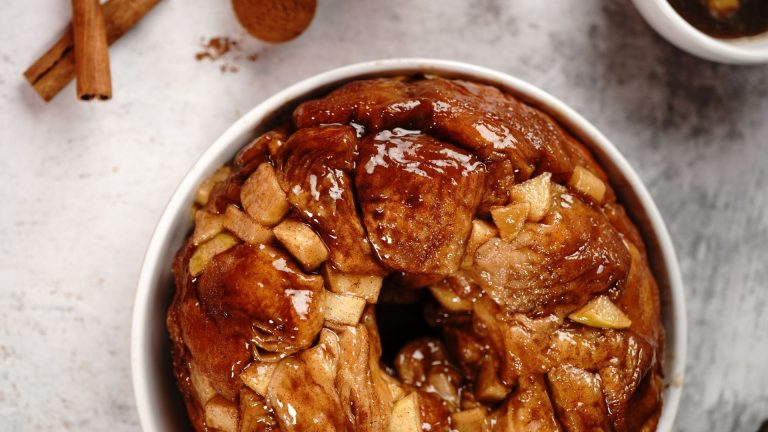
Monkey Bread
You can substitute other ground spices such as cardamom or a pumpkin spice blend for creative variations, but the classic combo never disappoints.
Ingredients
- 3 cans of buttermilk biscuits
- 1 cup granulated sugar + 2–3 teaspoons cinnamon
- 1 stick of butter, melted
- 1/2 cup brown sugar
- 1/2 cup pecans, chopped (optional)
Instructions
- Prep workspace – Preheat oven to 350°F and generously grease 12-cup Bundt pan with cooking spray for perfect release.
- Cut biscuits – Quarter each biscuit (or six pieces for bite-sized). Mix cinnamon sugar in large zip-top bag.
- Coat pieces – Add biscuit pieces to bag, seal, and shake until evenly coated. Work in batches for thorough coverage.
- Make sauce – Melt butter with brown sugar in saucepan over medium heat, stirring until smooth and caramel-like.
- Assemble – Layer coated dough balls in Bundt pan, pour butter-brown sugar sauce over top.
- Bake – 35-40 minutes until deep brown. Position toward bottom of oven, cover with foil if browning too quickly.
- Cool and invert – Cool exactly 5 minutes before flipping to prevent sticking.
- Glaze – Whisk powdered sugar, milk, and vanilla for drizzling.
Notes
Dough sticking to pan: Generously grease your Bundt pan with cooking spray and dust with flour. Cool the monkey bread in the pan for no longer than 5 minutes (any longer and the bread will be too sticky and hard to remove!) Remove while still warm, or the caramel will harden and stick.