
So a friend, coworker, or that one neighbor who’s always baking handed you a jar of bubbly goo and said “just feed it and use it!” Helpful, sort of. If you’ve never worked with a starter before, that jar can feel more like a science experiment than a baking ingredient. Good news: it’s a lot more forgiving than it looks, and once you know the basic rhythm, you’ll wonder why you were nervous in the first place.
Step 1: Figure Out What You Actually Have
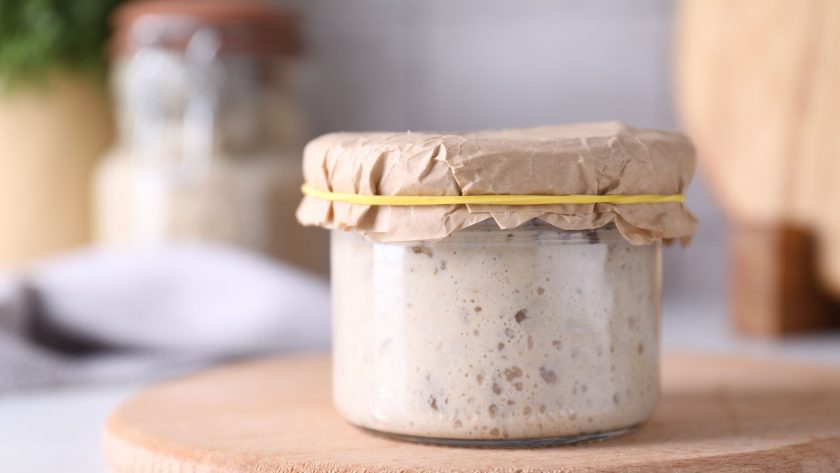
Before doing anything else, take a look at the starter and ask the person who gave it to you (if you can) two things: how old it is, and when it was last fed. That tells you whether it needs a rest, a feeding, or a full revival.
Signs your starter is healthy and ready to go:
- Bubbles throughout, not just on top
- A pleasant sour, yeasty smell (think tangy bread, not paint thinner)
- It’s roughly doubled in size since its last feeding
Signs it needs some TLC first:
- A layer of grayish liquid on top (called “hooch”) — this just means it’s hungry
- A sharp, boozy, or acetone-like smell
- Little to no rise since the last feeding
Neither of these is a dealbreaker. A starter with hooch or a strong smell almost always bounces back after a feeding or two.
Related: Is My Sourdough Starter Dead
Step 2: Give It a Home and a Feeding Schedule
Your starter needs regular meals of flour and water to stay alive, kind of like a very low-maintenance pet. The standard feeding ratio is 1:1:1 — equal parts starter, flour, and water by weight.
| Starter kept at | Feed how often | Best for |
|---|---|---|
| Room temperature | Once a day | Bakers who use it often (2+ times a week) |
| Refrigerator | Once a week | Casual or occasional bakers |
| Freezer (dried or as a backup) | N/A until revived | Long breaks from baking |
A basic feeding, step by step:
- Discard all but about 30-50g of your starter (save the discard for pancakes or crackers instead of tossing it)
- Add an equal weight of flour and water — for example, 50g starter, 50g flour, 50g water
- Stir until no dry flour remains
- Loosely cover the jar (a lid set on top, not screwed tight, or a rubber band with a cloth)
- Let it sit at room temperature until it’s bubbly and roughly doubled, usually 4-8 hours
Once it’s doubled and bubbly, it’s ready to bake with or go back in the fridge.
Related: Beginner-Friendly Sourdough Workflows
Step 3: Know When It’s Actually “Ready” to Bake With
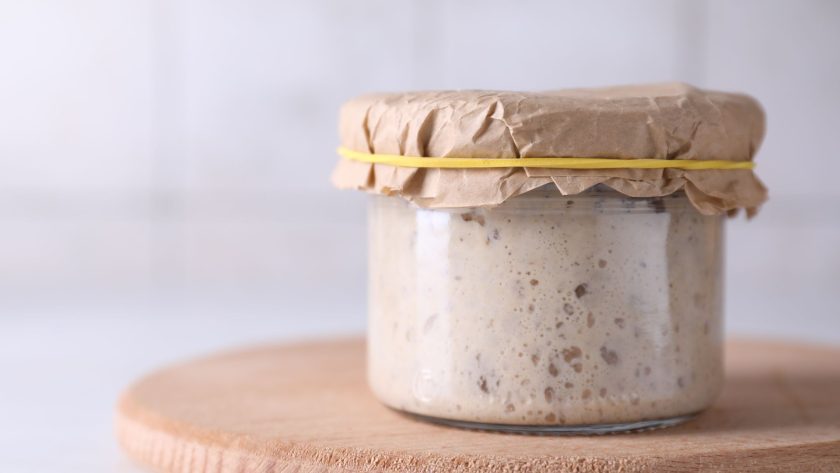
This is the part people mess up most: baking with a starter before it’s peaked. A starter is ready when it passes the float test:
Drop a small spoonful into a glass of room-temperature water. If it floats, the starter is full of gas and ready to leaven bread. If it sinks, give it more time (or another feeding).
Visual cues that back this up:
- It’s roughly doubled in volume since feeding
- The surface is domed and covered in bubbles
- It smells tangy and slightly fruity, not flat
Related: What is a Mature Sourdough Starter?
Step 4: Start With Something Low-Stakes
Skip the ambitious artisan loaf on day one. Warm up with recipes that are forgiving and quick to give you feedback.
Good first projects:
- Sourdough pancakes or waffles — use discard, no rise required, ready in 20 minutes
- Sourdough crackers — mix discard with olive oil, salt, and herbs, roll thin, bake
- No-knead sourdough sandwich loaf — minimal shaping, forgiving crumb
- Sourdough pizza dough — long fermentation does most of the work for you
Once you’re comfortable with how your starter behaves (how fast it rises, what it smells like when it’s ready), move on to a classic crusty boule or a batch of sourdough focaccia.
Step 5: Build a Simple Routine
Sourdough baking gets easier once it becomes a rhythm instead of a puzzle. Here’s a simple weekly flow if you bake once or twice a week:
- Day before baking: Take starter out of the fridge, feed it, let it sit overnight or a few hours until doubled
- Baking day: Use the amount your recipe calls for, feed the remainder, and either leave it out (if baking again soon) or pop it back in the fridge
- Off days: Leave it alone in the fridge, no feeding needed for up to a week
Troubleshooting Sourdough Starter Hiccups
| Problem | Likely Cause | Fix |
|---|---|---|
| Liquid pooling on top | Starter is hungry | Pour off or stir in, then feed |
| Not rising at all | Too cold, or flour ratio off | Move somewhere warmer (75-80°F), feed with fresh flour |
| Smells like nail polish remover | Fermented too long between feedings | Discard most of it, feed, repeat daily for a few days |
| Mold (fuzzy, colored spots) | Contamination | Toss it and start fresh, don’t try to salvage it |
| Rises then falls before you can bake | Over-proofed | Use it closer to its peak, or feed on a faster schedule |
Storing It Long-Term (Without Killing It)
If life gets busy, your starter can handle some neglect:
- Fridge, unfed: fine for 1-2 weeks
- Fridge, longer than 2 weeks: may need 2-3 feedings to bounce back, might look sluggish or develop dark liquid, still usually salvageable
- Freezer: freeze a portion in a bag as backup insurance in case your main starter ever dies
- Dehydrated: spread thin on parchment, let dry completely, store in a jar; rehydrate with water and flour when needed
FAQs
Do I need to name my starter?
Nope, purely optional tradition. Doesn’t affect how it works, but it’s a fun way to feel connected to the sourdough community.
Can I use tap water to feed it?
Usually yes. If your tap water is heavily chlorinated, let it sit out for an hour first or use filtered water, since chlorine can slow down fermentation.
What flour should I feed it?
All-purpose or bread flour works fine for maintenance. Whole wheat or rye flour can give it a boost if it seems sluggish, since they have more natural yeast and bacteria to feed on.
How much starter do I actually need for a loaf of bread?
Most recipes call for 50-150g of active starter. Check your specific recipe, but that range covers the majority of standard loaves.
I forgot about it for a month. Is it dead?
Probably not. Sourdough starters are remarkably resilient. Scrape off any liquid or discoloration on top, feed it daily for 3-5 days, and it will likely come back to life. Mold is the only sign that means it’s truly done.
Can I bake with discard instead of active starter?
Yes, but only for recipes that don’t rely on the starter to leaven the dough, like pancakes, crackers, or muffins. Discard has less rising power since it hasn’t been recently fed.
Why does my starter smell different than my friend’s?
Every starter develops its own personality based on your flour, water, and local environment. Slight variations in smell (sour, yeasty, a little fruity) are completely normal.
Related Articles:
 Sourdough Cinnamon Coffee Cake Recipe: 9 Steps to Irresistible Bakery-Style Results
 How to Dehydrate Sourdough Starter: Step-by-Step Guide for Long-Term Storage
 How Much to Feed Sourdough Starter (Beginner’s Guide)
 How to Feed Sourdough Starter from Fridge (Your Complete Guide to Better Bread)
 Why Is My Sourdough Starter Not Rising? (And How to Fix It)
