
Last updated on August 12th, 2026
Ever poured half a cup of starter down the drain just to keep your culture alive? Most sourdough guides have probably told you to discard and feed daily with a 1:1:1 ratio, which sounds simple until you realize you’re going through a bag of flour every week for a hobby loaf or two.
The good news: you can keep a healthy, active starter using a fraction of the flour most recipes call for. It just takes a few adjustments to how you store, size, and feed your starter.
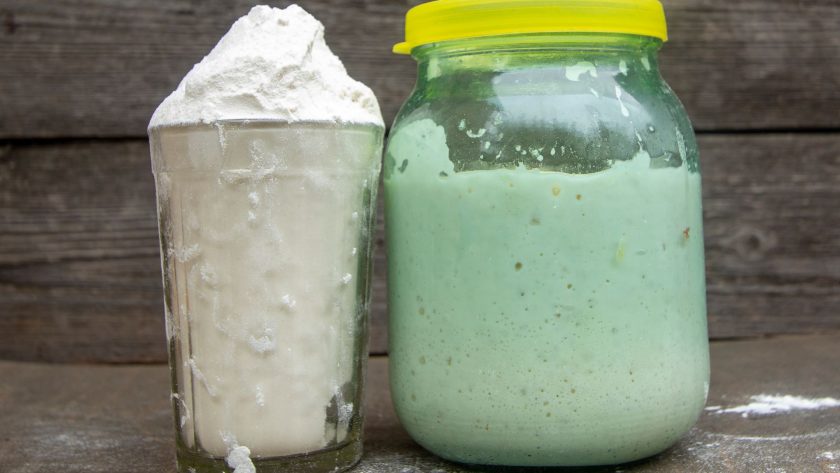
Why Sourdough Starters Waste So Much Flour in the First Place
Most starter waste comes down to three habits:
- Feeding too often. Daily feedings make sense for bakeries that bake every day. A home baker doing one or two loaves a week doesn’t need that pace.
- Keeping too much starter. Recipes often assume you’re maintaining 200g or more of starter, when 30-50g is plenty for most home baking.
- Discarding without using it. Every feeding produces excess starter (discard), and if that goes straight in the trash, you’re throwing out usable flour every single time.
Fix those three things and your flour usage drops dramatically, often by 70% or more.
1: Shrink Your Starter Size
This is the single biggest change you can make. A smaller starter needs less flour at every feeding, full stop.
| Starter Size | Flour + Water per Feeding | Weekly Flour Use (fed 2x/week) |
|---|---|---|
| 200g (common recipe default) | 100g flour + 100g water | ~400g |
| 50g (lean, practical size) | 25g flour + 25g water | ~100g |
| 20g (minimalist) | 10g flour + 10g water | ~40g |
You can maintain as little as 10-20g of starter and still have plenty for a loaf, since you’ll build it up (“bulk build”) the day before you bake anyway.
There’s no rule that says your everyday starter has to be big.
2: Feed Less Often by Using the Fridge
Room-temperature starters need feeding daily because the yeast and bacteria eat through the flour fast.
Cold storage slows that down considerably.
A realistic feeding schedule for beginners or hobby bakers:
- Keep your starter in the fridge, not on the counter.
- Feed it once a week if you bake occasionally, or every 2 weeks if you bake rarely.
- Take it out and let it sit at room temp for a couple of hours before feeding, then feed and return it to the fridge (or leave it out overnight if you’re baking soon).
- Only shift to daily counter feedings for the 1-2 days before you actually plan to bake, to wake it up and get it strong.
This alone cuts feedings from 7 times a week down to 1-2, which is where most of the flour savings come from.
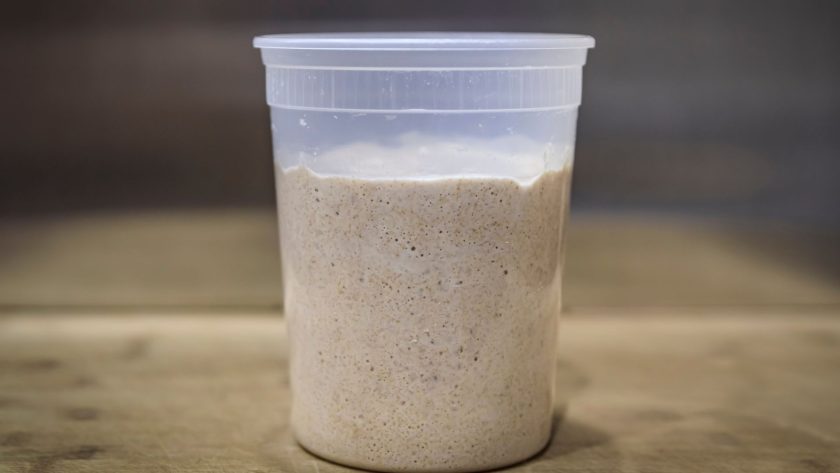
3: Use a Lower Feeding Ratio
The ratio between starter, flour, and water changes how fast your starter uses up its food and how much you need to add.
A common beginner ratio is 1:1:1 (equal parts starter, flour, water), but that’s not your only option.
| Ratio (starter:flour:water) | Best For |
|---|---|
| 1:1:1 | Fast rise, frequent baking, warm kitchens |
| 1:2:2 | Slower rise, stretches flour further, good for once-a-week feeding |
| 1:5:5 | Very slow, low-maintenance, good if you’re feeding infrequently and want the starter to last longer between feeds |
If you’re only feeding weekly, a 1:2:2 or even 1:3:3 ratio keeps the starter fed longer without you needing to add as much flour relative to how much starter you’re keeping.
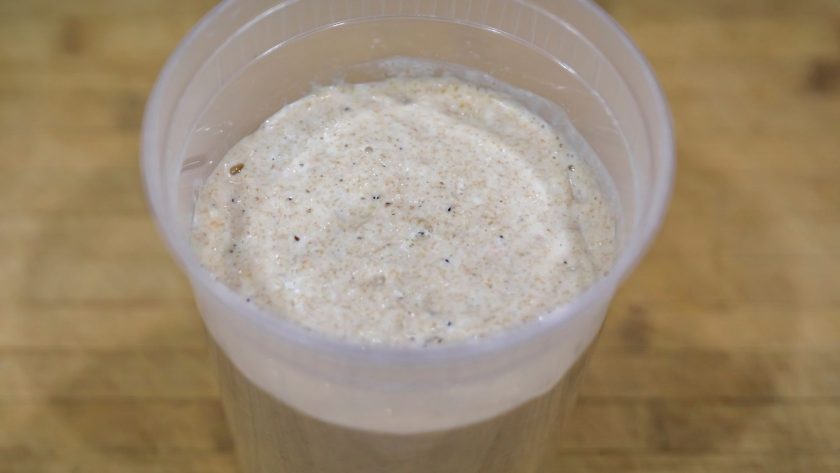
4: Actually Use Your Discard
Even with a small starter and infrequent feeding, you’ll still produce some discard. The trick is treating it as an ingredient instead of trash.
Easy ways to use discard without needing a special recipe:
- Stir a spoonful into pancake or waffle batter
- Add it to pizza dough for extra flavor
- Mix into crackers or flatbread dough
- Swirl into muffin or quick bread batter
- Use it to thicken soups slightly (in small amounts)
- Store it in a jar in the fridge and add to it over a week, then bake a “discard loaf” once you have enough
You don’t need a rigid recipe collection. Discard behaves like a mild sourish flour paste, so it works in most baked goods where you’re not relying on it to leaven the dough.
Related: 50+ Sourdough Discard Recipes
5: Consider Drying Your Starter for Long-Term Storage
If you go through stretches where you’re not baking at all, keeping a starter alive in the fridge still means periodic feedings.
An alternative is drying it out.
- Spread a thin layer of active starter on parchment paper
- Let it air dry completely (this can take a day or two)
- Break it into flakes and store in an airtight jar at room temperature or in the freezer
- To revive, rehydrate with equal parts warm water, then feed as normal for a few days until it’s bubbly again
A dried starter uses zero flour while it’s dormant, which is ideal if you bake in bursts rather than on a set schedule.
Flour-Heavy vs. Flour-Light Maintenance
| Habit | Flour-Heavy Approach | Flour-Light Approach |
|---|---|---|
| Starter size | 200g+ | 20-50g |
| Feeding frequency | Daily | Weekly or biweekly |
| Storage | Counter | Fridge |
| Ratio | 1:1:1 | 1:2:2 or leaner |
| Discard | Thrown out | Used in recipes or saved |
| Off-season storage | Kept fed indefinitely | Dried and stored dormant |
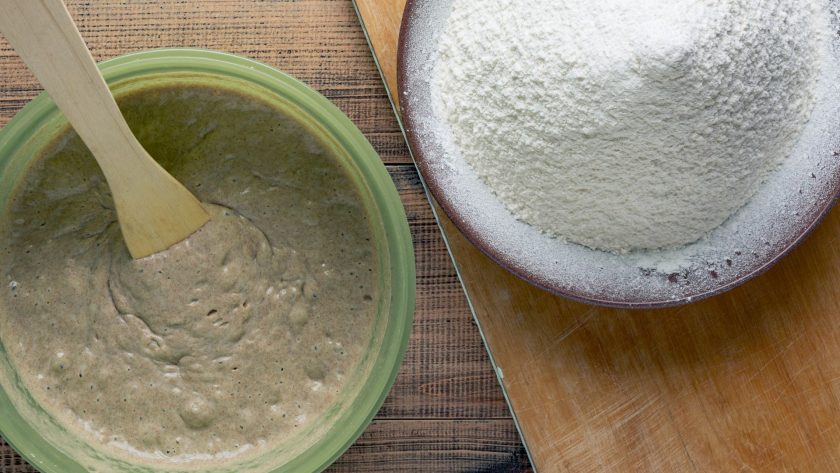
A Few Things to Watch For
Cutting back on flour and feedings doesn’t mean neglecting your starter entirely.
A couple of signs it needs attention:
- Dark liquid (“hooch”) on top means it’s hungry. Pour it off or stir it in, then feed.
- A strong, harsh, nail-polish smell usually means it’s gone too long without food. A feeding or two at room temperature usually brings it back.
- No rise or bubbles after a feeding can mean it’s too cold, too old, or needs a couple of consecutive daily feedings to wake back up before baking.
None of these mean you’ve killed it. Sourdough starters are resilient, and even a neglected one can usually be revived with a few days of regular feeding.
Once you settle into these habits, the flour math changes completely. You end up spending less, wasting less, and you’ll still have a starter ready to bake with!
FAQs
Do I have to discard starter every time I feed it?
No. Discarding is only necessary if you’re keeping your starter above the size you actually need. If you maintain a small starter (20-50g) and only feed enough to cover what you’ll use for baking, there’s little to no discard to deal with.
How small can a starter actually get before it stops working?
Starters as small as 10-20g work fine as long as you feed them consistently. Size doesn’t affect how well a starter ferments, it just affects how much flour each feeding takes.
Can I skip feeding my starter for a few weeks?
Yes, especially if it’s in the fridge. Two weeks between feedings is usually fine for a cold starter. Beyond that, drying it out is a better option than letting it sit unfed and risk mold or an overly acidic culture.
Will feeding my starter less often make my bread worse?
Not if you wake it up properly before baking. A day or two of room-temperature feedings before you bake brings a fridge-stored starter back to full strength, so your bread rises the same as if you’d fed it daily the whole time.
What’s the minimum ratio I can use without weakening my starter?
Ratios up to about 1:5:5 still work for maintenance feeding, though they slow fermentation down. If your starter seems sluggish or isn’t rising well before a bake, switch to 1:1:1 for a feeding or two to bring it back to full strength.
Is dried starter as good as a liquid starter once revived?
Yes. Drying doesn’t kill the yeast or bacteria, it just puts them dormant. A properly dried and rehydrated starter typically takes 3-5 days of regular feeding to get back to full strength, but it performs the same as a starter that was never dried.
Do I need to throw away discard I don’t use?
No. Discard can sit in a jar in the fridge for about a week before it gets too sour to use in most recipes. Keep adding to it and use it in a batch of pancakes, crackers, or pizza dough once you have enough.
Related Articles:
 Easy Sourdough Starter (A No-Fuss Guide for Beginners)
 Strawberry Cinnamon Rolls Recipe: A Sweet Twist on a Classic Favorite
 Sourdough Cinnamon Banana Bread: Easy, Moist & Delicious Recipe
 How to Use Sourdough Starter Like a Pro (Even as a Beginner)
 How to Rehydrate Sourdough Starter: Step-by-Step Guide for Beginners
